
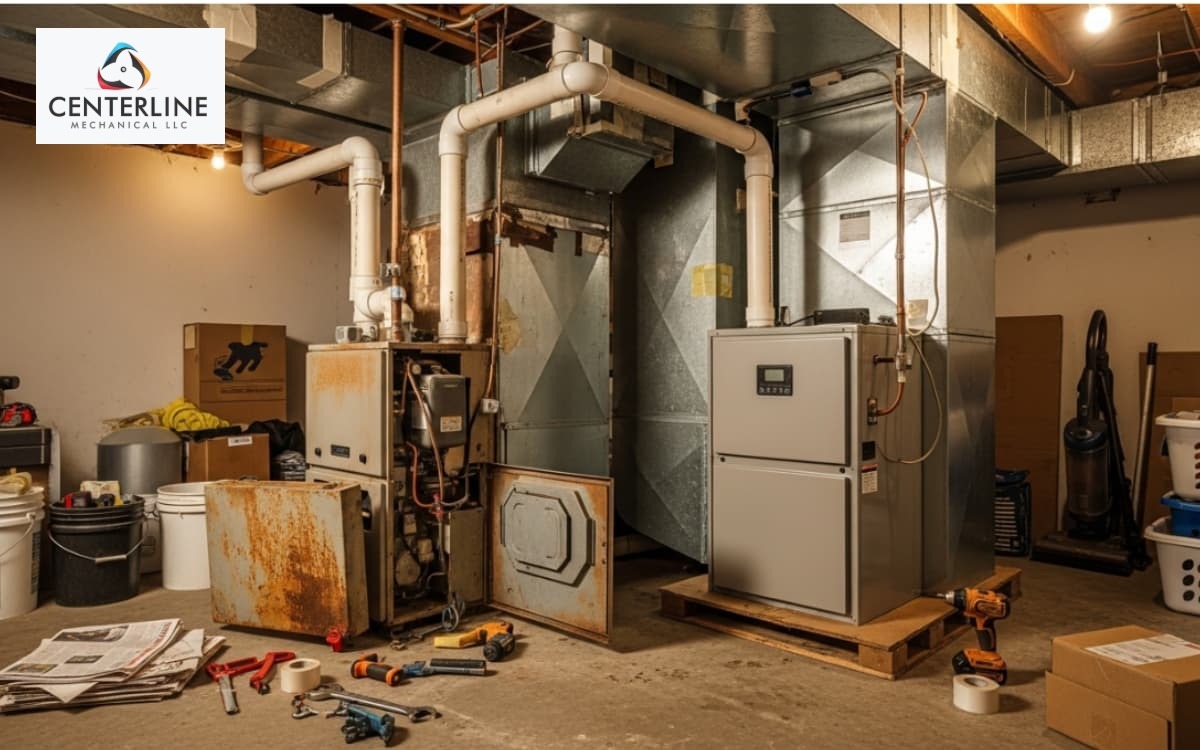
Deciding on an HVAC system replacement typically runs between $10,000 and $20,000 for a 2,000-2,500 square foot home, depending on the equipment you choose and how complex the install is.
This price range includes the new equipment and the labor needed to set everything up correctly in your house. Most homeowners spend about $13,000 for a common setup with an air conditioner and a gas furnace.
We want to make sure you understand every part of your bill. Our team at Centerline Mechanical created this guide to help you plan for this big project without any stress.
Key Takeaways
- Home size and system type have the biggest impact on total cost.
- High-efficiency systems cost more upfront but can lower monthly energy bills and may qualify for federal tax credits.
- Comparing multiple quotes and scheduling installation during slower seasons can help keep costs in check.
Factors Influencing HVAC Replacement Cost
| Cost Factor | Why It Matters |
| Home size | Larger homes need bigger systems, which cost more to buy and install |
| System type | Heat pumps, furnaces, and AC systems all have different price ranges |
| Ductwork condition | Old or leaky ducts can add labor and material costs |
| Efficiency rating | Higher efficiency systems cost more upfront but lower energy bills |
| Installation difficulty | Tight attics, crawl spaces, or older homes increase labor time |
| Permits and local codes | Permit fees and code upgrades vary by location |
Many things change the price of your new unit, and we want to help you understand why these costs vary. We look at everything from the size of your rooms to the type of fuel you use to stay warm.
Home Size and System Capacity
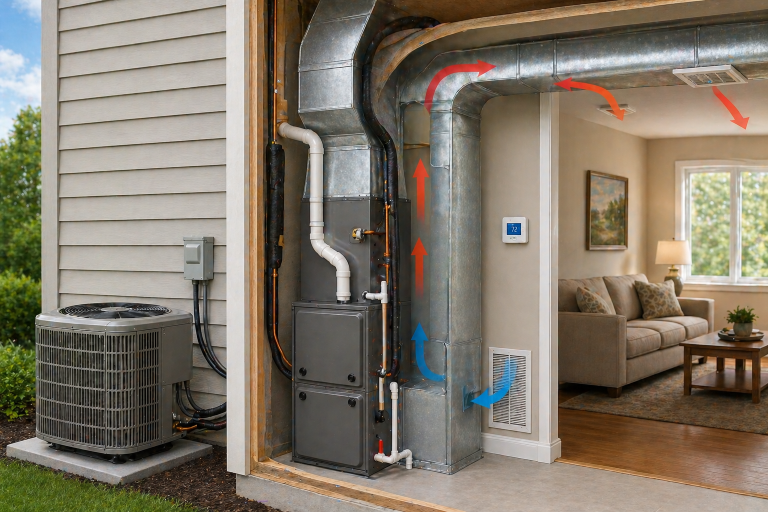
Your home’s square footage plays a major role in how much you’ll spend on a new HVAC system [1]. We look at the total area to decide how much power the system needs to keep you comfortable.
Larger homes require bigger units that can move more air through the rooms. If the system is too small, it will work too hard and break down much sooner than it should.
The capacity of an HVAC unit is measured in tons or BTUs. A system size that is too large will turn on and off too often, which wastes a lot of electricity.
We make sure to choose a system size that matches your specific living space perfectly. This keeps your home at the right temperature and helps your equipment last for many years.
We look at the total area of your house to decide how much power the new system needs to have.
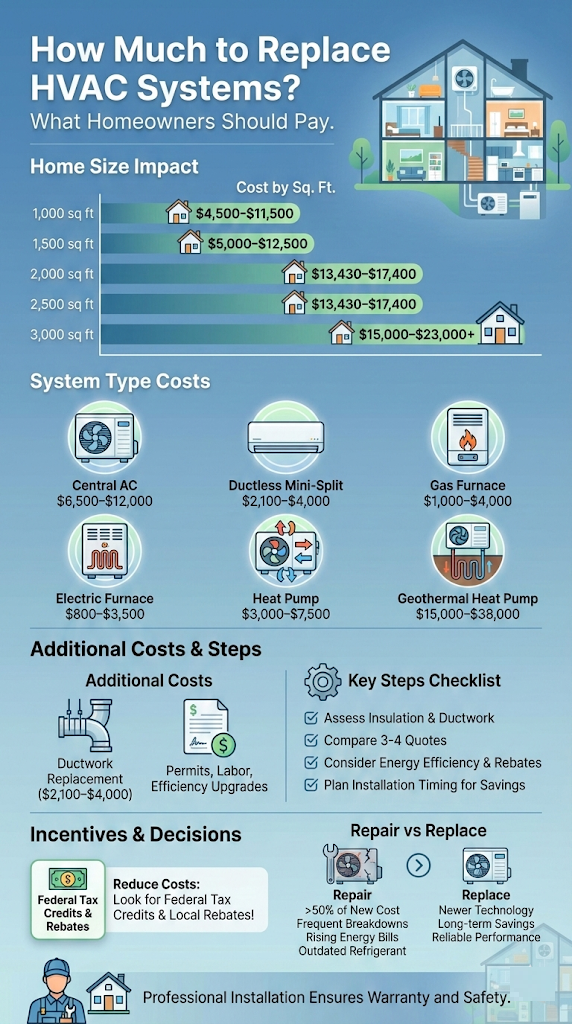
- 1,000 square feet: $4,500 to $11,500 total cost.
- 1,500 square feet: $5,000 to $12,500 total cost.
- 2,000 square feet: Average of $13,430 to $17,400.
- 2,500 square feet: Average of $13,430 to $17,400.
- 3,000 square feet: $15,000 to $23,000 or more.
If we need to put in new ductwork, the price will go up for every square foot of the home. Ducts are the pipes that carry the air from the unit to your vents. Old or leaky pipes make the new system work much harder than it should. We check these pipes during our first visit to see if they are still in good shape.
Replacing these pipes can add between $2,100 and $4,000 to the total bill for a standard home. We want to make sure the air flows easily through your house. New ducts help your new air conditioner run much better for a long time. Our team ensures every connection is tight so you do not lose any air.
System Type and Price Ranges
The type of system you pick for your home will change the price of the equipment significantly. Some systems use gas while others use electricity to keep you warm or cool. Each unit type has its own set of parts and different installation requirements.
We help you choose the one that fits your budget and your home layout. We look at your current setup to see which type will be the easiest to install.
You can see the common price ranges for the different types of systems that we can install in your home.
- Central AC: $6,500 to $12,000.
- Ductless Mini-Split: $2,100 to $4,000.
- Gas Furnace: $1,000 to $4,000.
- Electric Furnace: $800 to $3,500.
- Heat Pump: $3,000 to $7,500.
- Geothermal Heat Pump: $15,000 to $38,000.
A geothermal heat pump is the most expensive option because we have to dig deep into the ground. Most people choose a standard heat pump or a central air conditioning unit because they are very common. These choices work well for most households and are easier to maintain over time.
Additional Cost Considerations
Ductwork replacement expenses are common when you are upgrading a very old system. We also have to look for hazards like asbestos in older units before we can take them away.
If we find dangerous materials, we must follow special rules to remove them safely. This protects your household and our team from breathing in harmful dust.
The efficiency rating of your new unit will also affect the price you pay today. Units with higher efficiency ratings cost more money when you buy them at first.
However, they use much less electricity every month which saves you money on your utility bills. We can show you how these savings add up over several years.
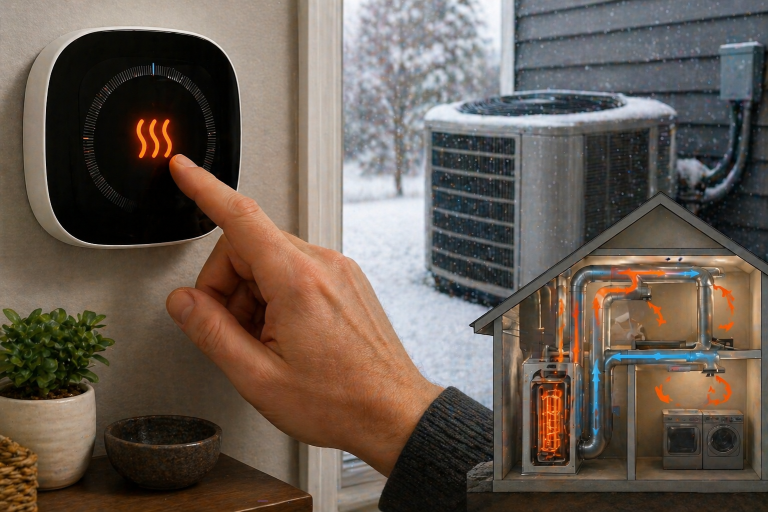
Smart thermostats are a great feature to add to your new HVAC system. They allow you to control the temperature from your phone even when you are not at home.
Local labor rates and permits also add to the final cost of the project. Our team at Centerline Mechanical takes care of the permits so the work follows all local rules.
Estimating Your HVAC Replacement Cost
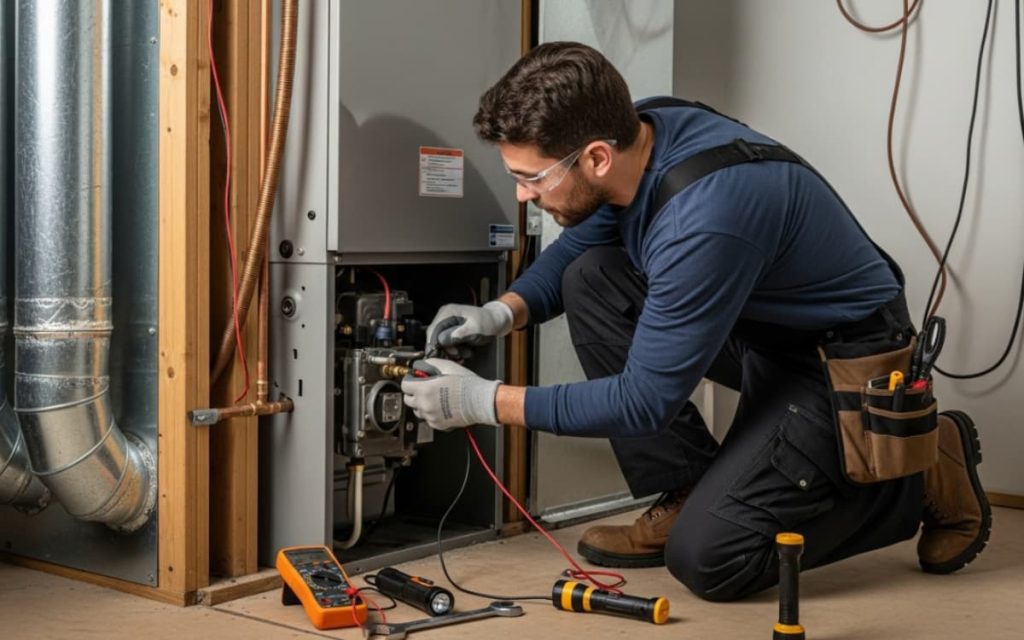
The best way to estimate your HVAC replacement cost is to look at how your home actually performs. No two houses are the same, and small details can change the price more than most people expect.
Assessing Your Home’s Needs
We start by checking how well your home is insulated. Good insulation keeps heated and cooled air inside, which means your system doesn’t have to work as hard. Homes with air leaks often need larger systems, which drives the cost up.
Energy efficiency goals also matter. We inspect your existing ductwork to make sure it can handle a modern system. Old or poorly sized ducts can limit airflow and reduce performance. Every vent is checked so air reaches each room evenly.
We focus on these four factors when sizing your system:
- Number of windows and exterior doors
- Direction your home faces and sun exposure
- Number of people living in the home
- Local climate and average outdoor temperatures
In some cases, improving insulation first allows for a smaller, less expensive system. That saves money upfront and lowers energy bills long term. We always look for the most practical solution for your home, not the biggest system.
At Centerline Mechanical, we look closely at the details so your estimate reflects what your home actually needs, nothing more, nothing wasted.
Gathering Quotes and Comparing Options
Getting three or four quotes helps you see what you’re actually paying for, not just the final number.
The cheapest option isn’t always the best one. Lower prices often mean higher energy bills or weaker warranties.
When comparing quotes, focus on:
- Total cost, including labor and materials
- Efficiency ratings of the equipment
- Parts warranty details
- How long will the job take
We explain the differences so you know what you’re giving up, or gaining. Paying a little more upfront often avoids problems later.
Understanding Labor and Installation Costs
Labor makes up a large part of HVAC replacement costs. Proper installation takes time, training, and attention to detail. Small installation mistakes add up fast, which is why every connection matters.
The location of the unit also affects labor costs. Tight crawl spaces or attic installs take extra time. We protect floors and work carefully to avoid damage.
Installing in spring or fall can sometimes lower costs. These are slower seasons compared to peak summer and winter demand. Planning ahead gives you more scheduling flexibility and potential savings.
Saving Money on HVAC Replacement
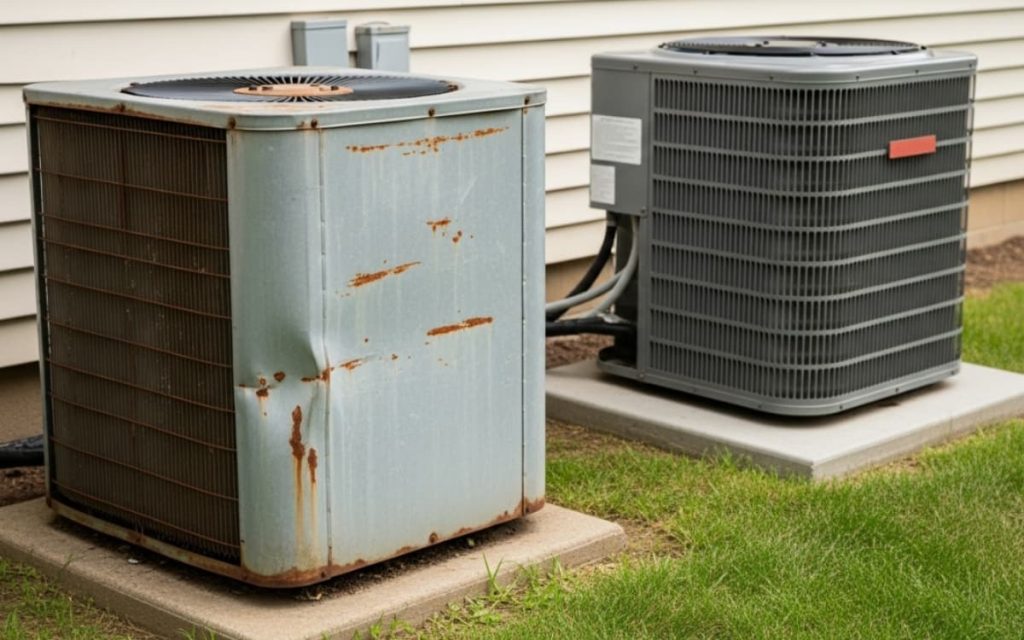
There are several ways to reduce HVAC replacement costs without cutting corners. We help you take advantage of incentives that actually apply to your system.
Energy-Efficient Models and Rebates
Claiming an HVAC system tax credit can lower your cost by up to $3,200 if your equipment qualifies. We’ll point you to models that meet the requirements.
Many utility companies offer rebates for high-efficiency upgrades, often worth a few hundred dollars after installation.
Common savings programs include:
- Federal tax credits for high-efficiency heat pumps
- State energy incentives for gas furnaces
- Utility rebates for central air systems
- Manufacturer promotions during select seasons
High SEER systems start cutting energy use as soon as they’re installed. Over time, those savings can offset much of the initial investment. We also help handle rebate paperwork so nothing gets missed. [2]
Repair vs. Replace Decision
Knowing when to replace instead of repair can save a lot of money. Most HVAC systems last 15-20 years when maintained properly. We’ll give you a straight answer on whether yours is worth fixing.
Replacement usually makes sense when:
- Repair costs exceed 50% of a new system
- Breakdowns happen multiple times a year
- Energy bills keep climbing
- The system uses outdated refrigerant
A new system is usually more reliable, especially during heat waves or cold snaps. We’ll always recommend what makes sense for your home, not what costs more.
Professional Installation Benefits
Proper installation keeps your warranty in place. Most manufacturers won’t honor coverage if the system isn’t installed by a licensed contractor. We handle the required paperwork so there are no issues later.
A correctly installed system runs better from day one. Poor sizing, loose fittings, or incorrect refrigerant levels can push energy bills up quickly. We test airflow and system performance before the job is finished.
Professional installation also reduces safety risks. Gas lines and electrical components need to be handled carefully and correctly. We do it right the first time so problems don’t show up later.
Checklist for HVAC Replacement
A simple checklist helps keep the replacement process on track and avoids last-minute issues. This is what to expect before, during, and after installation.
Pre-Replacement Checklist
Before installation, we take time to understand how your home actually feels day to day. That includes where the thermostat sits, which rooms run hot or cold, and any comfort problems with your old system. These details help us avoid repeating the same issues with the new unit.
We also recommend reviewing a few quotes and system options ahead of time. Financing is available if needed, and we can go over payment options so there are no surprises.
Before installation day, please:
- Clear access to the indoor and outdoor units
- Move fragile or valuable items away from work areas
- Keep pets secured in a separate room
- Check for any local permit or HOA requirements
We’ll confirm the schedule in advance and arrive with the equipment and tools needed to complete the job. Planning ahead helps the installation move faster and keeps disruptions to a minimum.
If you have questions, ask before we start. We’ll walk you through the plan so you know what’s happening and why. Your home is treated with care throughout the process.
During-Replacement Checklist
On installation day, we remove the old system and dispose of it properly. Floors and nearby areas are protected while equipment is moved in and out.
As the new system is installed, we check all connections, including electrical wiring, refrigerant lines, and drains. Once everything is hooked up, we run the system to make sure it’s working as it should.
During installation, we check that:
- Refrigerant levels are set correctly
- Airflow is balanced at each vent
- The thermostat is set up and working
- Safety controls are operating properly
If you have questions, we’ll answer them as we go. If anything unexpected comes up, we’ll talk it through before moving forward.
Post-Replacement Checklist
After installation, most homes feel more comfortable right away, especially if you added an ERV in HVAC to improve fresh air circulation. Temperatures are more even, and the system usually runs quieter.
Energy bills often improve as well. Keep your manuals and warranty paperwork in one place so they’re easy to find later.
Regular maintenance helps prevent problems down the line. A yearly tune-up can catch small issues before they turn into costly repairs.
To keep your system running:
- Keep leaves and junk away from the outdoor unit
- Swap the air filter every few months
- Pay attention if it starts sounding different
- Make sure the thermostat is still online
Doing the basics like this helps the system last longer and keeps it from wasting power.
Frequently Asked Questions
Does a new HVAC system increase the resale value of my home?
A new HVAC system makes your home worth more to buyers. It shows your house is well-kept and saves the new owner from expensive repairs after they move in.
Should I replace my system while I am doing other home renovations?
Replacing your unit during a remodel is smart. We can move vents and pipes easily while walls are open, which saves you money and prevents damage to your new drywall.
Will my homeowner’s insurance pay for a new HVAC system if the old one breaks?
Insurance usually only pays for damage from fires or storms. They will not cover a system that just gets old. Check your policy for special equipment coverage to be sure.
Can I add an air purification system to my new HVAC setup later on?
Yes, we can add purifiers or humidifiers later. We just need to leave enough room in your ductwork now so these upgrades fit easily when you are ready for them.
How much quieter will a new system be compared to my old noisy unit?
New systems are much quieter than old ones. They use special fans and blankets to muffle sounds, so you can enjoy a peaceful home while staying cool or warm.
Final Thoughts on HVAC Replacement Cost
Replacing an HVAC system is a big decision. Cost matters, but the right system and proper installation matter just as much. A well-matched setup keeps temperatures steady, lowers energy bills, and avoids repeat repairs.
If you’re planning a replacement or just need honest guidance, Centerline Mechanical can help you compare options and choose what makes sense for your home. When you’re ready, reach out to get started.
References
- https://en.wikipedia.org/wiki/Heating,_ventilation,_and_air_conditioning
- https://consumer.ftc.gov/node/78387