
Your air conditioner is designed to run quietly. When it starts making new noises, something is usually loose, restricted, or wearing out. That doesn’t always mean “big repair,” but it does mean the system is giving you feedback.
The most important step is simple: identify the sound and where it’s coming from. Once you do, you can usually tell whether this is a quick fix (like debris or a loose panel) or a stop-and-call situation (like grinding, burning smells, or ongoing hissing).
Key Takeaways
- Most AC noises come from loose parts, airflow restrictions, or motor/compressor wear.
- The type of sound and the location narrow the cause fast.
- Grinding, loud banging, burning smells, or persistent hissing are not “wait and see” problems.
First: When to Shut It Down
If any of these are happening, turn the system off at the thermostat. If you can do so safely, shut off power at the breaker and call a technician.
- Burning or electrical smell
- Loud grinding or metal-on-metal scraping
- Loud banging that starts suddenly
- Persistent hissing while the system is running
Why AC Noise Starts
Noise is rarely cosmetic. It usually shows up when parts aren’t working in balance anymore.
A loose panel vibrates. Debris hits a fan blade. A dirty filter forces the blower to work harder. A motor bearing wears and starts to complain. These issues often start small, then get louder as vibration spreads through the cabinet, ductwork, and framing.
What Different AC Noises Usually Mean
This table is the quickest way to get oriented.
| Noise type | Typical source | What it often means |
| Rattling / clanking | Panels, screws, debris, fan blade | Loose hardware or foreign objects |
| Buzzing | Contactor, capacitor, wiring, relay | Electrical component struggling |
| Humming | Compressor, fan motor | Normal operation or a motor having trouble starting |
| Hissing / whistling | Refrigerant lines, coil, ducts | Pressure noise, airflow restriction, or possible leak |
| Grinding / screeching | Motor bearings, blower wheel | Mechanical wear; can lead to failure |
A brief click at startup or a short “tick” at shutdown can be normal. A new sound that repeats, grows, or changes tone is what matters.
Rattling, Banging, or Clanking
Rattling is the most common noise homeowners report. It’s often the simplest fix.
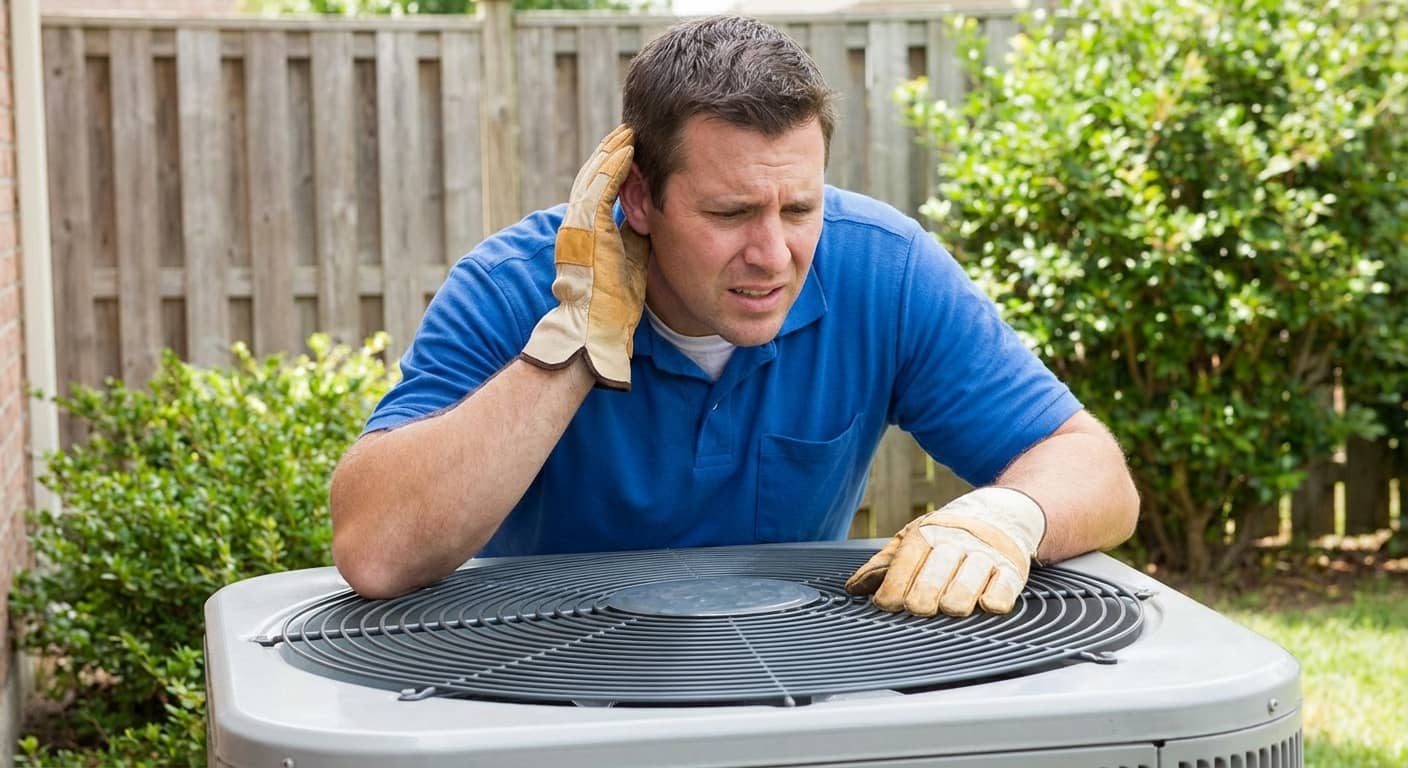
This usually comes from loose screws, a vibrating panel, or debris in the outdoor unit. It often shows up at startup or shutdown when the fan spins up and the cabinet flexes slightly.
If you can safely access it, check for obvious debris (leaves, twigs) and make sure exterior panels are snug. If the sound is heavy, rhythmic, and sudden, shut it down. That can indicate a fan blade hitting the housing or a failing motor.
Hissing or Whistling
A short hiss right after shutdown can be normal pressure equalization. A steady hiss while the system is running is different.
Sometimes “whistling” is airflow. A dirty filter, a blocked return, or closed vents can force air through a tight opening and create a sharp sound. If the noise improves after replacing the filter and opening vents, that was likely the cause.
If the hiss is persistent and cooling seems weaker, it can indicate a refrigerant issue. Refrigerant work is not DIY. Call a technician.
Buzzing, Humming, and Clicking
Buzzing is often electrical. It can come from a failing contactor, a weak capacitor, or a loose connection. If buzzing is loud, new, or paired with poor cooling, treat it as a service call.
A low steady hum can be normal. But if the outdoor unit hums and the fan isn’t spinning, that’s a common sign the system is trying to start but can’t. Don’t try to “help” it start. Shut it down and call a technician.
Rapid clicking that repeats can point to a control or electrical issue. If it doesn’t stop quickly, schedule service.
Grinding or Screeching
Grinding and screeching are the noises you don’t ignore.
They often point to worn bearings, a failing motor, or a blower wheel issue. Running the system can turn a repair into a replacement. Shut it down and call.
Can Ductwork Make an AC Noisy?
Yes. Ductwork can amplify sound, even when the equipment is fine.
Metal ducts expand and contract as temperatures change, which can cause popping or booming. Whistling can also be duct-related when air is being pushed through an undersized return, a tight duct bend, or a partially blocked path.
If the sound seems to travel through walls or ceilings, ductwork may be acting like a speaker.
How to Figure Out Where the Noise Is Coming From
You don’t need tools to narrow it down. You need a calm check.
Start by listening: is the sound coming from the indoor unit, the outdoor condenser, or the vents/ducts?
Then try this simple isolation:
- Set the thermostat to Off.
- Switch Fan to On (fan-only).
If the noise happens in fan-only mode, it’s likely indoor blower/duct related. If it only happens during cooling, it’s more likely outdoor-unit or refrigerant/compressor side.
What You Can Safely Fix vs What to Leave to a Pro
DIY-safe checks
- Replace a dirty filter
- Make sure vents and returns aren’t blocked
- Clear leaves and debris around the outdoor unit
- Tighten exterior panel screws if they’re visibly loose
Call a pro
- Persistent hissing while running
- Outdoor unit hums but won’t run properly
- Buzzing from the electrical compartment
- Grinding, screeching, or loud banging
- Burning smells or repeated breaker trips
FAQ
Why does my AC make different noises during the day and night?
Temperature changes matter. Metal expands and contracts, and the system may run harder during peak heat. A sound that only happens briefly at startup or shutdown can be normal. A sound that repeats and grows louder is the one to take seriously.
What causes a rattling or clanking sound?
Most often it’s loose hardware or debris. If the sound is light and intermittent, it’s commonly a panel or small object. If it’s heavy and sudden, shut the system down and schedule service.
Is a humming or buzzing noise dangerous?
It can be. A steady hum can be normal, but loud buzzing can point to an electrical issue. If the outdoor unit hums but the fan isn’t spinning, shut it down and call a technician.
Why does my AC hiss or whistle?
Whistling is often airflow restriction (dirty filter, blocked return, closed vents). A brief hiss after shutdown can be normal. A persistent hiss while running can indicate a refrigerant problem and should be checked professionally.
When should grinding or squealing be treated as urgent?
Immediately. Grinding and screeching typically mean mechanical wear. Running the system can cause permanent damage.
When AC Noise Becomes a Signal to Act
A noisy AC isn’t just annoying. It’s often the earliest warning you’ll get before performance drops or a part fails.
If the sound is new, repeating, or getting louder, it’s worth addressing now. Centerline Mechanical can pinpoint the cause, protect the system, and get your home back to quiet, steady cooling.