
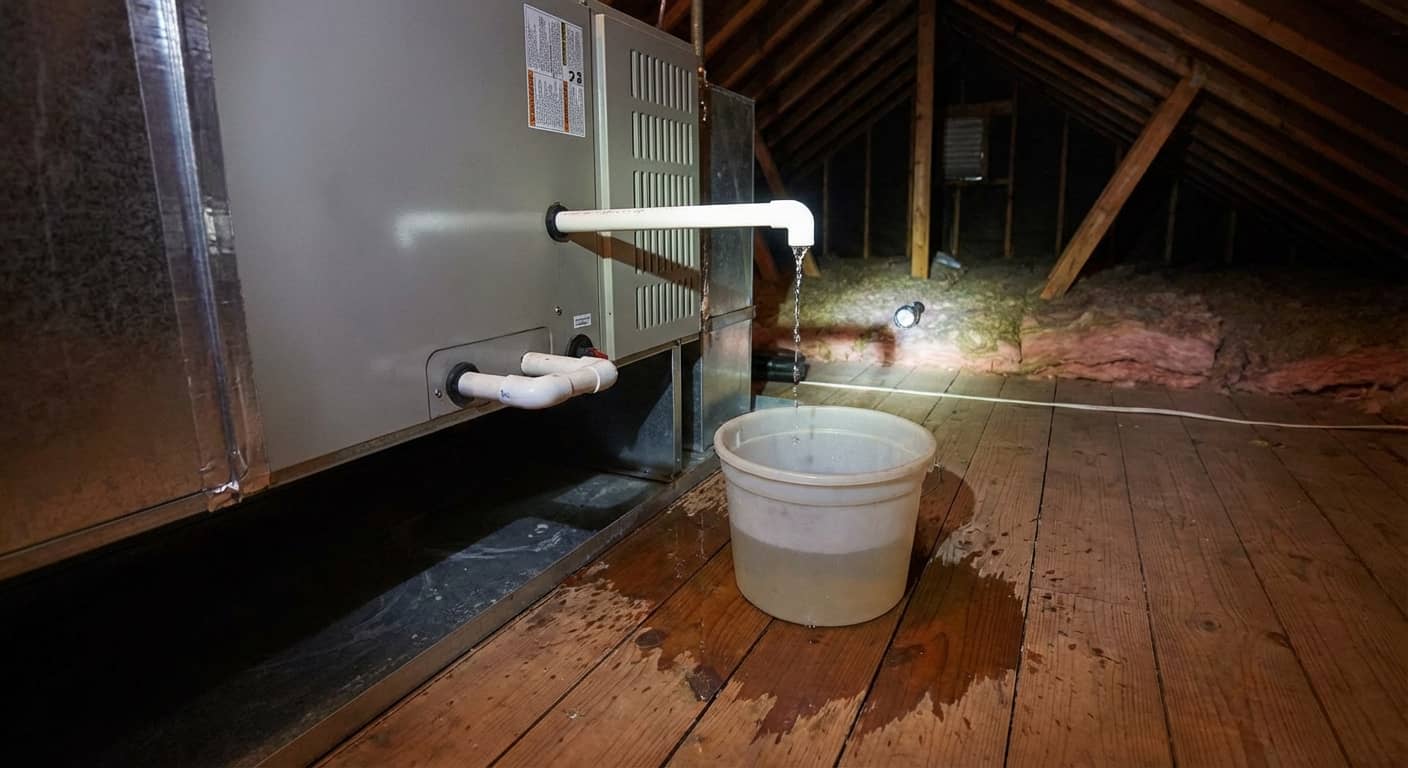
An air conditioner leaks water when it’s making condensation but can’t drain it away. Most leaks come from a clogged condensate drain line, a frozen evaporator coil that melts and overwhelms the pan, or a damaged drain pan.
Water damage spreads fast, especially if the unit is in an attic or above finished space. A small drip can turn into ceiling stains, soft drywall, and moldy insulation. The goal is simple: stop the water, find the cause, and keep it from coming back.
Key Takeaways
- Most indoor leaks start with a clogged drain line or a frozen coil.
- If the unit is in an attic or above finished space, shut it down quickly to protect ceilings and walls.
- If leaks repeat after basic cleaning, it’s time for a professional inspection.
Stop the Damage First
If you see water inside the house, do this before anything else:
- Set the thermostat to Off to stop making more condensation.
- If the unit is above a ceiling, shut it down sooner rather than later.
- Put a bucket or towels under the drip and keep water away from electrical components.
If you smell burning or see water near wiring, don’t touch panels. Turn the system off and call a technician.
Why an Air Conditioner Leaks Water
Air conditioners pull humidity out of the air. Warm indoor air hits a cold evaporator coil. Moisture condenses into water, drips into a drain pan, then flows out through a drain line.
When that drain path slows down or stops, water backs up and overflows. In other cases, the coil freezes, then dumps a surge of meltwater into the pan. If the pan is rusted or cracked, it leaks even when drainage is fine.
The pattern is usually the same:
Moisture forms during cooling → drainage fails or ice forms → water ends up where it shouldn’t.
The Most Common Causes
1) Clogged condensate drain line
This is the most common reason for indoor leaks. Algae, dust, and sludge build up inside the drain line until water can’t pass through. The pan fills, then spills.
Clues you’ll often notice:
- Water pooling near the indoor unit
- Musty or damp smells near the air handler
- The system shutting off if a float switch trips
2) Frozen evaporator coil
When airflow is restricted or refrigerant is low, the coil can drop below freezing. Ice forms. When the system cycles off, that ice melts quickly and can overflow the pan.
Common clues:
- Weak airflow at vents
- Ice on the larger copper line or near the indoor coil
- Leaks that show up right after the system shuts off
3) Rusted or cracked drain pan
Drain pans age. Metal pans can rust and develop pinholes. Plastic pans can crack. When the pan fails, water leaks even if the drain line is clear.
Clues:
- Constant dripping during operation
- Rust stains or flakes near the pan
- Leaks that get worse the longer the system runs
4) Condensate pump failure (basements, below-grade installs)
If your system relies on a condensate pump to move water up and out, a failed pump or stuck float can cause water to spill onto the floor.
Clues:
- Water around the pump
- Pump runs but doesn’t move water
- Cooling stops because a safety switch shuts the system down
5) Leveling / drain slope issues
Condensate relies on gravity. If the unit or drain line is installed with poor slope, water pools in the pan and problems repeat.
If you’ve cleared the drain and the leak keeps returning, it’s worth having a tech verify the drain setup.
How to Fix a Leaking Air Conditioner
Most fixes are about drainage and airflow. Keep it simple and safe.
Clear a clogged drain line
Turn off power to the system at the breaker. Then go to the drain line termination outside and use a wet/dry vacuum to pull out the clog for a minute or two. A towel wrapped around the connection can help improve suction.
If you have access to the drain line cleanout near the indoor unit (often a capped tee), you can flush the line afterward with a vinegar-and-water mix to slow new buildup.
If the evaporator coil is frozen
Don’t run cooling while it’s iced.
Set Cool: Off and Fan: On to thaw. Expect a few hours, sometimes longer. Replace the filter and make sure vents/returns are open.
If the coil freezes again after thawing and a clean filter, that often points to a deeper airflow restriction or a refrigerant issue that needs a technician.
If the drain pan is damaged
A cracked or rusted pan is usually not a “patch and forget” problem. Temporary fixes don’t tend to last. If the pan is compromised, replacement is the reliable solution.
When to Call a Professional
Call for service if:
- The leak continues after you clear the drain line
- Ice keeps returning after thawing and a clean filter
- You suspect low refrigerant (hissing, repeated icing, weak cooling)
- A condensate pump isn’t working
- The system is in an attic and you’re seeing ceiling stains
The larger cost is rarely the HVAC repair itself. It’s the water damage if the leak keeps going.
How to Prevent AC Water Leaks
Most leaks are preventable with basic habits.
Keep it tight and simple:
- Replace or clean filters regularly
- Flush the drain line a few times during the cooling season
- Keep an eye out for small damp spots or musty smells
- Schedule an annual inspection so small drain or pump issues don’t become ceiling repairs
If leaks have happened more than once, ask about adding or checking a float switch. It’s a small safeguard that can shut the system down before an overflow.
FAQ
Why is my air conditioner leaking water near the indoor unit?
Most often it’s a clogged drain line or an overflowing drain pan. Less commonly, the coil is frozen and melting faster than the drain can handle.
Can a dirty air filter cause an AC to leak water?
Yes. A clogged filter can reduce airflow, freeze the coil, and the meltwater can overflow the pan.
Why does my AC leak after it turns off?
That’s a common frozen-coil sign. The leak shows up when the ice melts after the cycle ends.
Is it safe to keep running an AC that’s leaking water?
Not if water is leaking indoors or above finished space. Shut it down and address the drain/ice issue first. Running it can lead to ceiling stains, drywall damage, and mold.
When should I call professional AC repair for water leaks?
Call if leaks return after clearing the drain, if icing keeps coming back, if the condensate pump isn’t working, or if the unit is in an attic and you’re seeing ceiling stains.
What to Do Next
Water leaks are rarely random. They usually point to drainage, airflow, or worn parts. When you catch a small drip early, fixes are often simple. Waiting lets moisture spread into ceilings, walls, and floors where damage becomes harder to manage.
If you want a clear diagnosis and a fix that lasts, schedule an inspection with Centerline Mechanical to keep your system dry and dependable.