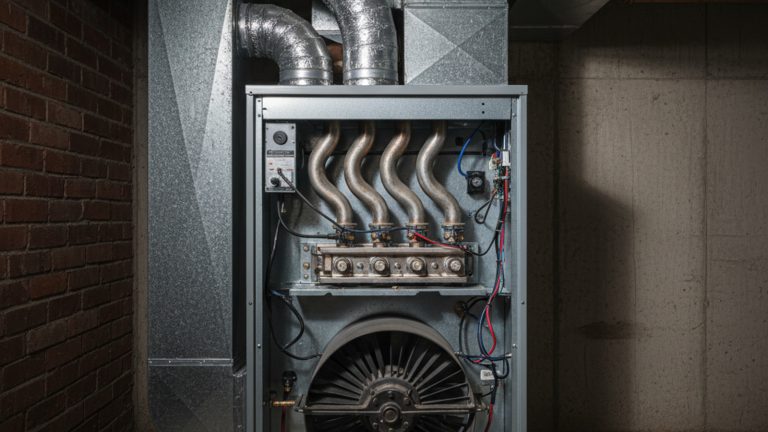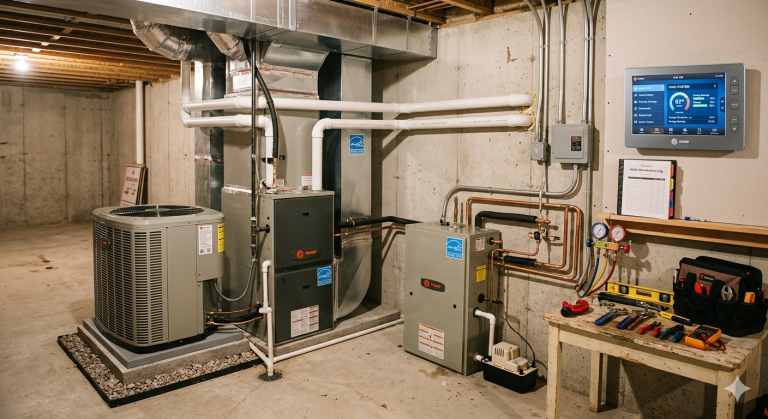


Central air conditioning is usually the better choice if you want steady, even cooling throughout your entire home. Window AC units make more sense when you only need to cool one room, you rent your space, or you want to keep upfront costs low.
You feel the difference fast. Central air is quieter, cleaner-looking, and built for whole-home comfort. Window units win for quick relief, easy DIY setup, and a low entry price. Your budget and your plans decide the rest.
Key Takeaways
- Central air costs more to install, but it’s often the better long-term fit when you’re cooling multiple rooms every day.
- Window units are great for targeted relief, rentals, and short-term solutions.
- Your home’s layout, your budget, and whether you own or rent are the deciding factors.
The Heart of the Matter: How Each System Works
A home with central air feels steady and even, the temperature so balanced you barely think about it. A room with a window unit feels more concentrated: colder near the unit, warmer a few steps away. That “feel” starts with how each system is built.
How Central Air Moves Cool Air
Central air is a split system. The louder parts (compressor and condenser coil) sit outside. The quieter parts (evaporator coil and blower) sit inside, often paired with a furnace or air handler. Refrigerant lines connect the two.
Inside, the blower pulls warm air from your home, pushes it across the cold indoor coil, and sends cooled air through ductwork to vents in each room. If ducts are leaky, dirty, or undersized, airflow and comfort suffer.
How a Window Unit Cools a Room
A window unit is one compact package mounted in a window or wall opening. It pulls warm air from the room, cools it over cold coils, and blows it back into the space. The heat it removed gets dumped out the back of the unit outdoors.
It’s built for one room or zone, not an entire house. That’s why the air feels coldest near the unit and less even as you move away.
Efficiency Unpacked: BTU, SEER2, EER, and Your Bill
These ratings look technical, but they’re really answering two questions:
- How much cooling do you get?
- How efficiently does the system use electricity to get it?
BTU: Cooling Power for the Space
BTU (British Thermal Unit) measures cooling capacity. More BTUs means more heat removal.
Match BTUs to the room, not a guess based on the whole house. Sun exposure, insulation, ceiling height, and how often doors stay open all matter. Too small and it never catches up. Too big and it short-cycles, which wastes energy and can feel clammy because it doesn’t run long enough to manage humidity.
SEER2 and EER: How Efficient the System Is
Central systems are typically rated with SEER2, which reflects updated testing standards across a cooling season. Window units often show EER or CEER, which measures efficiency under set conditions.
The takeaway is simple: higher numbers usually mean less electricity for the same cooling, all else equal.
Central Air vs Window Units: Efficiency at Scale
A window unit can be a smart choice for a single bedroom or office. You cool exactly the space you’re using and avoid paying to cool unused rooms.
The picture changes when you try to cool a whole home with several window units. Multiple compressors and fans running at the same time adds up, and comfort is harder to keep consistent across rooms.
| Scenario | Typical setup | Best fit |
| One bedroom or office | 1 window unit | Targeted cooling, occasional use |
| Small apartment, a few rooms | 1–2 window units | Zone-by-zone cooling |
| Whole home (many rooms) | Central air | Even cooling, simpler daily use |
| Whole home with multiple window units | 3–5 window units | Works, but often louder and less uniform |
A properly sized central system usually shines when you’re cooling many rooms at once. Window units fit best when the goal is relief in one or two spaces.
The Real Cost: More Than Just a Price Tag
The cost of cooling has three parts: what you buy, what it takes to install, and what it costs to run for years.
Upfront Investment: Installation and Equipment
Window units are mostly equipment cost. You buy the unit, install it, and you’re done.
Central air is largely installation and infrastructure. If your home already has ductwork from a furnace, you’re ahead. If it doesn’t, adding ducts can become a construction project that involves opening walls and ceilings, then patching and finish work afterward.
The Long Game: Operating and Maintenance Costs
Window units are simple to maintain: rinse or replace the filter, keep the coils reasonably clean, and pull them out at season’s end if needed.
Central air typically benefits from an annual professional checkup: coil cleaning, electrical inspection, airflow checks, and confirming the system is running the way it should.
Living With Your Choice: Comfort and Convenience
Central air is invisible comfort. One thermostat, consistent temperature across the house, unobstructed windows, and most of the noise kept outside.
Window units are a presence. They block a window, make more indoor noise, and cool one room extremely well while the rest of the house may stay warmer and more humid. You also have to manage comfort room by room.
Who Wins in Different Scenarios?
- Renting or short-term living: window units usually win.
- Small home, limited cooling needs: one or two window units can be totally sensible.
- Multi-story home, multiple bedrooms, open living space: central air becomes compelling for comfort and convenience.
- No ductwork but you want better comfort: ductless mini-splits are often the practical middle-ground.
FAQ
Is central air always better than window units?
Not always. Central air wins for whole-home comfort and convenience. Window units win when you only need to cool one or two rooms, you rent, or you want the lowest upfront cost.
How many window units equal central air?
If you’re cooling multiple bedrooms plus living space, you can end up running 3–5 units. At that point, comfort drops and the electrical load adds up fast.
Are window units cheaper to run?
They can be if you’re only cooling one room. If you’re cooling most of the house with several units, central air is often the more practical and consistent option.
Which is quieter?
Central air is usually quieter indoors because the loudest part sits outside. Window units are right in the room, so you hear the compressor and fan.
Do window units hurt resale value?
They don’t add value the way central air can. Many buyers see window units as temporary or a sign the home lacks a whole-home cooling system.
What about homes without ductwork?
If you don’t have ducts, central air can be expensive to add. In that case, ductless mini-splits are often the middle-ground solution.
The Final Calculation: Making Your Decision
Choosing between central air and window units depends on how you use your home. Central air makes sense for cooling multiple rooms and long-term living. Window units work well for smaller spaces, rentals, or short-term needs.
If you want clear answers tailored to your home and New England climate, Centerline Mechanical can evaluate your space, run a proper load calculation, and help you choose the most practical, cost-effective option.