
Ductless vs central air really comes down to two things: control and how your home is built. Ductless mini-splits shine when you want room-by-room comfort, especially in older homes without ductwork. Central air makes sense when ducts already exist and you want even, whole-home cooling from one thermostat.
In Central Massachusetts, this question comes up constantly because so many homes were built around boilers and baseboards, not ducts. That one detail changes the cost, the disruption, and the best path forward.
Key Takeaways
- Ductless usually wins when you want zoning and your home doesn’t already have ducts.
- Central air usually wins when ductwork is already in place and you want uniform whole-home cooling.
- The best choice depends less on the “box” and more on airflow, layout, and how you actually use the rooms.
The Core Difference: How the Air Reaches You
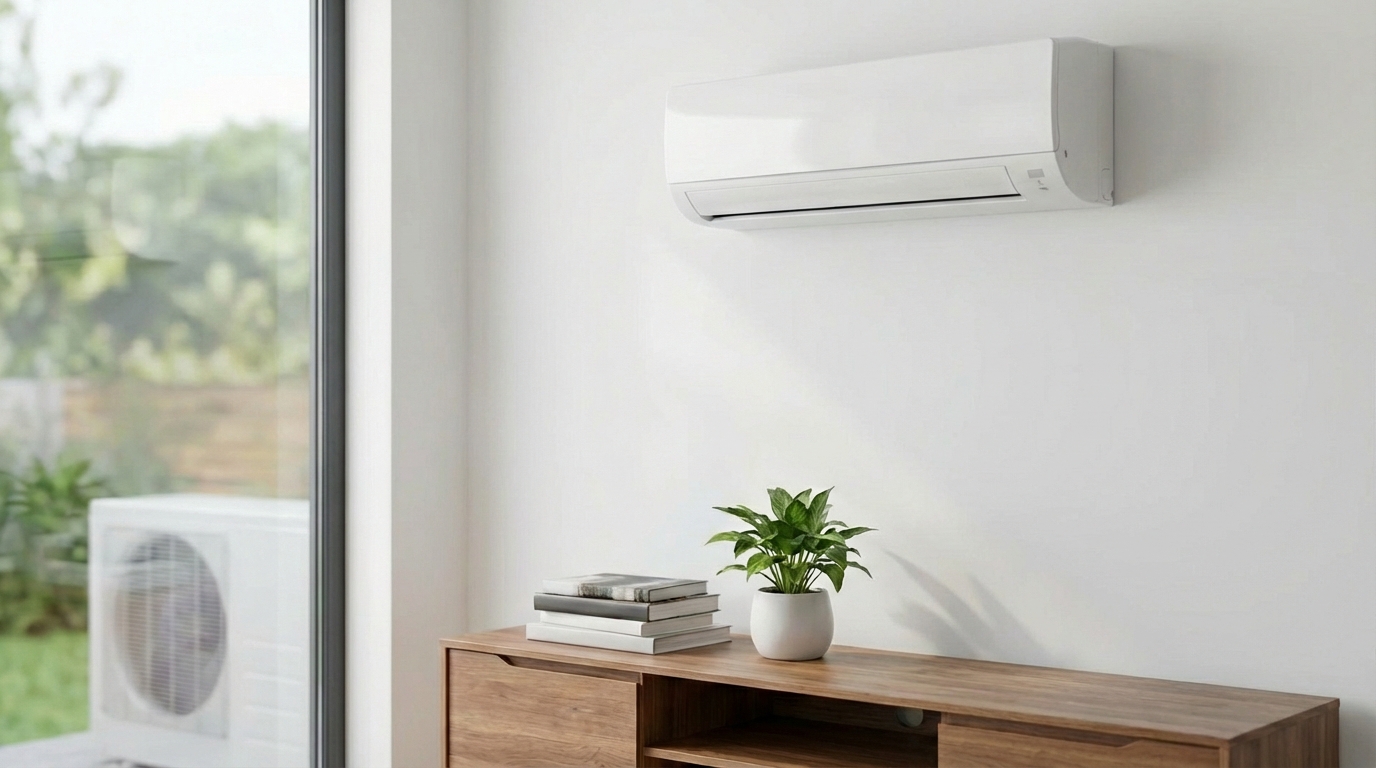
A ductless mini-split is direct. The indoor unit cools the air right where it’s mounted, then throws that air into the room. The path is short and simple. There’s not much in between to lose performance.
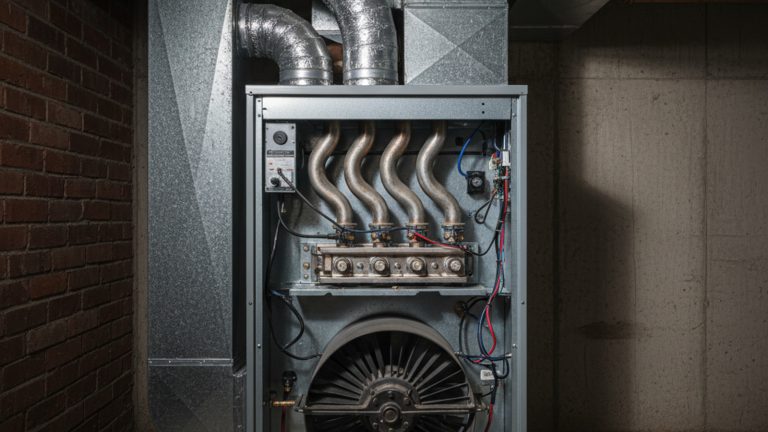
Central air is a delivery network. The system cools air in one place, then pushes it through ducts to every room. When the duct design is solid, it feels effortless. When it isn’t, you end up chasing hot spots, weak rooms, and uneven airflow.
That’s the real split. Ductless is room-first. Central air is system-first.
Efficiency: What the Sticker Doesn’t Tell You
Ductless has a built-in advantage: it doesn’t rely on ductwork. In real homes, ducts can leak, sag, pinch down, or run through hot attics and cold basements. Even small problems add up. You can have a high-efficiency central system on paper and still feel underwhelmed in practice if the ducts aren’t doing their job.
Ductless also tends to handle “part-load” better. Many mini-splits ramp up and down smoothly instead of cycling hard on and off. Central systems can do this too in many cases, but ductless still benefits from simpler delivery and zoning.
The biggest efficiency win isn’t a spec sheet. It’s this: ductless lets you stop conditioning rooms you aren’t using.
What Central Air Really Costs Without Ducts
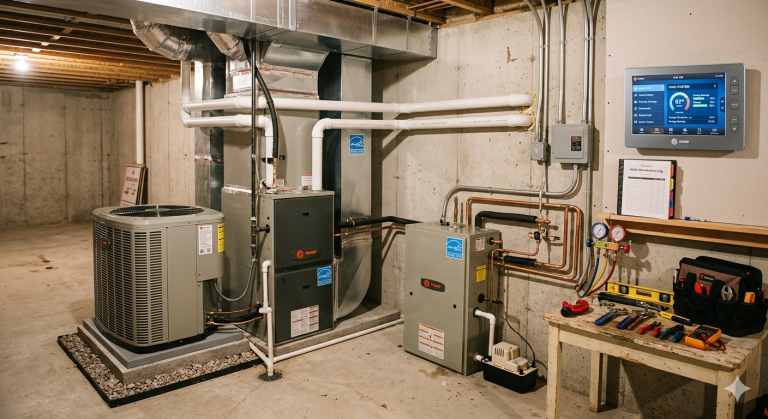
If your home already has ducts in decent shape, central air can be a clean, straightforward upgrade. If you don’t, it’s rarely “just add AC.” It’s “build the infrastructure first.”
In Worcester and much of Central MA, plenty of homes are boiler/baseboard with no ductwork. In those houses, ductwork retrofits are where budgets and timelines get real.
Here’s what that work often involves (and why it gets expensive fast):
- Opening walls and ceilings to run supply and return pathways
- Building chases or soffits to hide ducts
- Sealing, insulating, then repairing and repainting finishes
That disruption is the reason ductless is so common as a retrofit. You get comfort without turning the home into a construction zone.
How Ductless Installation Compares
Ductless installation is usually targeted. A small wall penetration, a line set run, and an indoor head mounted where it can actually throw air. A single-zone install can often be completed quickly with minimal disruption.
Multi-zone systems take more planning. You’re balancing head placement, line routing, and how air moves through doorways and open areas. The work is still lighter than installing full ductwork in most older homes, but design matters. Too many heads placed poorly can feel clunky. Too few heads can leave dead spots.
The Quotes Can Be Misleading
A central air quote may look cheaper because it assumes the ductwork is already there, or because duct upgrades aren’t included. A ductless quote usually bundles most of what you need because it doesn’t depend on hidden infrastructure.
The better question isn’t “which quote is lower?” It’s “what work is required to make this system perform well in this specific house?”
Long-Term Costs and Maintenance
Ductless often saves money when you use zoning the way it’s meant to be used. If you’re the type who cools the bedroom at night, leaves the guest room alone, and keeps the living space comfortable only when you’re home, ductless tends to fit your habits.
Central air can be very cost-effective too, especially when the ducts are tight and the layout is simple. It’s the “set it and forget it” option for many homeowners.
Maintenance is different, not necessarily harder.
Ductless asks for smaller, more frequent care. Each indoor head has a filter that needs cleaning. If you ignore it, performance drops.
Central air asks for fewer touchpoints. One main filter, plus the usual seasonal service. The duct system itself should be kept in good shape, but it’s not automatically something that needs constant intervention.
If you want a short, high-impact upkeep list, this is it:
- Keep filters clean (ductless heads or the central return filter
- Keep supply/return airflow unobstructed
- Keep outdoor units clear of leaves, weeds, and snow buildup
Comfort and Control: What It Feels Like Day to Day
Central air is built for uniformity. Air comes from multiple vents, spread across rooms, so the airflow often feels softer. When it’s designed well, you don’t think about it. The house just feels consistently cool.
Ductless is built for control. Each zone has its own setpoint. That’s a huge win in real homes where one bedroom runs hot, an upstairs office bakes in afternoon sun, or someone in the house likes it colder than everyone else.
The tradeoff is visibility and airflow style. Ductless heads are in the room, and the air comes from a single point. Many people don’t care. Some people do.
Air Quality and Aesthetics
Central air filters all recirculated air through one main filter. You can upgrade filtration, but you still need good airflow to avoid stressing the system.
Ductless filters are smaller and located in each indoor head. They catch dust well, but they need attention more often because there are multiple filters, not one.
Neither system brings in fresh outdoor air by itself. If your home needs ventilation, that’s a separate design decision (ERV/HRV).
On looks, central air wins if you want “invisible comfort.” Ductless wins if you want comfort without opening walls for ductwork and you’re fine seeing the indoor units.
How to Decide in a Real House
If you’re stuck, start here:
- If the home already has good ducts, central air is usually the simplest path.
- If the home has no ducts (common with boiler/baseboard), ductless is usually the practical path.
- If you only need to fix one problem area (a finished attic, a sunroom, a hot bedroom), a single-zone ductless system can be the cleanest solution.
The best installs come from a real load calculation and a real walk-through. Rules of thumb are how you end up with short-cycling, noisy airflow, and rooms that never feel right.
FAQ
Is ductless or central air better for an older home in Central Massachusetts?
If your home doesn’t already have ducts (common in Worcester-area boiler/baseboard homes), ductless mini-splits are often the cleaner retrofit. Central air can still work, but adding ductwork can turn it into a major renovation.
Does ductless cool as evenly as central air?
Central air often feels more uniform because air is delivered through multiple vents across rooms. Ductless can feel just as comfortable, but it’s zoned. If doors stay closed and zones are set differently, you’ll notice more room-to-room variation.
Is ductless always more efficient than central air?
Not always, but it often has an edge in real homes because it avoids duct losses and lets you condition only the rooms you’re using. A well-designed central system with tight ducts can also be very efficient.
What if my home already has ducts?
If ductwork is in good shape, central air can be cost-effective and clean-looking. Just make sure the ducts are properly sized and sealed. Leaky or undersized ducts can hurt comfort and efficiency no matter how good the equipment is.
Can ductless systems handle a whole house?
Yes. Multi-zone ductless can condition many rooms or an entire home. The key is design: correct sizing, smart placement, and realistic expectations about airflow between rooms.
What’s the downside of ductless mini-splits?
You’ll see the indoor units, and you’ll have multiple filters to clean instead of one. Some homeowners also prefer the feel of air delivered from multiple vents rather than a single head in a room.
Do ductless systems help with heating too?
Most ductless systems are heat pumps, so they heat and cool. In Central MA, many homeowners use them for efficient heat through much of the season, sometimes alongside an existing boiler or furnace for the coldest stretches.
Closing
Ductless vs central air isn’t really a debate about technology. It’s a decision about layout, infrastructure, and how you live in the space. If you want clear options based on real measurements, Centerline Mechanical can evaluate your home, run a Manual J calculation, and give you straightforward estimates so you can choose with confidence.