
Worcester County, MA has a 47-degree average seasonal temperature swing, and your HVAC system has to earn its keep on both ends. Winters here average 57 inches of snowfall with January temperatures hovering around 23 degrees. Summers bring humid afternoons that push the heat index well past the thermometer reading. When planning a new HVAC system installation, you need equipment that can handle a hard freeze and still pull moisture out of the air in July.
The choice between ductless mini-splits and traditional central air isn’t really about preference – it’s about what your house will actually accommodate. About 59% of the county’s homes were built before 1960, most of them designed around radiant heat rather than ductwork. That single fact shapes almost every conversation I have with buyers about HVAC. Installation costs, operating efficiency, and how the equipment fits into your floor plan all matter, but they start with what’s already inside your walls.
How Ductless Mini-Split Systems Work
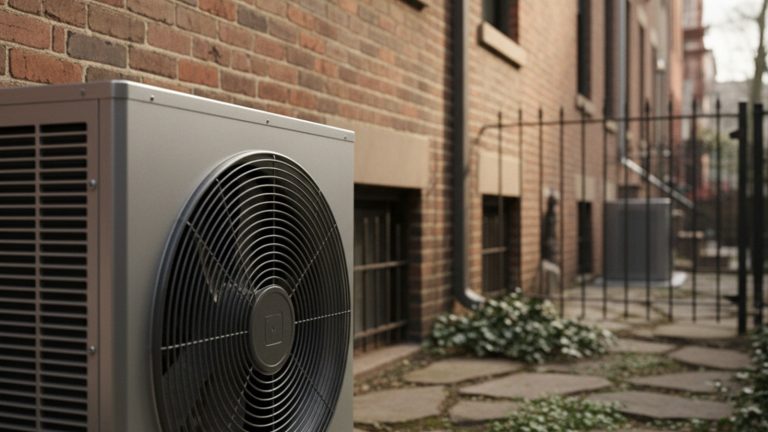
Ductless mini-splits let you add zoned climate control without tearing the house apart to get there. That matters enormously in neighborhoods like Main South and Tatnuck, where a lot of the housing stock runs on radiators and has never seen a supply vent. A ductless setup sidesteps ductwork entirely – small refrigerant lines connect an outdoor condenser to individual indoor air handlers mounted directly in the rooms you want to condition.
Because there’s no duct system to leak, these units operate efficiently by design. You control the temperature in each zone independently, which means an empty bedroom on a Tuesday afternoon doesn’t have to be cooled to the same degree as the room you’re sitting in.
The Mechanics of Ductless Cooling
A ductless system moves heat rather than generating it. On a Worcester County summer afternoon, the indoor evaporator coil pulls heat out of the room and transfers it outside. Come winter, the process runs in reverse – the system draws ambient heat from the outdoor air and brings it inside.
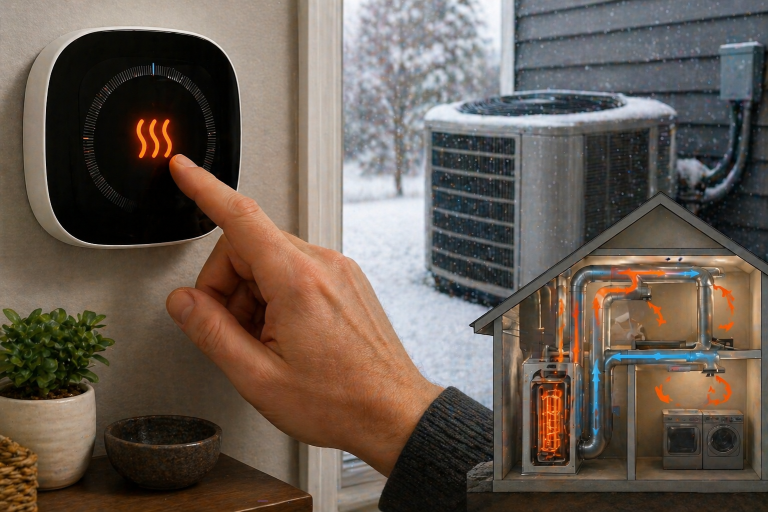
Advanced cold-climate heat pumps stay efficient even below freezing. They run continuously at lower speeds to hold a steady temperature, which is a fundamentally different approach than the blast-and-cycle pattern of older furnaces.
Pros and Cons of Going Ductless
The real advantage here is retrofit practicality. You can bring modern climate control into a 100-year-old house without touching the plaster walls or the original trim. Multi-level homes also benefit from the zone control – the top floor of a triple-decker runs hotter than the first, and individual units let you compensate for that without overcooling the rest of the building.
The trade-off is visibility. The indoor air handlers are wall-mounted boxes, and not every buyer loves the look of them. You’ll also need to clean the filters on each unit on a regular basis to keep the system performing the way it should.
Traditional Central Air Conditioning
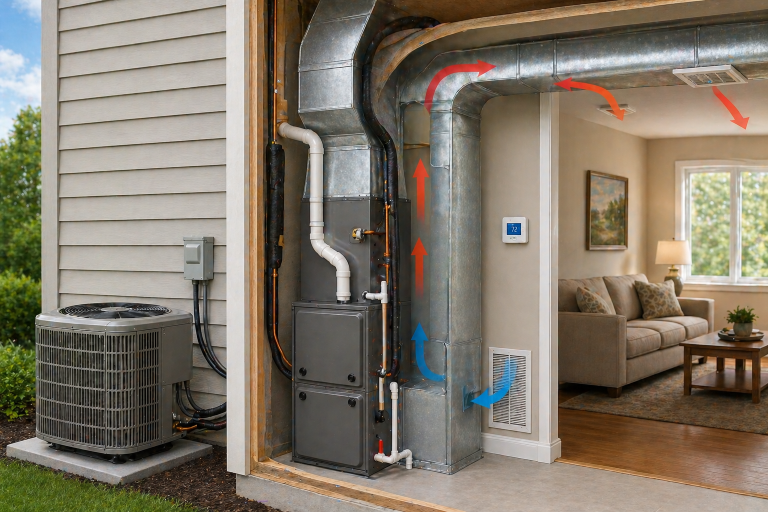
Central air is still the standard expectation in newer construction, and for a house that already has ductwork it’s a straightforward upgrade. Worcester County averages summer temperatures around 68 to 70 degrees, with about eight days a year pushing past 90. A central system handles those spikes by pushing cooled, dehumidified air through a duct network to every room at once, all regulated from a single thermostat.
If your house has a forced-air furnace, you already have most of what you need. Adding an outdoor condenser is a relatively clean process. The result is a uniform temperature from the basement to the bedrooms – and equipment that stays almost entirely out of sight.
How Central Systems Cool Your Home
The system pairs a large outdoor compressor and condenser coil with an indoor evaporator coil, typically attached to the furnace. Warm air gets pulled through return vents, cooled across the evaporator coil, and pushed back through supply vents throughout the house.
Dehumidification happens as part of that process – moisture condenses on the coil and drains away. That’s what makes the house feel genuinely comfortable on the kind of sticky Central Massachusetts afternoon that a thermometer undersells.
Benefits and Drawbacks of Central Air
Inside the house, central air is essentially invisible. Floor or ceiling registers are the only evidence of it. It handles large, open floor plans well and doesn’t require you to think about zone management – the thermostat does one job and the whole house responds.
The hard constraint is ductwork. If it isn’t there, you have to build it, which means opening walls, lowering ceilings, and giving up closet space. That’s not a small project, and it shows up in both the timeline and the price.
Installation Costs and Utility Bills
Worcester County residents pay some of the highest electricity rates in Massachusetts – 27 to 39 cents per kilowatt-hour, ranking the county second most expensive in the state. Average monthly residential electric bills run between $150 and $332. The system you put in will move your number up or down within that range, so the efficiency math actually matters here.
Upfront costs vary considerably depending on the system type and what infrastructure your home already has. Massachusetts does offer real financial relief through the Mass Save program: up to $10,000 in instant rebates for qualifying cold-climate heat pumps, a $150 to $250 rebate for high-efficiency central air conditioners, and 0% HEAT Loans up to $25,000. Those numbers change the out-of-pocket conversation significantly, especially for heat pumps.
Upfront Price Tags for Each System
A ductless mini-split installation in Worcester averages around $3,860. Single-zone systems start between $1,500 and $3,500. A multi-zone or whole-home ductless heat pump system generally runs $5,000 to $16,000, with statewide averages for full-home ductless installations landing between roughly $4,500 and $15,000.
Central air conditioning in Worcester typically ranges from $3,500 to $10,000 for standard systems, with a statewide average around $6,600. High-efficiency units with a 16+ SEER rating can push that to $10,000 or more on their own. Add brand-new ductwork to a home that doesn’t have it, and the total project cost can easily exceed $19,800.
Long-Term Energy Usage
Ductless systems tend to use less electricity because there’s no duct system losing conditioned air before it reaches the room. Turning off zones in spaces you’re not using keeps consumption down – and in a county where electricity runs 27 to 39 cents per kilowatt-hour, that adds up.
Central air cools the entire house at once, which draws more power if you’re only occupying part of it. That said, a modern central unit with a high SEER2 rating will still beat what most older window units were burning through, so an upgrade is an upgrade either way.
Choosing a System Based on Your House Style
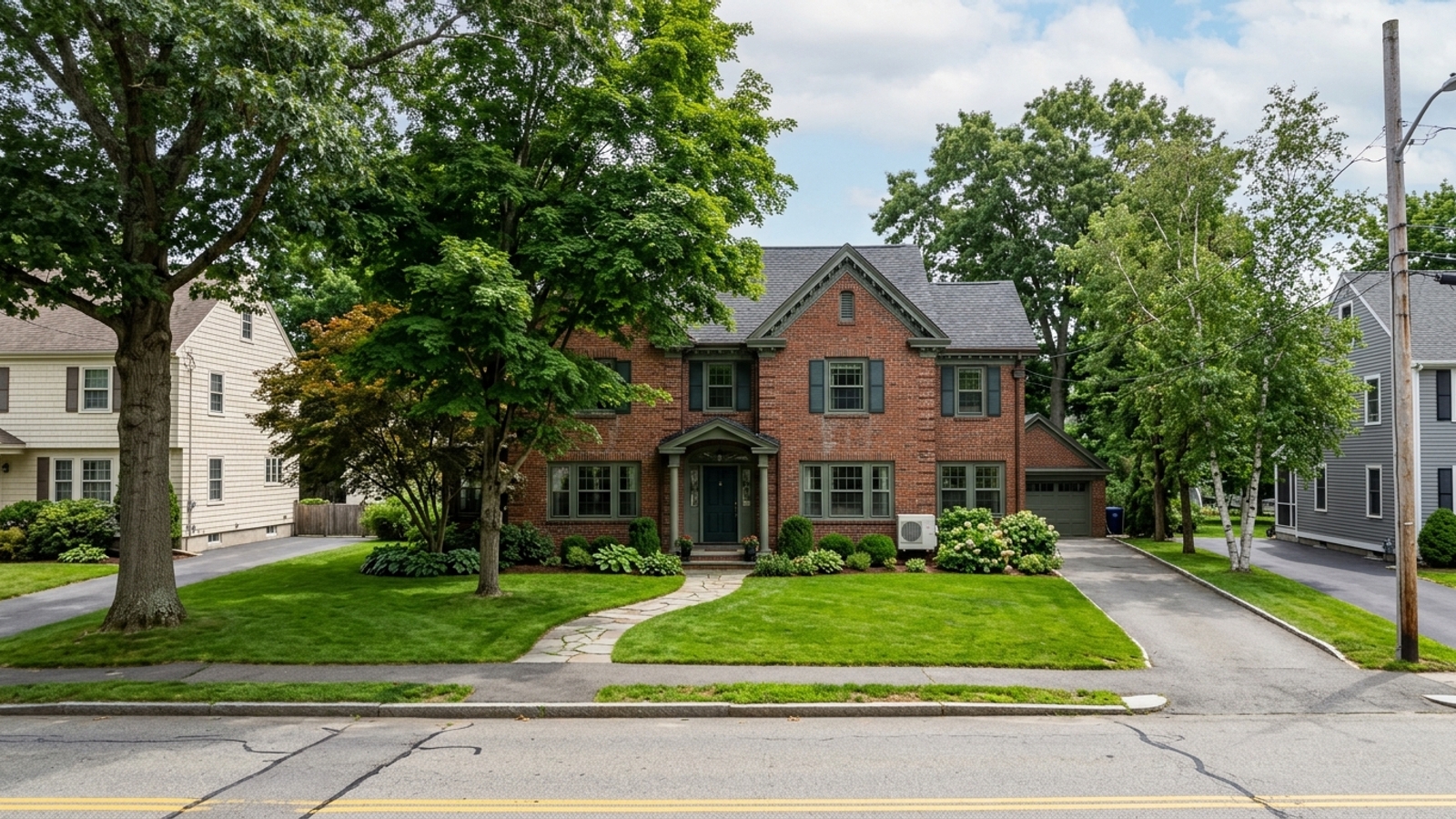
Worcester’s housing stock runs the full spectrum – triple-deckers, Colonial Revivals, Victorian-era Queen Annes, brick Cape-style homes, and newer suburban builds with open floor plans. The older styles dominate many neighborhoods, and they were built long before central cooling was a consideration. Your floor plan and your walls will tell you more about the right system than any preference chart will.
Modern homes in the suburbs typically come with ductwork already in place, which changes the equation entirely. The goal in either case is matching the system to what the house can actually accept without unnecessary structural surgery.
Retrofitting Older Properties
If you’re dealing with a Victorian or a triple-decker on original radiant heat, ductless is almost always the practical answer. Running central ducts through those structures means cutting into plaster walls and potentially compromising historic details that can’t easily be put back.
A mini-split installation requires a small hole through the exterior wall to connect the indoor and outdoor units. That’s it. The house keeps its character; you get modern climate control.
New Construction and Open Layouts
Homes built in the last few decades typically already have forced-air heating, which means central air is a natural and relatively simple addition. The existing ductwork is already sized for the floor plan.
Central air is well suited to these open layouts – it holds a consistent temperature across large connected spaces in a way that a single-zone ductless unit can’t replicate. Buyers shopping newer properties generally expect a central thermostat and registers they don’t have to look at.
Frequently Asked Questions
Does installing central air add more resale value to a Worcester County home than a ductless mini-split system?
It depends on the property type. In newer homes with existing forced-air heating, buyers generally expect central air, and lacking it can hurt resale value. In historic Worcester homes like Victorians or older triple-deckers, buyers value the addition of ductless mini-splits because they provide modern cooling without destroying original architectural details.
If I’m buying a historic home in Worcester County without existing ductwork, is central air even a realistic option?
Yes, but it’s expensive and invasive. Adding central air to a home without ducts requires opening walls, lowering ceilings, and sacrificing closet space to run the vents, which can push the project cost well past $19,800.
Can ductless heat pumps handle the severe Central Massachusetts winter cold, or do buyers expect a backup heating system?
Modern cold-climate heat pumps are rated to operate in temperatures as low as negative 13 degrees Fahrenheit. Since Worcester County winters average around 24 to 26 degrees, these systems can handle the climate, though some homeowners keep their original radiant heat as a backup for extreme freezes.
How do Mass Save rebates affect the out-of-pocket cost when choosing between ductless and central air?
Mass Save heavily favors heat pumps, offering up to $10,000 in instant rebates for qualifying cold-climate ducted or ductless heat pumps. In contrast, high-efficiency central air conditioners max out at a $150 to $250 rebate, making heat pumps much more cost-competitive upfront.
How much longer does the installation timeline take to retrofit an older New England home with central AC versus ductless units?
Retrofitting central air with new ductwork can take several weeks of construction, plastering, and painting. A ductless mini-split system can typically be installed in a single day or a few days, as it only requires running small refrigerant lines through exterior walls.
Are homebuyers in the Worcester area generally turned off by the aesthetics of wall-mounted ductless units compared to hidden central air?
It depends on the buyer and the home. While some buyers prefer the hidden vents of central air, many in Worcester accept wall-mounted units as a standard upgrade for older homes like brick Capes and Colonials where adding ductwork is impractical.