
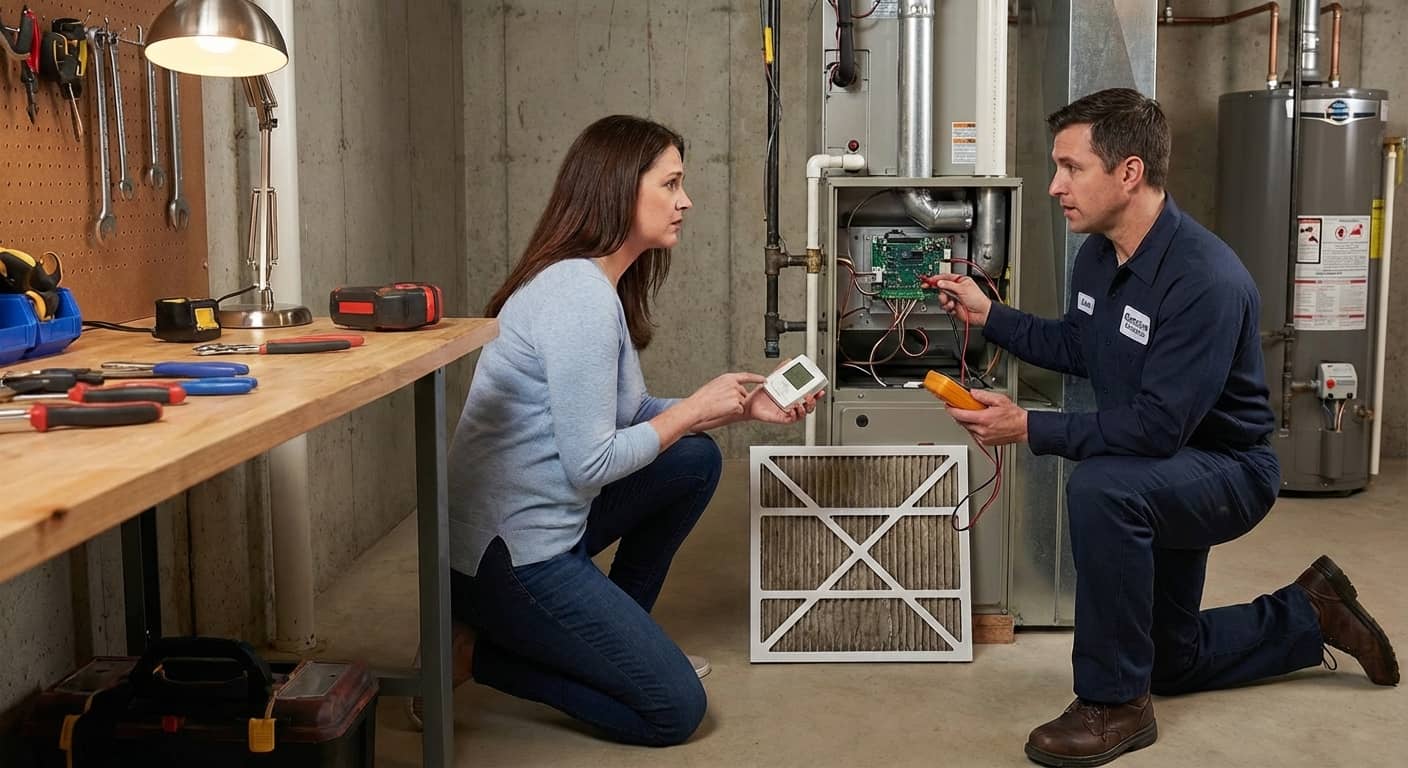
If your furnace is running but no heat is coming from the vents, it usually means the blower is moving air while the heating side never fully started, or it started and got shut down by a safety control.
Most of the time, the cause is simple: restricted airflow, an ignition problem, or a safety switch preventing the furnace from firing. Start with the quick checks below. If you hit any warning signs (gas smell, CO alarm, repeated lockouts), stop and call a technician.
Key Takeaways
- A clogged air filter is the most common culprit. It can overheat the furnace and trip the high-limit switch.
- Ignition problems (dirty flame sensor, failing ignitor) can stop burners from staying lit.
- If a limit or rollout switch keeps tripping, it can signal a serious safety issue that needs fast service.
Start With the Thermostat
This feels too simple, but it causes more “no heat” calls than people expect.
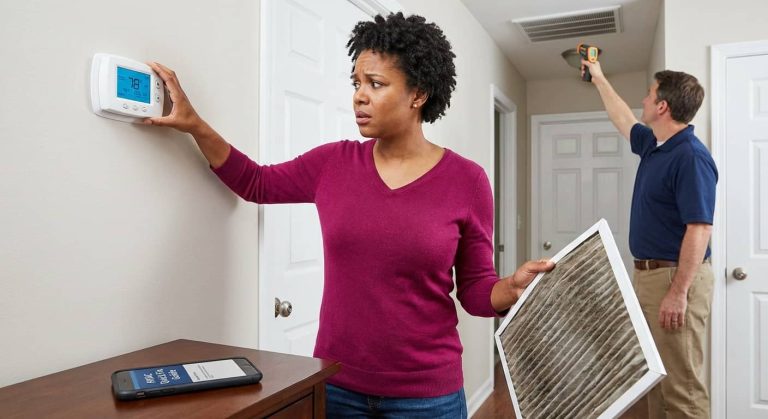
Check the thermostat screen first. If it’s blank, replace the batteries and try again. Then confirm the system is set to Heat.
Now check the fan setting. If it’s set to On, the blower will run constantly even when there’s no heat. That can feel like the furnace is “running,” even though the burners are off. Switch it to Auto so the fan runs only during a heating cycle.
After you change the setting, give it a minute. Listen for the furnace to start its sequence.
A Dirty Filter Can Make the Furnace Run With No Heat
A lot of “furnace running but no heat” situations start with the air filter.
When airflow drops, the heat exchanger heats up too fast. The high-limit switch senses the temperature rising and shuts off the burners to protect the system. The blower often keeps running to cool the unit down, so you feel airflow but no warmth. That’s the furnace protecting itself.
How to check the filter
Turn the furnace off at the thermostat (or the furnace switch). Pull the filter and hold it up to a light. If you can barely see light through it, replace it.
Once the new filter is in, turn the system back on and let it run a cycle or two. Many furnaces recover immediately once airflow is restored.
How often to change it
Most homes do well with a 1-inch pleated filter every 60–90 days. If you have pets, allergies, or renovation dust, lean toward every 30–60 days.
When the Ignition Sequence Fails
If the thermostat is set correctly and airflow is fine, the next most common issue is ignition.
Modern furnaces follow a start sequence. If one step fails, the control board shuts things down for safety. The result is confusing: you hear activity, but you never get stable heat.
Hot surface ignitor: when it won’t glow
The ignitor is the part that glows orange to light the gas. Over time it can crack or burn out.
If it never glows, the furnace may try to start, pause, then shut down. Replacement is usually straightforward for a technician, but the part is fragile and requires opening the burner compartment.
Flame sensor: dirty, not dead
The flame sensor is a thin metal rod that “proves” flame. If the control board doesn’t detect flame, it shuts the gas off within seconds.
A classic symptom is: burners light for a few seconds, then shut off, while the blower keeps running.
Cleaning the flame sensor can fix this, but many homeowners prefer a pro since it requires opening the burner compartment.
Don’t Skip the Gas Supply Basics
Before assuming a bigger failure, check the gas shutoff valve to the furnace.
The handle should be parallel to the pipe when it’s on. If it’s perpendicular, gas is off. If you have propane, check the tank gauge too.
Never force a valve. If you smell strong gas, stop and leave the area.
Safety Switches Are Doing Their Job
Furnaces have multiple safety controls designed to prevent unsafe operation.
- The high-limit switch trips on overheating (often airflow-related).
- The pressure switch prevents ignition if venting/draft isn’t correct.
- The rollout switch trips if flames are not staying where they belong.
You may see a reset button on some switches. Pressing it once might restore heat, but if it trips again, don’t keep resetting it. That’s the furnace telling you something is wrong.
The Silent Danger: A Cracked Heat Exchanger
The heat exchanger keeps combustion gases separated from the air you breathe. If it cracks, carbon monoxide can enter the home.
If you suspect a cracked heat exchanger, turn the furnace off and don’t run it again until it’s inspected. This is not a DIY situation.
Common warning signs include repeated rollout trips, unusual flame behavior, soot/scorching near the burner area, or CO alarms.
When to Call a Professional
Some symptoms aren’t “try one more thing” moments. They’re stop-and-call moments.
Call immediately if you notice:
- Gas odor (rotten egg smell)
- Carbon monoxide alarm activation
- Loud bang at ignition (possible delayed ignition)
- Yellow, unstable, or rolling flames
- Repeated lockouts or safety trips
If you’ve done the basics (thermostat, filter, gas valve position) and the furnace still won’t heat, it’s time for a technician to diagnose safely.
FAQ
Why is my furnace running but blowing cold air?
Most often, the blower is running while the burners aren’t staying on. Common causes are the thermostat fan set to On, a dirty filter tripping the high-limit switch, or an ignition issue that shuts the gas off for safety.
Can a dirty air filter really cause “no heat” even though the furnace is running?
Yes. Restricted airflow can overheat the heat exchanger. The furnace shuts the burners off but keeps the blower running to cool itself down.
What does it mean if the burners light, then shut off after a few seconds?
That’s commonly a flame-sensing problem. A dirty flame sensor is a frequent cause, and it can make the furnace shut the gas off quickly even though ignition started normally.
What if I hear the furnace start up but never see it light?
That can point to an ignitor issue, a gas supply problem, or a safety switch preventing ignition (venting/draft issues). If you’re not sure, it’s a good time to call for service.
Is it safe to keep running a furnace that blows cold air?
Not if it keeps happening. Repeated shutdowns can indicate overheating, venting problems, ignition failures, or a more serious safety issue. If a clean filter and correct thermostat settings don’t fix it, schedule service.
When should I call a professional immediately?
Right away if you smell gas, a CO alarm goes off, you see yellow/erratic flames, you hear a loud bang at ignition, or the furnace keeps tripping safety switches.
Getting Your Warmth Back
A furnace blowing cold air is usually a safety shutdown, not a random failure. Start with the thermostat, then airflow, then ignition basics. If the warning signs show up, stop troubleshooting.
That’s when calling Centerline Mechanical makes sense. Their technicians can diagnose the issue safely and get steady, reliable heat back fast.