
Choosing between a heat pump and a furnace isn’t just a purchase. It’s a quiet wager on the weather and a long look at future utility bills. One system moves heat. The other creates it.
Get it right and you may not think about it again for twenty years. Get it wrong and you’ll feel it every winter. So let’s set aside the sales language and look at what these systems actually do.
Key Takeaways
- Heat pumps move heat efficiently; furnaces create heat by burning fuel.
- In Central Massachusetts, the “best” choice depends on your balance point, electricity rate, and how well your home holds heat.
- For many Worcester-area homes, a dual-fuel (hybrid) system is the most practical middle ground.
The Core Difference: Making Heat vs Moving It
A furnace makes heat. It burns fuel (natural gas, propane, or oil) to heat a metal heat exchanger, then pushes warmed air through your ductwork. When you want fast, high-temperature air, furnaces excel.
Furnace efficiency is usually described by AFUE (Annual Fuel Utilization Efficiency). A 95% AFUE furnace converts about 95% of the fuel it burns into usable heat.
A heat pump moves heat instead of creating it. Using electricity and a refrigerant cycle, it pulls heat from outdoor air and moves it indoors. In summer, the cycle reverses and it cools your home like an air conditioner.
Heat pump efficiency is often described by COP (Coefficient of Performance). In plain terms: “how much heat you get per unit of electricity,” and that number changes with outdoor temperature.
What the Hardware Tells You
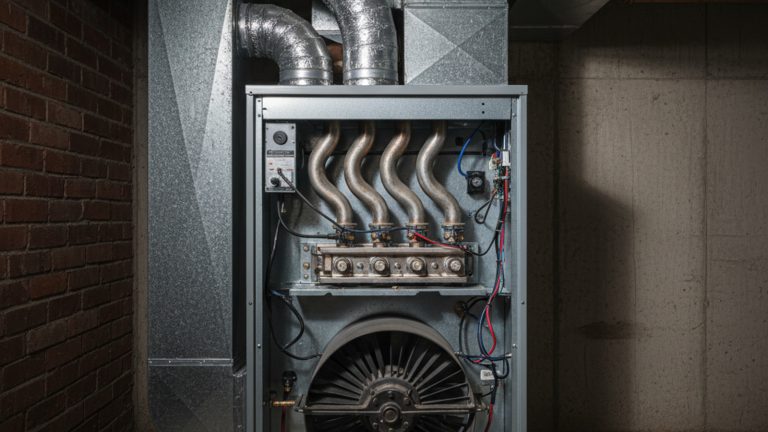
A furnace is basically a controlled fire in a metal box. It needs a fuel supply, burners/combustion chamber, and a flue to vent exhaust gases. That’s why venting, combustion safety, and maintenance matter.
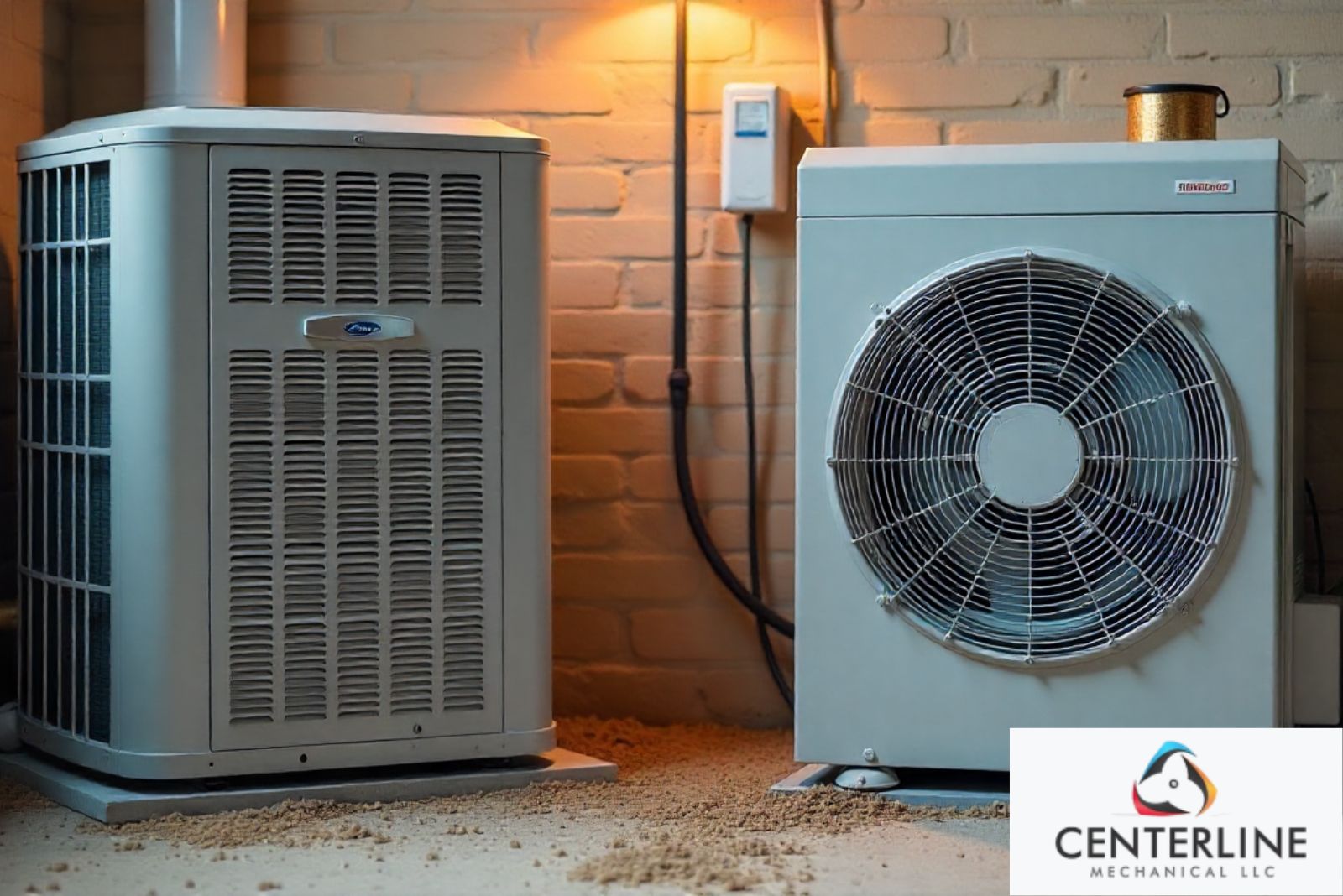
A heat pump is a transport system. It relies on a sealed refrigerant loop, an outdoor compressor, and a reversing valve that lets it heat or cool. It’s not burning fuel inside your home.
A few practical details that matter in real houses:
- Furnaces use a blower motor to move air. A dirty filter or restricted ducts can cause overheating and shutdowns.
- Heat pumps often include backup heat for the coldest stretches (either electric strips or a dual-fuel furnace).
- Ductwork matters for both, but heat pumps are especially sensitive to airflow and duct sizing because they often run longer at lower supply-air temperatures.
Climate: The Deciding Factor in Worcester and Central Massachusetts
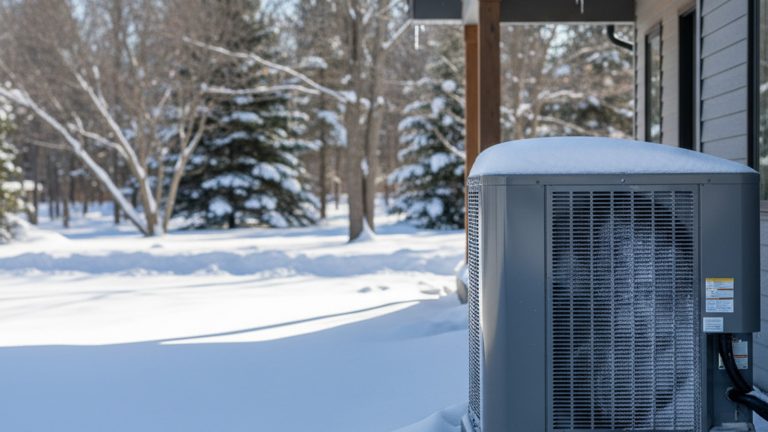
In Worcester and much of Central Massachusetts, the question isn’t whether a heat pump can run below freezing. It can. The real question is where your home’s balance point lands.
Your balance point is the outdoor temperature where the heat pump’s output (and cost per BTU) stops keeping up with your home’s heat loss. Below that point, backup heat becomes more important for comfort and cost control.
This is why equipment selection and home performance matter as much as the brand name. In Central MA, look for ENERGY STAR® Cold Climate heat pumps (often aligned with NEEP cold-climate performance criteria), not older “warm-climate” designs.
A furnace doesn’t react the same way to falling outdoor temperatures. Whether it’s just below freezing or you’re in a deep cold snap, it burns fuel and produces heat. That consistency is why furnaces remain popular in colder climates, with the trade-off being higher fuel use during long winters.
Costs: What You Pay Now vs What You Pay Later
Installed pricing varies by home, access, ductwork, and electrical needs. But the pattern is consistent: furnaces are often cheaper upfront, while heat pumps can win on operating costs in the right setup.
| Cost & Performance Factor | Heat Pump | Furnace (gas/propane/oil) |
| Typical upfront cost | Higher (equipment + outdoor unit + possible electrical work) | Lower (especially like-for-like replacements) |
| Primary energy source | Electricity | Gas / propane / oil |
| Key efficiency metric | COP / HSPF2 | AFUE |
| Best fit | Mild-to-moderate winters, strong home envelope, zoning needs | Long cold stretches, inexpensive fuel, high heat demand |
| Typical lifespan | Often shorter due to year-round duty | Often longer (seasonal duty) |
Where the math really changes is your local energy pricing. You’re comparing the cost of a kWh to the cost of a therm/gallon, and then translating that into “delivered heat” in your house.
In Massachusetts, electricity rates can be high, which makes the details matter. A cold-climate heat pump in a well-sealed house may still be a great move, but you want the system sized and configured around how your home actually behaves in winter.
The Hybrid Option: Dual-Fuel Systems
For many Worcester-area homes, the answer isn’t one system or the other. It’s both.
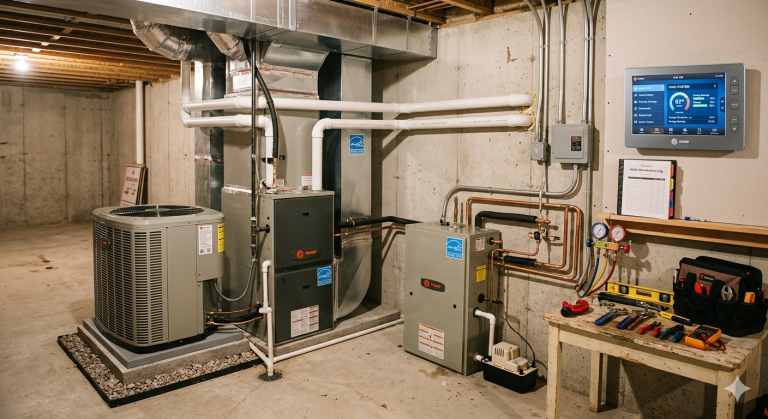
A dual-fuel system pairs a heat pump with a gas furnace. The heat pump runs during mild and moderate weather, then the furnace takes over when temperatures drop low enough that gas becomes the better value or comfort choice.
Why people like dual-fuel:
- Efficient electric heat for much of the season
- Strong, dependable heat during extreme cold
- Automatic switching managed by a smart thermostat
It costs more upfront and adds complexity, but it’s a practical solution for unpredictable New England winters.
Installation and Home Readiness
Even the best equipment won’t perform well if it’s installed poorly. Oversized systems short-cycle and waste energy; undersized systems run nonstop and still feel behind.
A qualified contractor should perform a Manual J load calculation based on insulation, windows, layout, and air leakage. That’s how you avoid guessing.
Your house matters as much as your equipment. Air sealing and insulation improvements can reduce the size of system you need, lower operating costs, and improve comfort no matter what you install. An energy audit can point out the highest-impact fixes.
Comfort, Noise, and Everyday Living
Furnaces often feel “hotter” because they deliver higher-temperature supply air. Heat pumps tend to run longer with lower-temperature air, which many people experience as steadier and more even.
Noise is also different. Furnaces are often quieter indoors because the loudest action is usually contained in a basement or utility area. Heat pumps add an outdoor unit that runs in both summer and winter, including occasional defrost cycles.
If you care about how the house feels, not just what the bill says, this is where you decide. Comfort is a mix of temperature, airflow, humidity, and how stable the system is across the coldest weeks.
A Simple Way to Decide
Start local. Pull up your past utility bills. What do you pay for electricity, and what do you pay for gas, propane, or oil?
Then answer these:
- What’s my current heat source (gas, oil, propane, electric resistance)?
- How well does my home hold heat (drafty vs tight, insulation quality, older windows)?
- Do I need cooling too, or just heat?
- Do I want room-by-room control, or one thermostat for the whole house?
- What matters most: lowest bills, lowest emissions, or maximum cold-snap reliability?
A quick gut-check:
- If you have no gas and want one system year-round, a cold-climate heat pump is often the cleanest path.
- If you have inexpensive gas and want the hottest, most consistent heat in cold snaps, a high-efficiency furnace still makes sense.
- If you want efficiency most days but a safety net for the coldest nights, dual-fuel is hard to beat.
FAQs
What is the main difference between a heat pump and a furnace?
A heat pump moves heat from outside to inside your home. A furnace creates heat by burning fuel. Moving heat can be more efficient, especially in mild-to-moderate winter conditions.
Which system costs less upfront?
Furnaces typically cost less to buy and install, especially when you’re replacing an existing furnace. Heat pumps often cost more upfront because they include outdoor equipment and sometimes require electrical upgrades.
Which works better in very cold weather?
Furnaces are consistent in deep cold. Heat pumps can still operate in low temperatures, but output and efficiency drop as it gets colder, which is why many systems use backup heat or dual-fuel.
Can a heat pump cool my home too?
Yes. In summer, a heat pump works like an air conditioner by moving heat out of your home. One system can handle both heating and cooling.
What is a dual-fuel or hybrid system?
It’s a system that combines a heat pump and a furnace. The heat pump runs when it’s efficient, and the furnace takes over during colder conditions. A thermostat manages the switching automatically.
Which system saves more money over time?
It depends on climate, insulation, and energy prices. Heat pumps often win when you’re replacing electric resistance heat or when your home is tight and well-insulated. Furnaces can be cheaper to run when gas is inexpensive and winters are long.
Are heat pumps better for the environment?
In many cases, yes. They don’t burn fuel on-site, and emissions can be lower depending on the electricity mix and the system’s efficiency.
How important is installation quality?
Very important. Poor sizing, duct issues, and airflow problems can erase efficiency gains and reduce comfort for both furnaces and heat pumps.
The Final Word on Comfort
There’s no universally “best” system, only the one that fits your climate, budget, and priorities. Furnaces are dependable workhorses in persistent cold. Heat pumps offer efficient, flexible comfort and align with the broader shift toward electrification.
If you want clarity instead of guesswork, Centerline Mechanical can review your utility history and your home’s layout to compare real costs for heat pumps, furnaces, and hybrid options. A personalized analysis makes the decision easier and more confident.