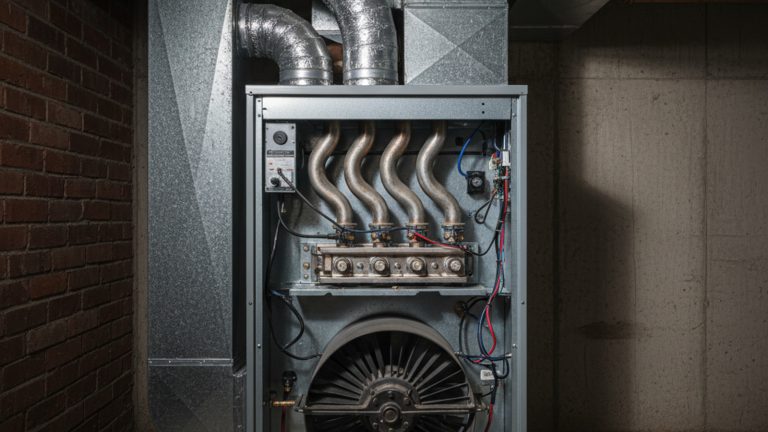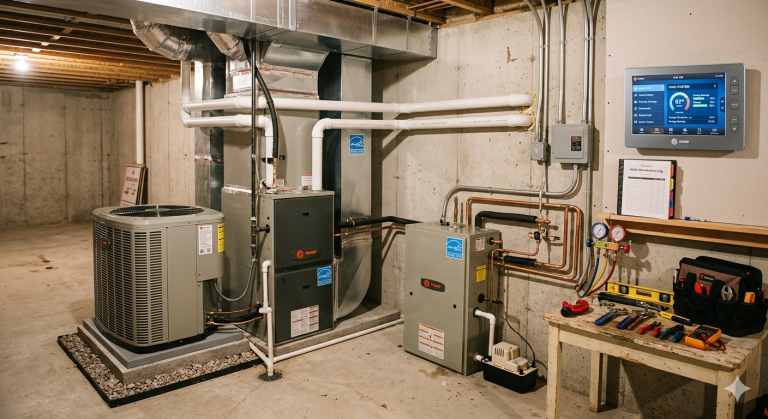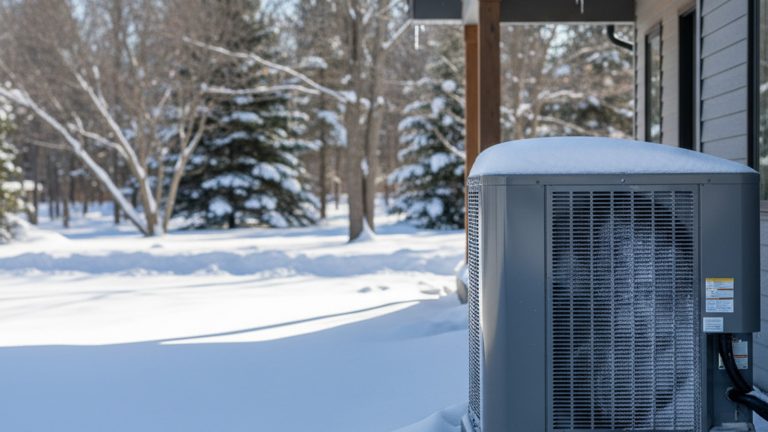

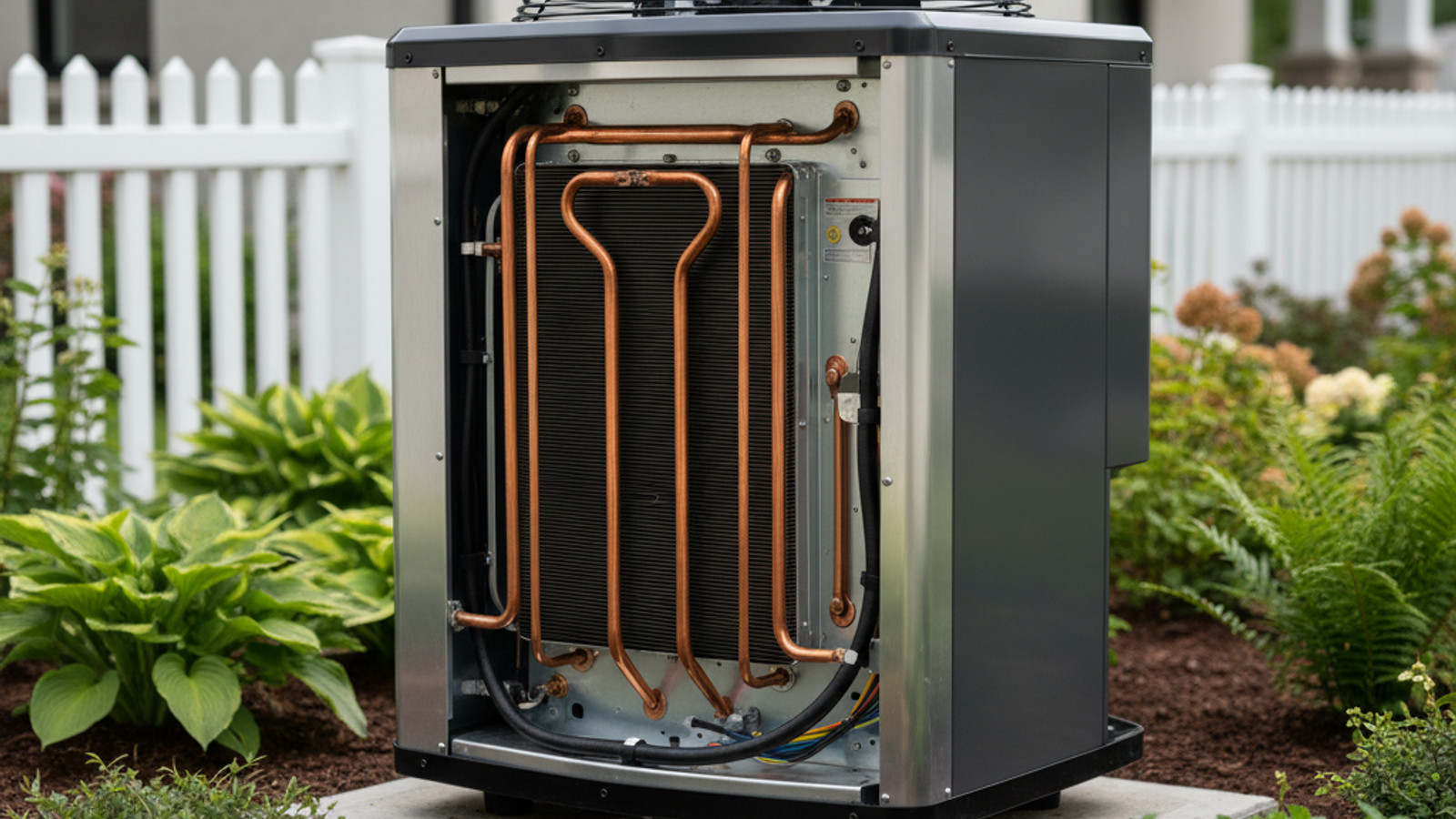
A heat pump is a high-efficiency HVAC system that heats and cools your home by transferring heat rather than generating it. Using electricity and refrigerant, it pulls heat from the air (even in cold weather), concentrates it, and moves it indoors, or reverses the process to cool your home in summer. This transfer-based approach dramatically reduces energy consumption compared to traditional systems like furnaces or baseboard heat.
With one system handling both heating and cooling, homeowners benefit from lower utility costs, a smaller mechanical footprint, and a more environmentally efficient way to maintain year-round comfort.
How Does a Residential Heat Pump Work Step by Step?
Let’s break down exactly what happens inside the unit when you adjust your thermostat. The system relies on a continuous refrigeration cycle to move heat energy from one environment to another. It does this by shifting a special chemical called refrigerant back and forth between a liquid and a gas.
First, the evaporator absorbs heat from the surrounding air. Even when it feels chilly outside, the liquid refrigerant inside the outdoor coil absorbs whatever heat energy is present. As it soaks up this warmth, the liquid turns into a low-pressure gas.
Next, that gas travels through copper lines to the compressor. The compressor squeezes the gas, which drastically raises its pressure and temperature. This step is crucial because it turns the warm gas into a very hot vapor that is ready to warm your house.
From there, the hot gas moves to the condenser coil inside your home. As your blower fan pushes indoor air across this hot coil, the heat is released into your rooms through your vents. As it loses heat, the refrigerant cools back down into a liquid. Finally, this liquid passes through an expansion valve that drops its pressure, sending it back outside to restart the entire cycle.
Heating and Cooling: The Dual Functionality of Heat Pumps
The most brilliant part about a heat pump system is that you get a heating and cooling system rolled into one piece of equipment. You do not need a separate furnace in the basement for winter and a massive central air conditioner in the yard for summer. This streamlined approach saves space and simplifies your home’s mechanical footprint.
This two-in-one magic happens thanks to a small but vital component called a reversing valve. When you switch your thermostat from heat to cool, the reversing valve physically changes the direction that the refrigerant flows through the pipes. It is a simple mechanical switch that completely alters how the system interacts with your indoor air.
By simply running the refrigeration cycle backward, the system completely flips its job. The indoor coil becomes the evaporator, and the outdoor coil becomes the condenser. It is a seamless transition that makes seasonal HVAC maintenance much simpler for homeowners, as you only have one primary system to service each year.
How Does a Heat Pump Work in Cold Weather vs. Summer?
During the summer months, your heat pump operates exactly like a standard air conditioner. It absorbs the unwanted heat from inside your house and expels it outdoors. At the same time, it naturally dehumidifies the air, leaving your indoor environment crisp and comfortable.
When winter arrives, the system goes into heating mode by extracting latent heat energy from the cold outside air. It might be hard to believe, but there is still plenty of heat energy in the air even when the temperature drops below freezing. The system captures this sparse heat, concentrates it, and pumps it indoors.
Modern cold climate heat pumps are specifically engineered to handle extreme winter weather. They come equipped with advanced variable-speed compressors that allow them to pull warmth from the air efficiently even in sub-zero temperatures. This means homeowners in freezing climates no longer have to rely exclusively on expensive fossil fuels to stay warm.
What Are the Different Types of Heat Pumps?
Not every property is built the same, so manufacturers have developed a few different types of heat pumps to suit various lots and floor plans. Choosing the right one usually depends on your property size, your local climate, and whether your home has existing ductwork.
Here is a quick look at the most common systems you will see when shopping for a home or planning an upgrade:
- Air-Source Heat Pumps: This is the standard setup that moves heat between your indoor air and the outdoor air. They are the most affordable to install and work perfectly for most traditional single-family homes.
- Ground-Source Heat Pumps: Often called geothermal systems, these use buried pipes to transfer heat using the stable, moderate temperature of the earth. They require a large yard for excavation but offer unmatched long-term efficiency.
- Water-Source Heat Pumps: These systems transfer heat through a nearby pond, lake, or well. While highly efficient, they are less common in typical residential neighborhoods due to the need for a dedicated water source.
- Ductless Mini-Split Heat Pumps: These are perfect for older homes without existing ductwork or for adding climate control to a new addition. They allow you to mount individual air handlers on the wall, giving you precise temperature control in specific rooms.
Key Benefits of Installing a Heat Pump in a House
Upgrading your HVAC system is a major investment, but buyers consistently love seeing modern heat pumps when touring a property. The long-term perks make it a very smart upgrade for your home’s resale value and your personal monthly budget.
Because moving heat requires significantly less electricity than generating it, you get incredibly high energy efficiency. Systems with high SEER2 ratings use a fraction of the power of older units, which translates directly to utility cost savings. Most homeowners see noticeably lower monthly electric and gas bills over the lifespan of the equipment, easily offsetting the initial purchase price.
Beyond the financial savings, these systems offer a fantastic environmental impact. By relying on electricity rather than burning natural gas or heating oil, you drastically reduce your household’s carbon footprint. If your local grid uses renewable energy, your home heating becomes incredibly green.
Finally, the convenience factor is a huge selling point. Maintaining just one system for year-round comfort means fewer appointments with technicians and less equipment to worry about breaking down.
How to Tell if a Residential Heat Pump is Working Properly
Once you are living in a home with a heat pump, keeping an eye on its performance is pretty straightforward. A little routine observation can save you from an expensive emergency repair bill in the middle of a winter storm or a summer heatwave.
Start by checking your thermostat settings to ensure it is actually set to the correct mode for the season. It sounds simple, but many service calls are resolved by just flipping the switch from cool to heat. Next, listen to the outdoor unit – a smooth humming is fine, but grinding, rattling, or squealing noises usually indicate mechanical issues with the compressor or the fan motor.
In the winter, step outside and look at the unit. A light layer of frost on the coils is totally normal, but if you see a solid block of ice building up, the system’s automatic defrost cycle might be failing. You should also monitor your utility bills for sudden, unexplained spikes.
If your costs jump unexpectedly or you cannot fix an airflow issue with a standard DIY filter change, it is time to call a local HVAC professional to diagnose the problem. If you are considering upgrading your home’s heating and cooling system entirely, consulting an expert is your best next step to ensure you get the right size equipment for your specific floor plan.
Frequently Asked Questions About Heat Pumps
Buyers always have great questions about the numbers and practicalities of these systems. Here are a few of the most common things people ask when considering a switch from traditional HVAC setups.
At what temperature does a heat pump become ineffective?
Traditional units start losing efficiency when the temperature drops below 30 degrees Fahrenheit, often relying on a backup electric resistance heater. However, modern cold climate heat pumps can efficiently heat a home even when local winter temperatures plunge to negative 15 degrees Fahrenheit.
What is the major disadvantage of a heat pump?
The biggest hurdle for most homeowners is the higher upfront installation cost compared to a basic gas furnace. You also become entirely reliant on electricity, meaning you will need a backup generator to keep the heat running during local winter power outages.
How much does a heat pump cost for a 2,000 square foot house?
For a typical 2,000 square foot home, you can expect to pay anywhere from $5,000 to $10,000 for a standard air-source system, including installation. High-end ground source heat pumps for that same square footage can easily exceed $20,000 due to the extensive yard excavation required.
Do heat pumps use a lot of electricity?
They actually use significantly less electricity than traditional electric baseboard heaters or space heaters. By simply transferring heat instead of generating it, a high-efficiency unit can deliver up to three times more heat energy to your home than the electrical energy it consumes.