
Most homeowners don’t think about their furnace filter until something feels off, such as weak airflow, rising energy bills, or a system that just isn’t keeping up. In reality, that small, inexpensive filter plays a huge role in how well your heating and cooling system performs.
Changing it on the right schedule keeps air moving properly, protects key components like the blower motor, and helps maintain clean indoor air. The challenge is that there is no one-size-fits-all timeline. Filter thickness, time of year, pets, allergies, and even recent home projects all affect how quickly it clogs.
This guide breaks down exactly how often to change your furnace filter based on real-world conditions, so you can stay ahead of problems and keep your system running efficiently year-round.
Why Furnace Filter Maintenance Matters
Let’s start with a home maintenance task that is incredibly easy to forget but surprisingly expensive if you do. When I am walking buyers through homes for sale in our area, one of the first things I check in the utility closet is the heating, ventilation, and air conditioning system. A neglected HVAC system tells a story, and a dirty filter is usually the first chapter.
A clogged filter is a hidden drain on your wallet. It restricts air flow, which forces your furnace to work overtime, driving up your monthly energy bills and putting unnecessary strain on the equipment. At its core, an air filter’s job is simple but vital – it traps dust, dander, and airborne particles before they can circulate back through your living space.
As a general rule of thumb, you should plan to swap out your filter every 90 days. However, that timeline is not set in stone. The actual schedule depends heavily on the physical thickness of your filter, its minimum efficiency reporting value, and the unique activity happening inside your home.
Furnace Filter Replacement Schedule by Thickness
Moving on to the actual schedule, the most important factor in determining how long your filter will last is its physical size. Standard 1-inch filters are the most common in residential homes, but they fill up fast and usually need to be swapped every 30 to 90 days.
If your system uses thicker 4-inch or 5-inch pleated filters, you get a lot more breathing room. These deeper filters have significantly more surface area to catch debris without choking off the air supply. Because of that extra surface area, a 4-inch filter typically lasts between three and six months before needing a swap.
If you have a massive 5-inch filter installed, you might only need to change it once or twice a year. For most homeowners with these premium setups, an easy schedule is replacing it every six to 12 months.
Filter SizeTypical Replacement Timeline1-inch (e.g., 20x25x1)30 to 90 days4-inch (e.g., 20x25x4)3 to 6 months5-inch (e.g., 20x25x5)6 to 12 months
How Often to Change a Furnace Filter: Summer vs. Winter
The time of year also plays a huge role in your furnace filter replacement schedule. During peak winter heating and the hottest days of summer, your system runs almost constantly to keep the house comfortable. Because central air conditioning often shares the same air handler and filter as your furnace, summer cooling pulls just as much air and debris through the system.
I always recommend checking your filter once a month during these extreme weather seasons. When the blower motor is running around the clock, the filter catches a massive amount of particulate matter in a very short window. Staying on top of summer AC prep and winterizing your home includes bumping up your filter checks.
On the flip side, we usually get a break during our mild spring and fall months. When the windows are open and the system is taking a break, your filter is not working nearly as hard. During those shoulder seasons, a standard filter can easily stretch to the longer end of its lifespan.
Household Factors That Accelerate Filter Changes
Beyond the calendar, your specific lifestyle and home environment will dictate when it is time to replace the filter. Pets are the biggest wildcard when it comes to indoor air quality. Fur and dander clog up pleated filters incredibly fast, so you should plan to subtract about 30 to 60 days from the lifespan of your filter for every indoor pet.
If anyone in your home suffers from allergies or asthma, you will want a stricter schedule. Allergy sufferers need cleaner air to breathe comfortably, which usually means swapping basic filters every 30 to 45 days. Another factor is the filter type itself, as higher MERV ratings mean the filter traps much smaller particulate matter like pollen.
While those high-efficiency filters are great for air quality, they will clog faster if your home is inherently dusty. Finally, if you recently tackled home renovations, all that airborne construction dust demands immediate attention. You should put in a fresh filter the moment your remodeling project wraps up.
Household FactorAdjusted Timeline (1-inch filter)No pets, no allergiesEvery 90 daysOne petEvery 60 daysMultiple pets or allergiesEvery 30 to 45 daysPost-renovationImmediately
Furnace Humidifier Filter Replacement Frequency
If your home has a whole-house humidifier tied directly into the furnace, there is a second filter you need to keep an eye on. Managing indoor humidity is great for our dry winters, but it requires a bit of extra maintenance.
The humidifier water panel – often called a humidifier pad or filter – is completely different from your standard air filter. You generally only need to replace this pad once per heating season. A great habit is to swap it out right before you turn the heat on for the first time in late fall.
However, if our local water supply is particularly hard, mineral scale buildup will happen much faster on the pad. Leaving an old, crusty water panel in the unit can restrict moisture flow and even lead to mold or bacterial growth. Do not skip this annual swap, as a fresh pad ensures clean moisture is added to your warm air.
Where is the Furnace Filter Located and How to Change It
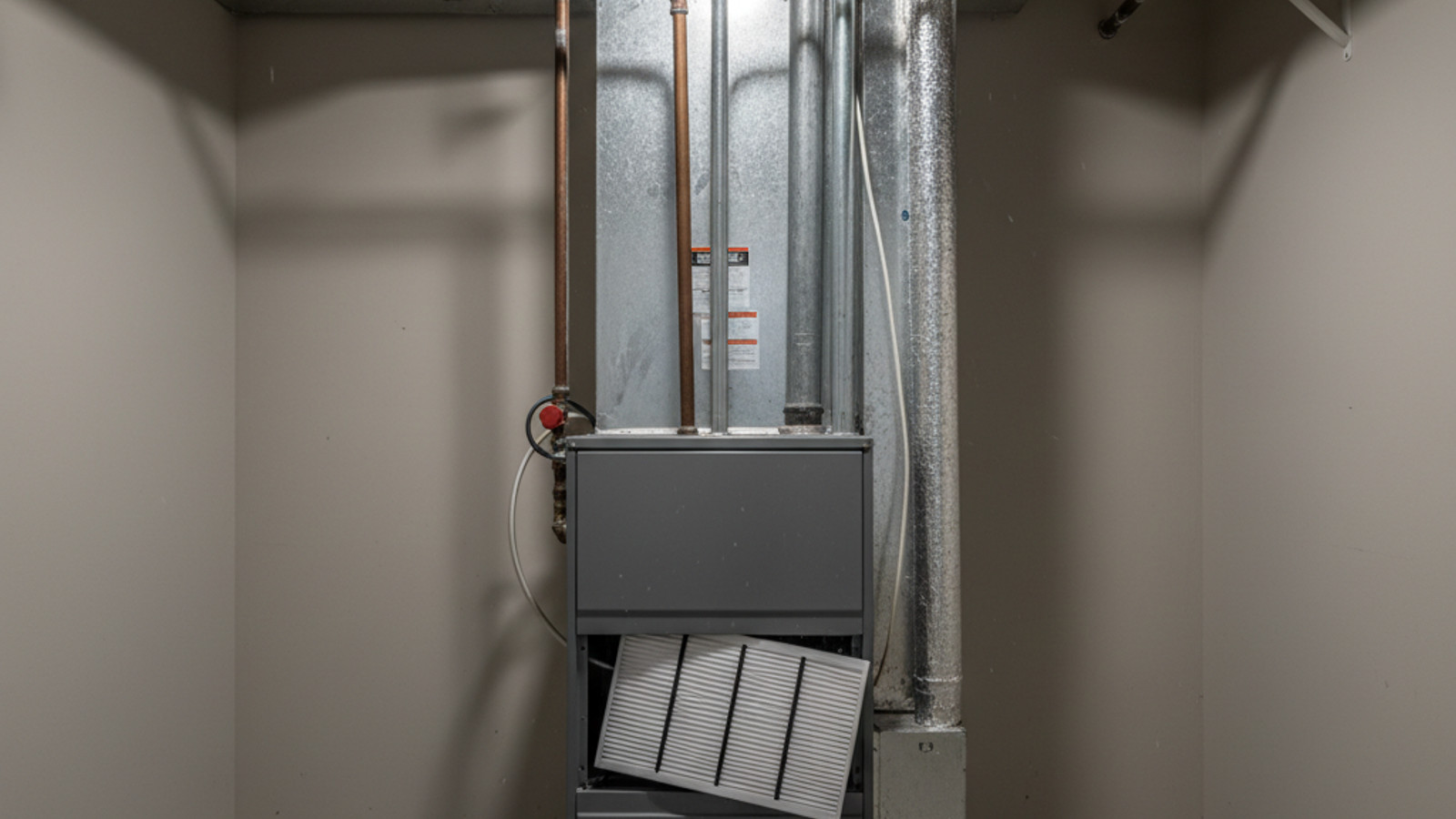
Actually changing your furnace filter is a quick, beginner-friendly task once you know where to look. You can usually find the filter behind large return-air vents in the wall, inside the main air handler cabinet, or in a narrow slot directly on the side of the furnace.
Before you open any panels or pull out the old filter, always turn off the power to the furnace at the thermostat and the breaker box for safety. Pull the old one out and inspect it for excessive dirt and debris.
When you slide the new filter in, look for the printed arrows on the cardboard frame. Those arrows must point toward the furnace, following the exact direction of the air flow. As a pro tip, grab a marker and write today’s date on the edge of the new filter so you never have to guess when you last changed it.
What Happens If You Never Change Your Furnace Filter?
It is easy to put off this chore, but neglecting your filter can lead to some incredibly expensive repairs. When a filter is completely blocked by dust and debris, the restricted airflow forces the blower motor to work harder. This intense strain can cause the motor to overheat and burn out entirely.
During the summer, that same lack of airflow can actually cause your air conditioning evaporator coils to freeze over into a block of ice. In the winter, your furnace might short-cycle – turning on and off rapidly – or simply fail to heat the house to a comfortable temperature.
Beyond the equipment damage, all that untrapped dust simply recirculates through your ductwork, ruining your indoor air quality. A simple disposable filter costs between $10 and $50. In stark contrast, replacing a blown blower motor or a cracked heat exchanger can easily run anywhere from $500 to $1,500 or more.
Frequently Asked Questions
How do you know when a furnace filter needs to be changed?
The easiest test is to pull the filter out and hold it up to a bright light. If you cannot see any light shining through the pleats, it is completely clogged with debris and needs to go. You might also notice physical signs around the house, like reduced airflow from your vents or a sudden increase in dust settling on your furniture.
How much does a new furnace filter cost?
A basic 1-inch fiberglass filter might only cost you around $5 at the local hardware store, while higher-quality pleated filters usually range from $15 to $30. If you have a specialized 4-inch or 5-inch media filter, expect to pay between $35 and $60 per replacement.
Can I wash and reuse my furnace filter?
You should never wash a standard disposable cardboard and fiberglass filter, as water will ruin the material and encourage mold growth inside your ductwork. There are specific washable filters available with heavy-duty plastic frames, but they often have lower efficiency ratings and require thorough drying before you put them back in the unit.