

You notice it first as a faint, musty smell when the furnace kicks on. Then you see the fine black dust settling on the white windowsill, again, just days after you’ve wiped it clean.
Cleaning them isn’t just about dust bunnies; it’s about the air your family breathes and the money you spend on energy. Keep reading to learn the clear, step-by-step process to reclaim the air in your home, making it cleaner, healthier, and more efficient.
Key Takeaways
- Clean ducts every 3-5 years to boost HVAC efficiency and improve indoor air quality.
- Know when to DIY for light dust and when to hire a pro for mold, pests, or complex systems.
- The core process involves agitation, extraction, and sealing for a complete clean.
How HVAC Ductwork Affects Indoor Air Quality and Home Efficiency
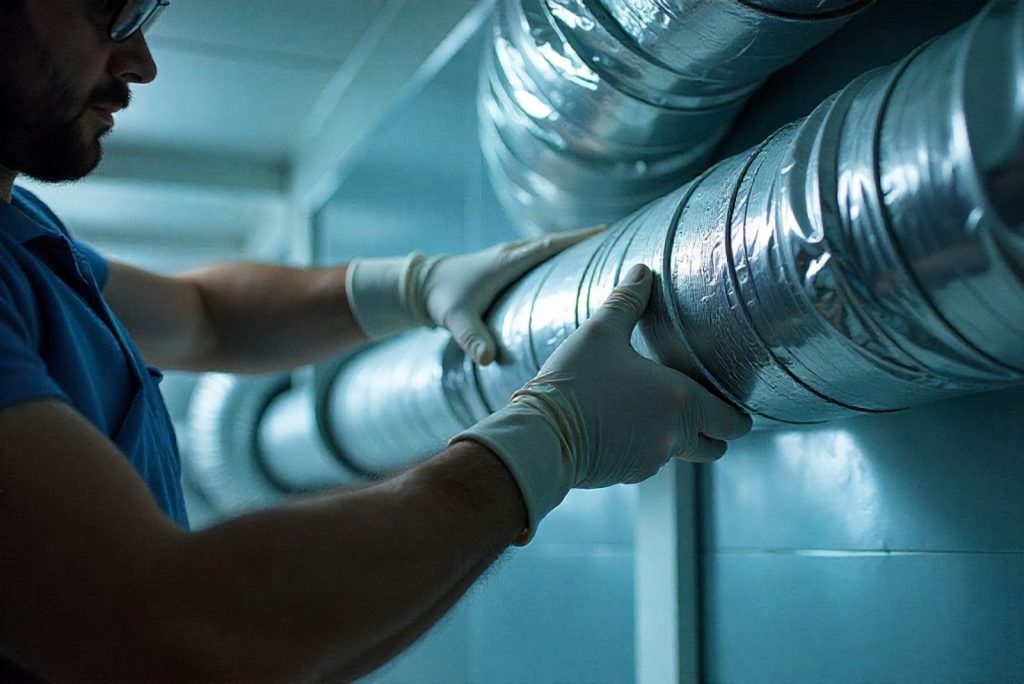
Think about the air moving through your house. It’s not magic. It travels through a network of tubes, the ductwork, hidden behind your walls and in your ceilings. This system is the circulatory system of your home, delivering warm or cool air to every room.
Every time your HVAC system runs, it blows this accumulated debris back into your living space. This constant cycle affects everything from your health to your wallet.
- Dust accumulation on surfaces
- Worsening allergy or asthma symptoms
- A persistent musty odor from the vents
- Reduced airflow from the registers
- Unexplained increases in your energy bills
The good news is you can interrupt this cycle. Cleaning your HVAC ducts is a proactive measure that pays off in clearer air and a more efficient system. It’s maintenance, not a mystery.
Signs Your HVAC Ducts Need Cleaning or Professional Attention
| Sign | Description | Action Needed |
| Excessive dust | Dust accumulates quickly on surfaces | Inspect and clean ducts; replace filters |
| Musty odor | Persistent smell when system runs | Check for mold; consider professional cleaning |
| Allergy or asthma flare-ups | Family experiences increased symptoms indoors | Clean ducts and improve filtration |
| Uneven airflow | Some rooms feel hotter/cooler than others | Inspect ducts for blockages or leaks |
| Visible mold or pests | Mold spots or insects in vents | Immediate professional remediation |
You don’t need to guess if it’s time for a cleaning. Your house will give you signals. Some are subtle hints, while others are urgent warnings that demand immediate action. Ignoring the urgent ones can lead to bigger problems, like mold remediation or pest control, which are far more expensive than a standard duct cleaning.
The most common signs are the ones you live with every day. If you find yourself dusting more frequently than usual, or if family members seem to have more allergy flare-ups indoors, your ducts are probably a contributing factor.
The general rule is to have your ducts inspected and potentially cleaned every three to five years. But if you see any of the urgent warning signs, don’t wait for the calendar. Your health and your home’s efficiency depend on it.
Professional HVAC Duct Cleaning Process Explained
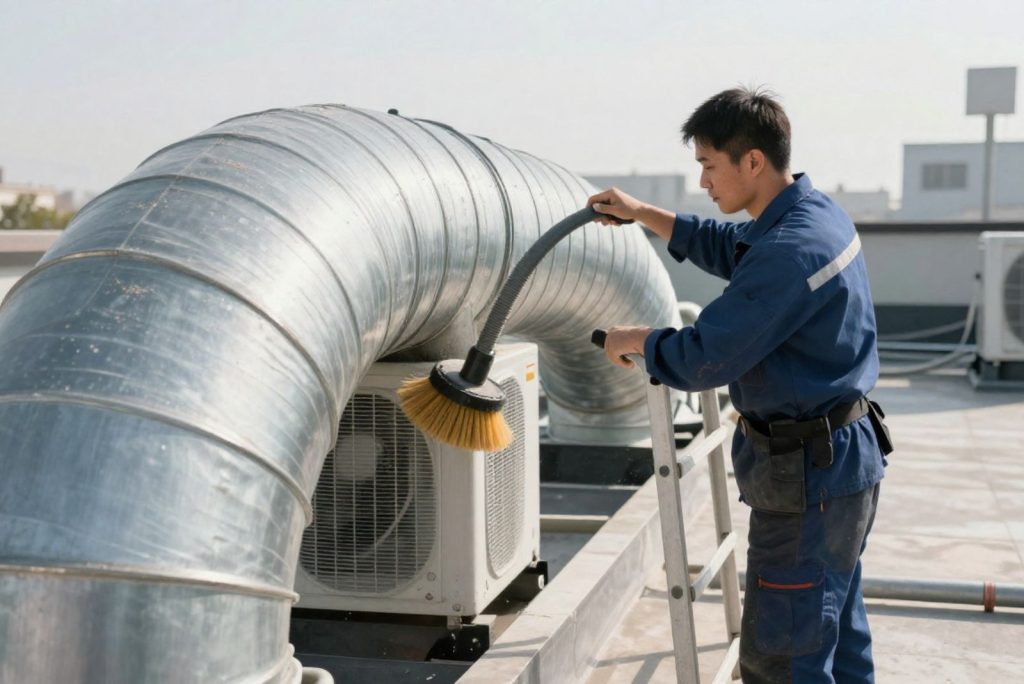
So what happens when you hire a professional duct cleaning service? It’s more than a guy with a powerful vacuum.
A reputable company, especially one offering full HVAC service with NADCA certification, follows a meticulous process designed to clean the entire system, not just the parts you can see.
The cleaning itself involves agitation and extraction. They use specialized tools like rotary brushes or air whips to dislodge debris stuck to the sides of the ducts.
- A thorough inspection with a duct camera.
- Sealing the system and creating negative pressure.
- Agitating debris with rotary brushes or air whips.
- Extracting all loosened material with a powerful HEPA vacuum.
- Optional sanitization for mold or bacteria.
This level of cleaning can reduce airborne particles in your home by a significant margin. It’s an investment that improves your indoor air quality and can help your HVAC system run more efficiently, potentially lowering your energy bills.
How to Clean HVAC Ducts Yourself: Step-by-Step DIY Guide
Gather your tools: a screwdriver to remove vent covers, a shop vacuum with a hose and brush attachment (a HEPA filter is a bonus), a sturdy brush, a flashlight for peeking inside, and personal protective equipment like an N95 mask and gloves.
- Remove vent covers and grilles
- Soak in warm, soapy water
- Vacuum register openings
- Scrub straight metal ducts
- Handle flex ducts carefully
After vacuuming, you can wipe the accessible metal surfaces with a microfiber cloth. Some people use a dilute vinegar solution for a light clean (1). A clean filter will help keep the system clean after your work. This prevents dust from being pulled in from attics or crawlspaces.
Essential Tools and Safety Tips for HVAC Duct Cleaning
Agitation tools are next. A set of long, flexible brushes designed for duct cleaning allows you to loosen dust that’s stuck to the sides beyond where the vacuum hose reaches, which is especially important in homes with VAV (Variable Air Volume) duct systems where airflow can be more complex.
Use a specialized whip brush for stubborn debris. Attach it to a drill for effective cleaning, but handle gently to avoid damaging the ducts. Avoid water or liquid cleaners: Moisture inside ducts can promote mold growth and compromise air quality.
A properly fitted N95 mask will prevent you from inhaling the cloud of dust you’re stirring up. Gloves protect your hands from sharp edges and dirt.
HVAC Duct Cleaning Tools, Equipment, and Safety Best Practices
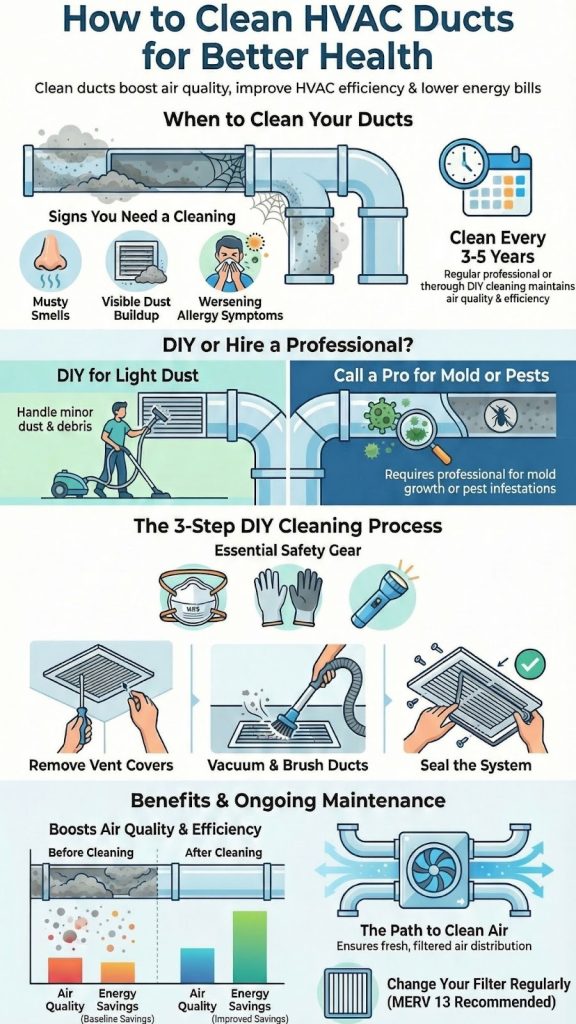
The work isn’t over once the vents are back on. The cleaning is a reset, but your daily habits determine how long the system stays clean. The single most important thing you can do is change your HVAC air filter regularly. This is the first line of defense, catching dust before it ever enters the ductwork.
The frequency depends on your household. A home with pets, smokers, or a lot of activity might need a filter change every month. A quieter household might stretch it to three.
- Don’t rely on a set schedule. Replace it whenever it looks gray or clogged.
- A MERV 13 filter (if your system supports it) captures finer particles and improves air quality.
- Focus on carpets and high-traffic areas, and use a vacuum with a HEPA filter to reduce airborne dust.
- Less dust in your home means less debris pulled into return air ducts.
- Make sure the space around your indoor unit is clean and unobstructed for proper airflow, paying special attention to the plenum in HVAC.
- Clean and service them regularly to prevent mold and moisture-related issues.
These small, consistent actions work together with your duct cleaning to maintain a healthier indoor environment. They help ensure that your effort and investment pay off for years to come.
How to Maintain Clean HVAC Ducts After Cleaning
Credits: Emerald
Cleaning your HVAC ducts is one of those home maintenance tasks that feels hidden but has a very visible impact. It’s about taking control of the air you breathe and the efficiency of your home’s climate system. Whether you choose a DIY approach for maintenance or hire a professional for a deep clean, the result is the same: a fresher, healthier home.
The process demystifies what happens behind your walls. It’s not a complex mystery but a logical series of steps,inspection, agitation, extraction, and sealing. Understanding this empowers you to make the right choice for your situation. You know the signs to watch for and the tools you need. You appreciate the value a professional brings to a complex job.
FAQs
What are HVAC ducts?
HVAC ducts are tubes hidden in your walls, ceilings, or floors that carry warm or cool air through your home. They are like highways for the air, moving it from your furnace or air conditioner to each room.
Over time, dust, pet hair, and pollen can settle inside. Dirty ducts can make the air feel musty, trigger allergies, and cause your system to work harder, raising energy bills.
Why should I clean my ducts?
Cleaning your ducts removes dust, pollen, and debris that builds up over time. This improves the air you breathe, reduces allergy symptoms, and makes your HVAC system run more efficiently. When air flows freely, the system uses less energy, which saves money.
Regular duct cleaning can also prevent mold, pests, and other problems that may damage your home or HVAC system.
How often should ducts be cleaned?
Most homes should have HVAC ducts cleaned every three to five years. Homes with pets, smokers, or heavy dust may need cleaning more often. If you notice dust piling up quickly, a musty smell from vents, or allergy problems, it might be time for a cleaning. Urgent issues like mold or pests should be addressed immediately by a professional.
Can I clean ducts myself?
Yes, you can clean ducts yourself for light dust. You’ll need a vacuum with a hose and brush attachment, a screwdriver, a flashlight, gloves, and an N95 mask. Remove vent covers, vacuum the openings, and use brushes to loosen dust. Be careful with flexible ducts and don’t use water inside the ducts. For major mold, pests, or deep cleaning, call a professional.
What tools do I need for DIY cleaning?
For DIY duct cleaning, use a vacuum with a HEPA filter, long hose attachments, and soft brushes (2). A flashlight helps you see inside the ducts, and a screwdriver is needed for vent covers. Wear gloves and an N95 mask to protect yourself from dust. Optional tools include a whip brush attached to a drill to reach stubborn debris, but handle carefully to avoid damage.
Can dirty ducts affect my health?
Yes, dirty ducts can carry dust, pollen, mold spores, and pet dander throughout your home. Breathing this air can trigger allergies, asthma, coughing, or other respiratory issues. Cleaning ducts reduces these particles in your home, improving air quality.
Combined with regular filter changes, clean ducts help everyone in the household breathe easier and stay healthier.
How do professionals clean ducts?
Professional duct cleaners follow a step-by-step process. They inspect ducts with a camera, seal the system, and create negative pressure to avoid spreading dust. Then they use rotary brushes or air whips to loosen debris and powerful HEPA vacuums to extract it.
If needed, they can apply EPA-approved sanitizers to remove mold or bacteria. This ensures a complete, deep cleaning that is safer and more effective than most DIY methods.
Will cleaning ducts lower my energy bills?
Yes, clean ducts allow air to move freely through your HVAC system. When air flows easily, the system doesn’t have to work as hard to heat or cool your home.
This reduces energy use and lowers your monthly bills. Over time, proper duct cleaning combined with filter maintenance can save you money and extend the life of your HVAC system.
What signs tell me ducts need cleaning?
Signs include dust building up quickly, a musty smell from vents, allergy flare-ups, or uneven airflow in rooms. Visible mold around vents, pests, or rodent droppings are urgent warning signs.
Recent construction or renovations can also fill ducts with dust. These clues mean it’s time to clean or hire a professional to make sure your HVAC system and air quality are safe.
How can I keep ducts clean after cleaning?
Change your HVAC filter regularly; homes with pets may need monthly changes, quieter homes every two to three months. Use a high-quality MERV 13 filter if your system allows.
Keep floors and carpets vacuumed with a HEPA filter vacuum. Keep the area around your indoor unit clean. These habits prevent dust from entering ducts, keeping your system efficient and air quality high between professional cleanings.
Your Path to Cleaner Air
The goal is a system that works for you, not against you. Clean ducts mean your HVAC doesn’t have to fight through layers of dust to heat or cool your home. That translates to lower energy bills and a longer lifespan for your equipment.
Ready to see the difference clean ducts can make? Centerlinemech’s IAQ monitoring tools can help you track your home’s air quality before and after your cleaning project, giving you real data on your improvement.
References
- https://www.researchgate.net/publication/352813764
- https://www.researchgate.net/publication/251836916