
Winter in Central Massachusetts is not subtle. January is typically the coldest month in Worcester, MA, with average highs around 30.9°F and lows running between 14°F and 18.9°F. That’s the kind of cold that makes homeowners nervous about whether their equipment is keeping up, especially if they are unfamiliar with how a heat pump works in deep freezes.
If you rely on a heat pump, understanding when and how to use the emergency heat setting is genuinely useful – not because you’ll need it often, but because the one time you do need it, you’ll want to know exactly what to do without accidentally running up a massive utility bill.
How Heat Pumps Handle Worcester Winters
National Grid recommends NEEP-listed cold-climate heat pumps for Worcester homes, and for good reason – these models are built to maintain heating capacity even when outside temperatures drop to 5°F.
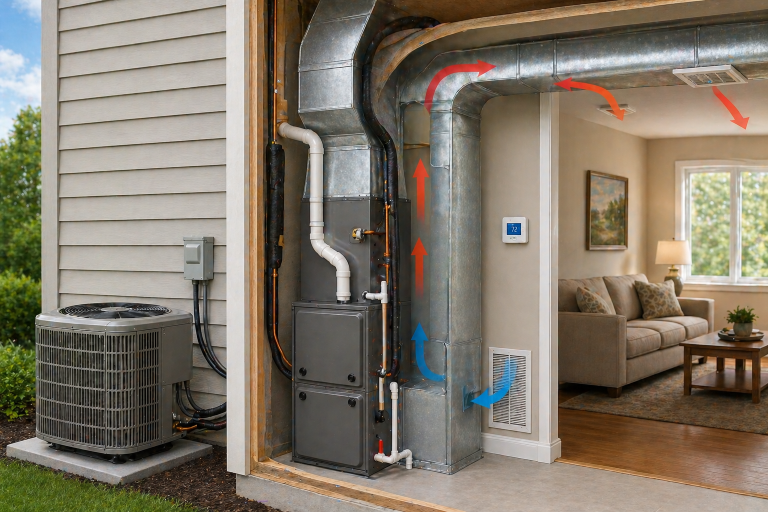
The basic idea is this: a heat pump warms your house by pulling ambient heat from the outside air and moving it indoors. Even when it feels brutally cold to you, there’s still enough thermal energy out there for the outdoor compressor to work with. Standard heat pumps start losing efficiency as temperatures approach freezing, but modern cold-climate units handle Massachusetts winters well. The system adjusts automatically. You don’t have to touch anything.
What the Emergency Heat Setting Does
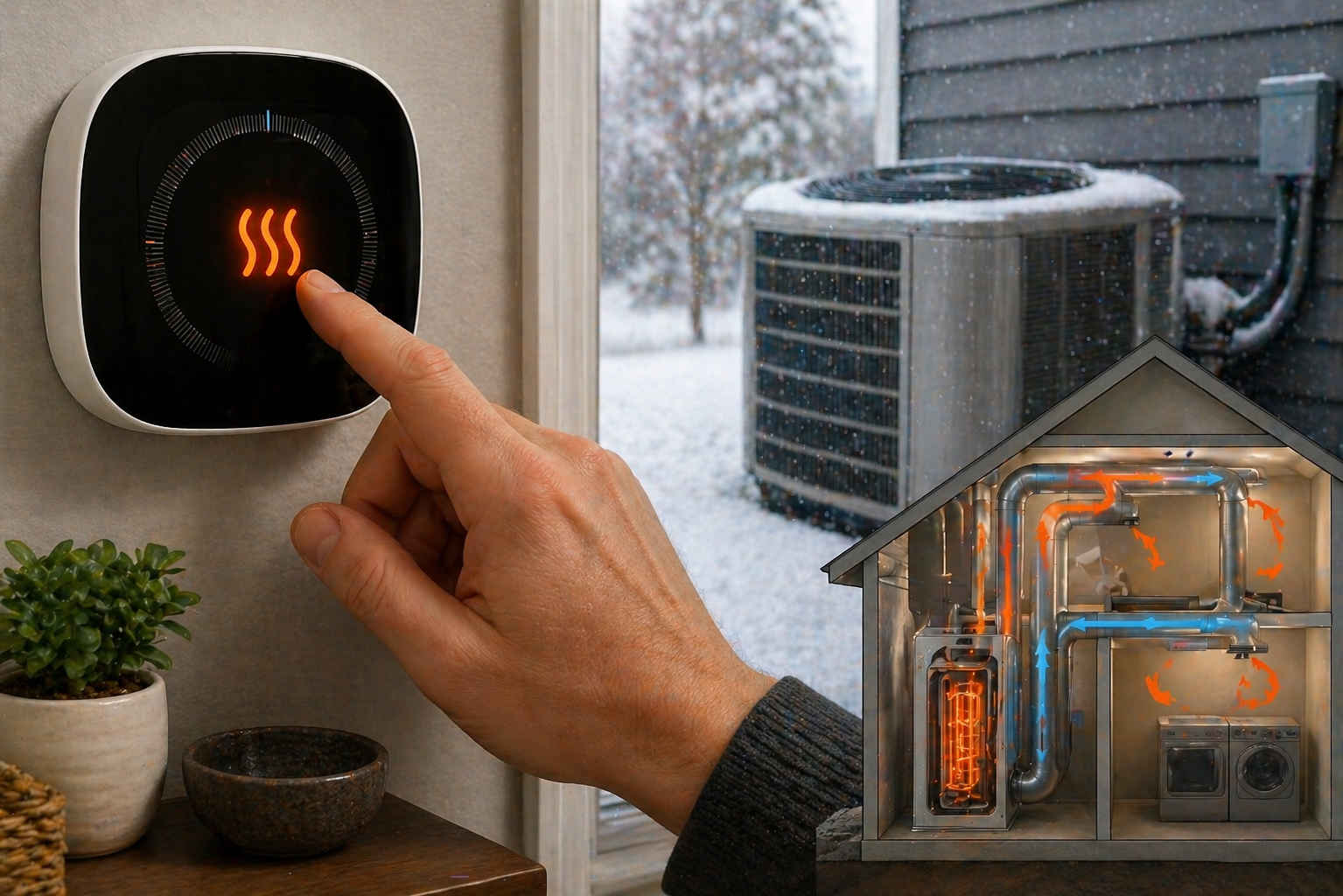
Flipping your thermostat to emergency heat completely shuts down the outdoor compressor. The system stops trying to pull heat from outside air and relies entirely on a secondary indoor heat source instead.
For most homes, that means activating electric resistance heating strips inside the air handler. If you have a dual-fuel system, the backup might be a gas or oil furnace. Either way, this is a manual override – the backup heat source runs continuously, regardless of outdoor temperature or whether the heat pump could theoretically function.
Auxiliary Heat Versus Emergency Heat
These two settings get confused constantly, and they’re not the same thing.
Auxiliary heat – the “Aux” light on your thermostat – kicks in automatically when the heat pump needs a temporary boost to hit your target indoor temperature. The outdoor compressor keeps running. The backup electric strips just add some extra warmth until it gets there.
Emergency heat is your choice, not the system’s. You flip it manually, it disables the outdoor unit completely, and everything runs off the backup method alone. Normal cold weather doesn’t call for it. Equipment failure does.
When You Should Turn On Emergency Heat
The average winter low of 18.9°F in Worcester is not a reason to touch that emergency setting. Your system handles that with automatic auxiliary heat, no help from you required.
You switch to emergency mode when the outdoor unit physically can’t function – as a temporary measure to keep your pipes from freezing and your family warm while you wait for a technician to show up.
Dealing With a Mechanical Malfunction
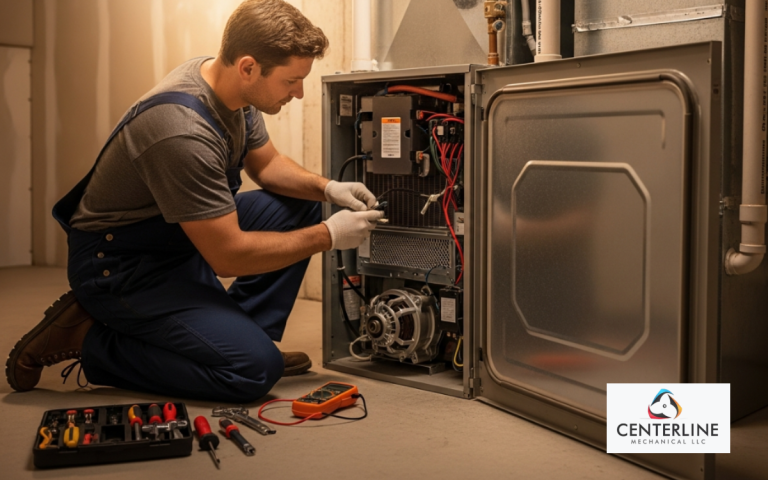
If the outdoor compressor has stopped running entirely, is making loud grinding noises, or isn’t pushing warm air indoors, the heat pump needs professional attention. The emergency setting lets you bypass the broken equipment and heat the house safely until someone can look at it.
Handling a Frozen Outdoor Compressor
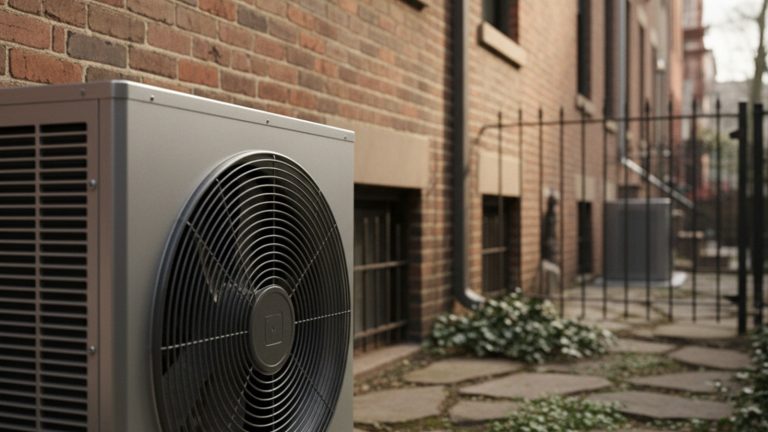
Some frost buildup on the outdoor unit is completely normal – the system handles it with an automatic defrost cycle. The problem is when the unit is encased in a solid block of ice that the defrost cycle can’t clear. That’s when you switch to emergency heat.
Running the heat pump while the fan blades are frozen solid will damage the motor. Emergency heat keeps you warm indoors and gives the ice time to melt on its own.
Extreme Winter Storms and Tree Damage
A heavy ice storm can do real physical damage – falling branches can crush the top of the outdoor condenser unit. If that happens, turn on emergency heat, leave the outdoor unit alone, and don’t run it again until someone has inspected it.
Steps to Activate the Emergency Setting
Most standard and smart thermostats have a dedicated menu option or a physical switch for this. Look under your system mode settings – it’ll be listed alongside “Heat,” “Cool,” and “Off.” Select “EM Heat” or “Emergency Heat” to engage the override. Your thermostat screen should show a clear indicator that emergency mode is active.
One thing worth knowing: if the electric resistance strips haven’t run in months, you might notice a faint burning dust smell when they first kick on. That’s normal. It clears up after a few minutes.
Energy Costs of Running Backup Strips
National Grid is the primary electric utility provider for about 4,260 residential customers in Worcester, MA, and running on emergency heat will hit those bills hard.
Here’s why: a heat pump doesn’t generate heat, it moves it. That process is efficient. Electric resistance strips generate heat from scratch by drawing large amounts of electricity, which is expensive and slow by comparison. A few days on emergency heat is manageable. Weeks of it will produce a utility bill that stings.
Switch back to normal operation the moment the outdoor unit is repaired or thawed.
Calling for HVAC Repairs in Central Massachusetts
A standard HVAC diagnostic call in the Worcester area typically runs $75 to $200, and that fee is often applied toward the total repair cost if you move forward with the fix.
That’s almost always cheaper than leaving your system on emergency heat for any extended stretch – the electricity the backup strips consume can easily outpace the cost of a minor repair.
The smarter move is getting routine maintenance done in the fall, before January’s lows arrive. A heat pump that goes into winter well-maintained is far less likely to strand you in emergency mode at the worst possible time.
Frequently Asked Questions
At what temperature is it necessary to manually switch my heat pump to emergency heat in Worcester?
There’s no specific outdoor temperature that requires it. Modern cold-climate models operate efficiently down to 5°F, so the manual setting is only for situations where the outdoor unit has actually broken down – not because it’s cold outside.
How much will running emergency heat spike my winter utility bills compared to normal heat pump operation?
It’ll move fast. Electric resistance strips consume far more electricity than the normal heat transfer process, and National Grid customers will see that reflected quickly in their bills.
What is the difference between the ‘Aux Heat’ turning on automatically and manually flipping the ‘Emergency Heat’ switch?
Auxiliary heat turns on automatically to help the outdoor compressor reach your target indoor temperature during cold snaps – the compressor keeps running. Emergency heat is a manual setting that completely disables the outdoor unit and runs entirely on the backup heating strips.
Can it damage the HVAC system if I leave the emergency heat running continuously during a multi-day Massachusetts blizzard?
Running emergency heat won’t damage the indoor HVAC components. What it will do is drive your electricity bill up sharply, so it should only be on if the outdoor unit is damaged or frozen – not just because conditions are rough outside.
Will a local home inspector test the emergency heat function if I am buying a Worcester house during the summer?
It depends on the outside temperature. Inspectors do check HVAC systems, but testing heating functions during extreme summer heat can sometimes be restricted to avoid damaging the equipment.
Do the newer cold-climate heat pumps being installed in New England homes still require an emergency heat backup?
Yes. Utility companies like National Grid often recommend keeping a backup heat source for extreme cold snaps. Even though NEEP-listed models maintain capacity down to 5°F, a backup gives you coverage if the primary system fails.