
Upgrading your HVAC system can come with a significant upfront cost, but federal and Massachusetts incentive programs can offset a large portion of that investment—if you choose the right equipment. Not every system qualifies. To access tax credits and rebates, your new HVAC setup must meet specific efficiency standards and follow program guidelines. In Massachusetts, combining federal tax credits with Mass Save rebates can reduce costs by thousands. The key is understanding exactly what qualifies, how much you can claim, and how to stack the incentives correctly.
Overview of federal HVAC tax credits
Federal HVAC tax credits are part of the Energy Efficient Home Improvement Credit (under current federal energy policy). These credits are designed to reward homeowners who install high-efficiency systems that reduce energy consumption.
For HVAC systems, the credit is typically structured as 30% of the total project cost, up to certain annual caps. For most heating and cooling equipment:
- Heat pumps (air-source and ductless): up to $2,000 per year
- Central air conditioners and furnaces: up to $600 per year
- Combined annual cap for all upgrades: typically $3,200 per year
These credits apply to equipment and installation costs combined, which is important because labor can be a significant portion of the project.
Eligible HVAC systems under federal tax credits
To qualify, systems must meet strict efficiency standards set by the federal government, often tied to ENERGY STAR or higher performance benchmarks.
Qualifying systems commonly include:
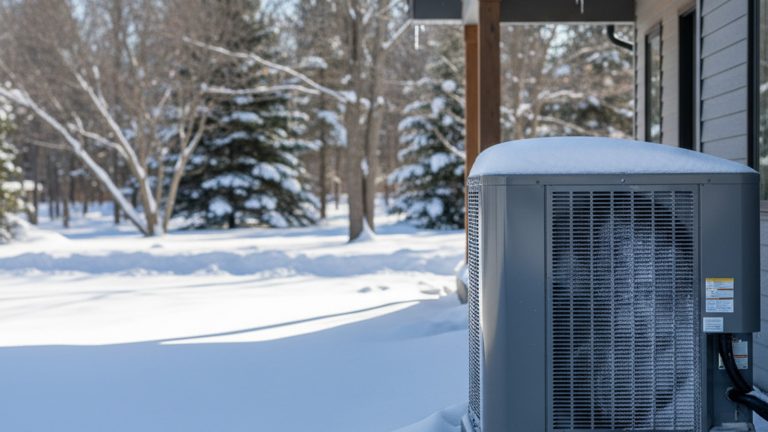
- Air-source heat pumps (including cold-climate models)
- Ductless mini-split heat pumps
- High-efficiency central air conditioning systems
- Certain high-efficiency gas furnaces
- Biomass stoves and boilers
In practice, heat pumps are the most consistently eligible and offer the highest available credit.
Who qualifies for federal HVAC tax credits
These credits are available to homeowners installing qualifying systems in their primary residence. Second homes may qualify in some cases, but rental properties typically do not.
There are no income limits for most federal HVAC credits. However, the credit is non-refundable, meaning it can only reduce the amount of tax you owe. If your tax liability is lower than the credit amount, you may not be able to claim the full value in that year.
How to maximize federal HVAC tax credits
The biggest lever is selecting equipment that clearly meets the highest efficiency tiers, especially for heat pumps where the credit is larger.
Because of annual caps, some homeowners choose to spread improvements over multiple tax years. For example, installing a heat pump one year and upgrading insulation or other systems the next can allow you to claim more total credits.
Keep detailed documentation, including manufacturer certification statements and itemized invoices. These are essential when filing your taxes and validating eligibility.
Overview of Massachusetts HVAC tax credits and incentives
Massachusetts does not offer a traditional state “tax credit” for HVAC systems in the same way the federal government does. Instead, the state provides direct rebates and financing incentives, primarily through the Mass Save program.
These incentives are often more impactful than tax credits because they reduce your upfront cost immediately rather than later at tax time.
For heat pumps, current Mass Save rebates can reach:
- Up to $10,000 for whole-home heat pump systems
- Smaller rebates for partial-home systems
- Additional incentives for income-qualified households
Mass Save also offers the HEAT Loan, which provides up to $25,000 in 0% interest financing for eligible improvements.
Eligible HVAC systems under Massachusetts programs
Mass Save focuses heavily on electrification and high-efficiency systems.
Eligible systems typically include:
- Whole-home air-source heat pumps
- Ductless mini-split systems
- Ground-source (geothermal) heat pumps
- In limited cases, high-efficiency gas systems (depending on program rules)
The largest rebates are usually reserved for systems that replace oil, propane, or electric resistance heating.
Who qualifies for Massachusetts HVAC incentives
Most homeowners in Massachusetts qualify for Mass Save incentives, but there are a few requirements.
You typically need to:
- Complete a Mass Save home energy assessment
- Install qualifying equipment that meets program standards
- Use a participating or approved contractor
- Follow proper installation and documentation procedures
Some incentives are enhanced for income-qualified households, which can significantly increase rebate amounts.
How to maximize Massachusetts HVAC rebates and credits
Start with the energy assessment. This step is often required and can unlock additional incentives beyond HVAC, including insulation and air sealing.
Choosing a whole-home heat pump system instead of a partial system usually results in the highest rebate.
Working with an experienced contractor is critical. They will ensure the system is sized correctly, meets all requirements, and that the paperwork is submitted properly.
Combining HVAC upgrades with weatherization improvements can also increase total savings while improving overall system performance.
How to combine federal and Massachusetts savings opportunities
Massachusetts homeowners are in a strong position because they can stack state and federal incentives.
The typical flow looks like this:
First, Mass Save rebates are applied, reducing your upfront installation cost. Then, when you file your taxes, you claim the federal credit based on the remaining eligible expense.
For example, if a heat pump system costs $18,000 and you receive a $10,000 Mass Save rebate, your remaining cost is $8,000. You can then apply the federal credit—typically 30%—to that remaining amount, up to the annual cap.
This layering effect can dramatically reduce the effective cost of a system, sometimes cutting the net expense by 40% to 60% or more.
The key is ensuring the system qualifies under both programs and that all documentation is properly handled.
FAQs
Can I claim both federal and Massachusetts HVAC incentives?
Yes. Massachusetts rebates reduce your upfront cost, and federal tax credits are applied when you file your taxes. Using both together is one of the most effective ways to lower your total investment.
Do I need to use an approved contractor to qualify?
For Mass Save incentives, yes—working with a participating contractor is typically required. For federal credits, the system must meet efficiency standards, but using a knowledgeable contractor helps ensure everything is installed and documented correctly.
Are tax credits different from rebates?
Yes. Rebates reduce your cost upfront or shortly after installation. Tax credits reduce the amount of tax you owe when you file your return.
What documentation do I need to claim HVAC incentives?
You should keep all invoices, receipts, and manufacturer certification statements. For federal credits, you will need this information when filing your taxes. For Mass Save, documentation is usually submitted as part of the rebate application process.