
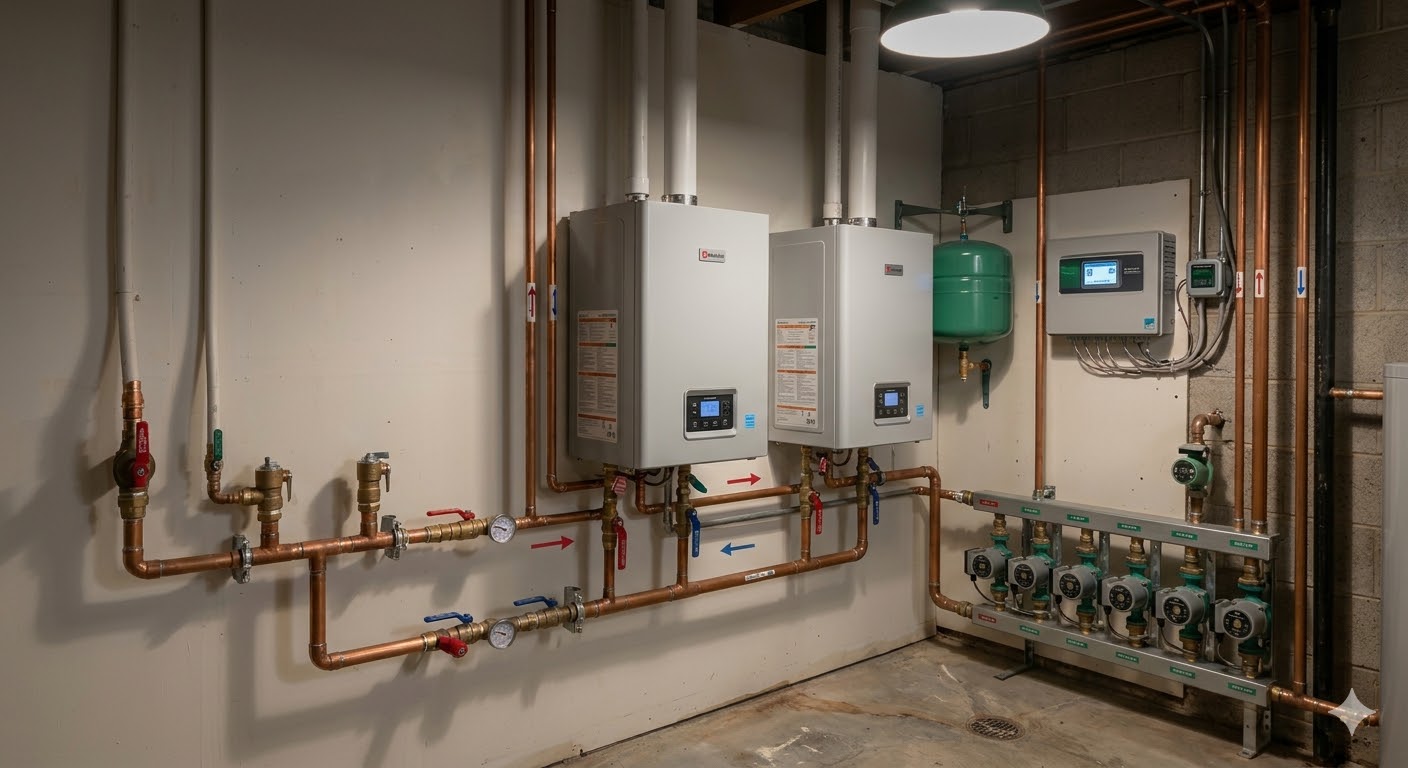
A dual boiler system in HVAC refers to a setup where two separate boilers work together to heat a home, rather than relying on a single unit. These systems are typically designed to improve efficiency, provide redundancy, and handle larger or more complex heating demands. Instead of one boiler cycling on and off to meet all heating needs, a dual system can stage output—running one boiler during mild conditions and both during peak demand.
For homeowners, especially in colder regions or larger homes, this approach can deliver more consistent heat, better energy use, and added reliability.
Dual boiler vs single boiler systems in HVAC
Most homes use a single boiler system, where one unit is responsible for heating water and distributing it through radiators, baseboards, or radiant flooring. It is simple, cost-effective, and works well for standard residential setups.
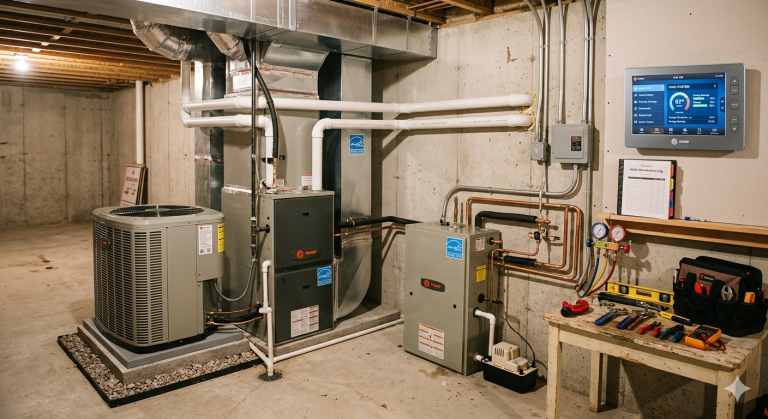
A dual boiler system takes a different approach. Instead of one larger unit, it uses two smaller boilers connected in a coordinated system. These boilers can operate independently or together depending on the heating demand.
In practical terms, the difference comes down to flexibility. A single boiler runs at varying levels to meet demand, while a dual system can stage its output. For example, on a mild fall day, only one boiler may run. On a cold January night, both units can operate simultaneously to keep the home comfortable.
This staging capability is where dual systems start to stand apart, especially in climates with wide temperature swings.
Benefits of a dual boiler setup for homeowners
The biggest advantage of a dual boiler system is control. Instead of one system constantly ramping up and down, you have a setup that can adjust more precisely to real heating needs.
One of the key benefits is improved efficiency. Running a single smaller boiler during low-demand periods is often more efficient than cycling a large unit on and off. Over time, this can reduce fuel consumption and lower heating costs.
Another major benefit is redundancy. If one boiler fails, the second can often continue operating, at least partially heating the home. In colder regions, this added layer of reliability can be a significant advantage.
Dual systems also tend to provide more even heating. Because they can modulate output more effectively, they reduce temperature swings and help maintain a steady indoor climate.
For larger homes or homes with multiple heating zones, dual boilers can better match how the space is actually used, rather than forcing a one-size-fits-all solution.
When a dual boiler system makes sense
Dual boiler systems are not necessary for every home, but there are situations where they make a lot of sense.
They are commonly used in larger homes where a single boiler would need to be oversized to handle peak demand. Instead of installing one large unit, two smaller boilers can share the workload more efficiently.
Homes with multiple zones—such as separate heating for different floors or wings—can also benefit. A dual system can respond more flexibly as different zones call for heat at different times.
In colder climates with long heating seasons, dual systems help manage fluctuating demand more efficiently. Early fall and late spring require far less heat than mid-winter, and a staged system handles that variation well.
They are also a good fit for homeowners who prioritize reliability. Having a backup system already in place can prevent a complete loss of heat during a breakdown.
Costs and installation considerations
Dual boiler systems come with higher upfront costs compared to a standard single boiler setup. You are essentially installing two units instead of one, along with additional controls and piping.
Typical costs can vary widely depending on system size and complexity, but in general:
- A single boiler system might cost between $5,000 and $12,000 installed
- A dual boiler system can range from $10,000 to $20,000 or more
Installation is also more complex. The system needs to be properly designed so both boilers work together efficiently. This includes controls that determine when each unit runs, as well as proper piping to balance the load.
Space is another consideration. Two boilers require more room, which can be a limiting factor in smaller homes or tight mechanical areas.
Because of the added complexity, it is important to work with an experienced HVAC contractor who understands how to design and install staged boiler systems correctly.
Maintenance and efficiency of dual boiler systems
Maintenance for a dual boiler system is similar to maintaining a single unit, but there are simply two systems to service instead of one.
Each boiler should receive regular inspections, cleaning, and safety checks. This includes monitoring burners, heat exchangers, and controls to ensure everything is operating correctly.
One advantage is that wear and tear can be distributed across both units. Since each boiler runs less frequently than a single oversized unit would, components may last longer over time.
From an efficiency standpoint, dual systems often perform well because they avoid excessive cycling. Instead of turning a large boiler on and off repeatedly, the system can run a smaller unit steadily, which is typically more efficient.
However, efficiency gains depend heavily on proper system design and control setup. A poorly configured dual system can lose many of the benefits it is supposed to provide.
Common misconceptions about dual boiler systems
One common misconception is that dual boiler systems are always more efficient. While they can be, the actual performance depends on how well the system is designed and matched to the home.
Another misunderstanding is that they are only for commercial buildings. While they are more common in larger properties, they are increasingly used in high-end residential homes and complex heating setups.
Some homeowners also assume that dual boilers are simply a luxury upgrade. In reality, they can serve a practical purpose in homes with high or variable heating demand.
There is also confusion between dual boiler systems and other heating technologies. For example, some people mistakenly think a dual boiler system refers to a unit that handles both heating and hot water, which is actually a different type of system.
How to choose the right boiler setup for your home
Choosing between a single and dual boiler system comes down to your home’s size, layout, and heating needs.
Start by evaluating the heating demand of your home. Larger homes or homes with multiple zones are more likely to benefit from a dual setup. Smaller homes with consistent heating needs typically do well with a single boiler.
Consider how long you plan to stay in the home. Dual systems often have higher upfront costs but can provide long-term efficiency and reliability benefits.
It is also important to look at available space. Mechanical rooms or basements need to accommodate the additional equipment.
Most importantly, work with a contractor who will perform a detailed heat load calculation and design the system around your specific home. The right setup is less about the number of boilers and more about how well the system is matched to your needs.
FAQs
Do most homes have dual boiler systems?
No, most homes use a single boiler system. Dual boiler setups are typically found in larger homes, multi-zone properties, or situations where added reliability and efficiency are priorities.
Is a dual boiler the same as a combi boiler?
No, they are different. A dual boiler system uses two separate boilers working together, while a combi boiler is a single unit that provides both heating and domestic hot water.
Is a dual boiler worth it for a typical home?
For a typical home, a single properly sized boiler is usually sufficient. A dual boiler system becomes more worthwhile in larger homes, homes with complex heating needs, or for homeowners who want added redundancy and long-term efficiency benefits.