
You can always tell when a homeowner has an air handler issue long before they know what an air handler [1] even is. They’ll describe a “weird hum,” or a room that suddenly feels like it stopped getting cool air, or that faint, dusty smell the moment the ac unit kicks on.
They think it’s the thermostat. Or the outdoor unit. Or the ducts. But here’s the part most people haven’t caught up to yet: the quiet metal box inside, your air handler, is often the real heartbeat of the entire HVAC system. When it slips, everything else feels off.
And the stakes? Your comfort, your bills, your indoor air quality, and whether your home feels like a refuge or a problem.
1. Defining the Air Handler
Credits: MEP Academy
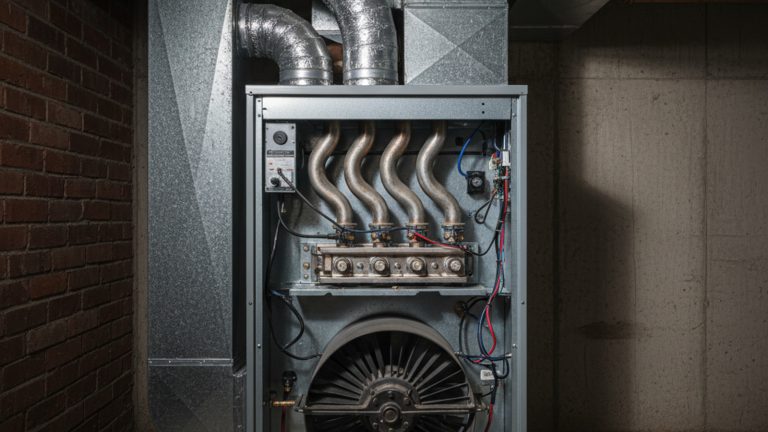
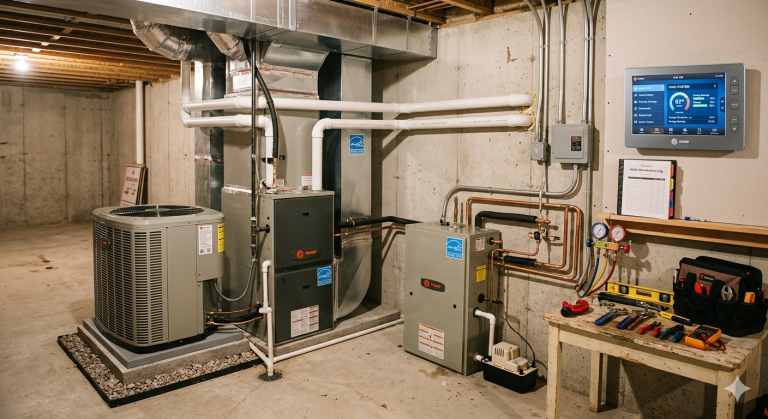
Most homeowners picture the big outdoor condenser when they hear “air conditioner.” But the air handler? That’s the indoor half of the story, the part that actually moves air through your home, pulls it back in, treats it, and sends it out again. It doesn’t generate cooled air or heat on its own; instead, it circulates conditioned air created by heat pumps, furnaces, or outdoor AC units.
Think of it as the central hub of HVAC air movement. Every bit of air you breathe indoors, every pocket of comfort you feel, every degree of temperature control your HVAC system nails or misses, your air handler is right in the middle of it.
And that’s why it’s critical.
Without a functioning air handler:
- The system can’t circulate air.
- The treated air stays trapped.
- The outdoor unit works harder, louder, and less efficiently.
Most homeowners don’t realize it, but the air handler is the piece that quietly dictates indoor environment stability, air quality, and energy efficiency. When techs talk about the backbone of HVAC systems, this is it.
2. Key Components of an Air Handler
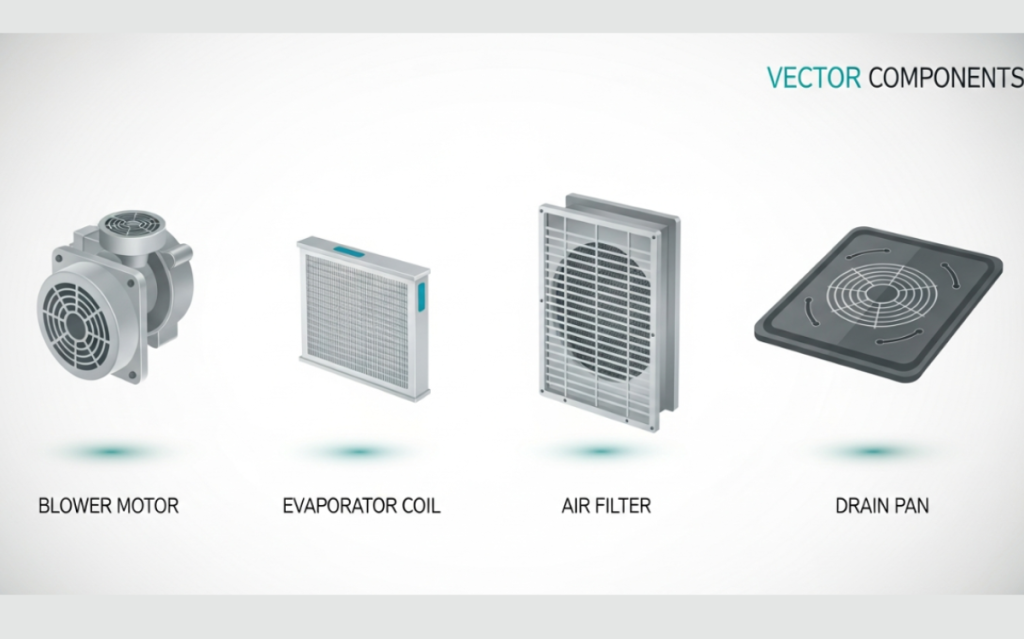
Open up an air handler, carefully, ideally not alone, and you’ll see a surprisingly tight cluster of parts packed together with a single mandate: circulate air and clean it while adjusting its temperature. But the real action? It happens inside a handful of key components.
The Blower Fan: The Muscle That Pushes Everything
This is the part that homeowners hear when they say, “the system sounds like it’s struggling.” The blower fan (and its paired blower motor) is the powerhouse that pulls indoor air into the unit, pushes it across the evaporator coil, and sends it through ductwork.
When the blower goes bad, bearing wear, a faulty blower motor, or blocked airflow, you’ll feel it instantly:
- Rooms heat up.
- Air barely trickles out of vents.
- The energy bill spikes.
The blower is the centerpiece of air circulation. Ignore it, and your HVAC system becomes little more than a noisy box.
The Evaporator Coil: The Temperature Magician
If the blower is the muscle, the evaporator coil is the brain that handles temperature interaction.
When the system calls for cooling, the coil absorbs heat from indoor air, delivering cool air back into the home. When paired with heat pumps for winter, it switches modes and sends heated or cooled air depending on the season.
This coil makes the difference between:
- sticky, humid rooms
- crisp, cooled air
- uneven temperatures
- steady, improved comfort
And yes, you can have the strongest outdoor unit on the block, but if this coil is dirty, frozen, or leaking, your home never hits the desired temperature.
Air Filters: The First Line of Defense
Air filters aren’t just optional accessories. They’re what remove dust, pollen, pet dander, and airborne contaminants before they can clog the coil or blow into your living room.
Skip filter changes long enough and you get:
- clogged air filters
- suffocated airflow
- an overworked blower
- rising energy bills
- worsening indoor air quality
All from a $15 piece of fabric.
Sound Attenuators: The Peacekeepers
Not every air handler has them, but the ones that do? You’ll notice. These built-in dampeners soften that metallic, whooshing rush of moving air. They don’t affect temperature. They affect livability. [2]
Optional Add-Ons: The Lifestyle Upgrades
Some homeowners go further with:
- UV lights (kills mold on the coil)
- humidifiers (for dry climates)
- electric heat strips (backup heat)
These aren’t required for basic function. They’re for homeowners who recognize that comfortable, clean indoor air isn’t accidental.
3. How an Air Handler Works
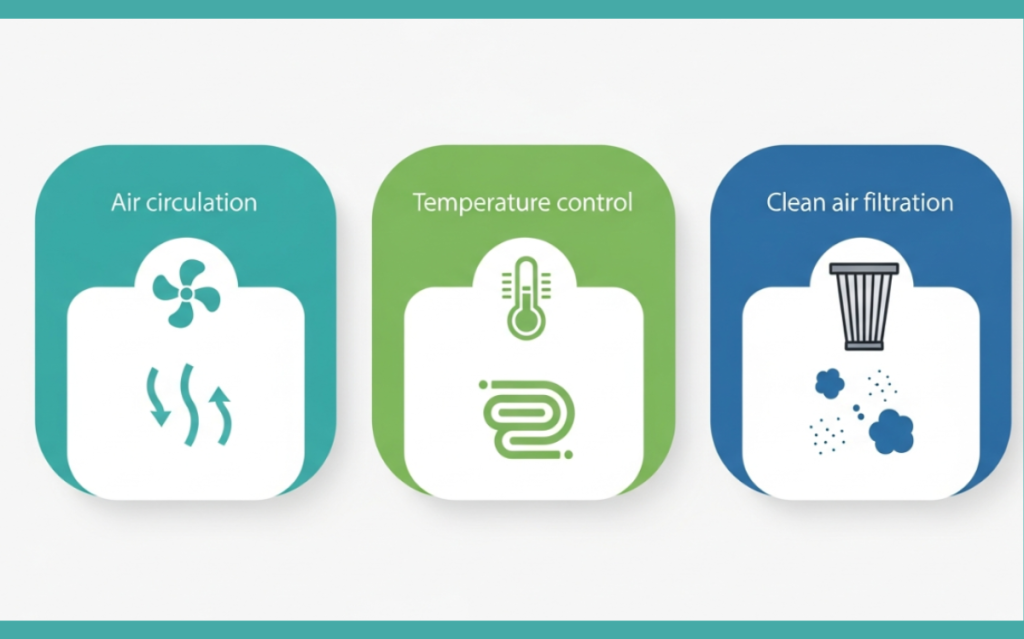
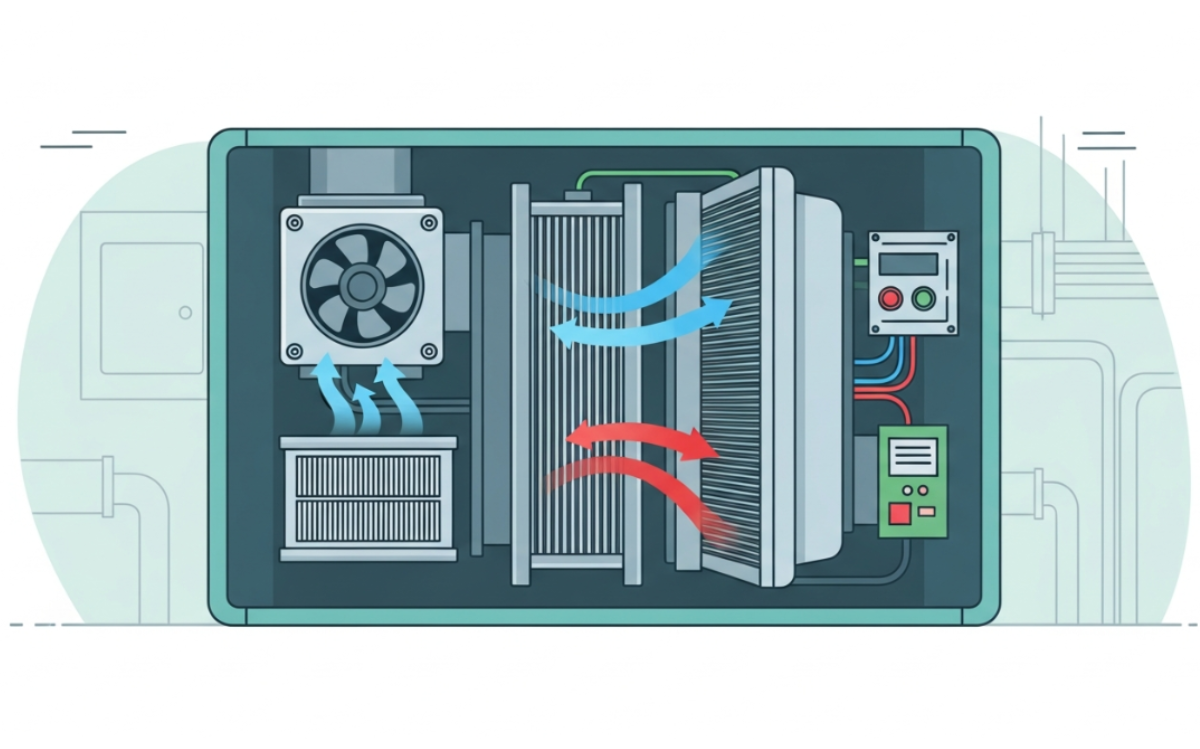
Here’s the piece most homeowners never get explained well: what the air handler actually does all day. And once you see the mechanism, the weird symptoms you’ve been ignoring suddenly make sense.
Step 1: Air Intake Through Return Ducts
The system begins by pulling indoor air through return vents, yes, all indoor air passes through this one hub. That’s why return placement and filter quality matter.
This air hits the filter before it touches anything else. Good air filters protect the coil. Bad ones… well, let’s just say techs see things in old air handlers that belong in horror movies.
Step 2: Air Filtration + Temperature Adjustment
Once past the filter, air travel gets interesting.
It flows across the evaporator coil, where it’s heated or cooled depending on whether the heat pump or outdoor unit is in “cooling” or “heating” mode. This is where indoor air gets transformed from stuffy to fresh or from chilly to warm.
Step 3: Air Distribution Through Ductwork
When the air is fully conditioned, the blower fan pushes it through supply ducts. This is the air that hits your face when you stand under a vent.
If you ever feel weak airflow at one vent but not another? That’s often duct leakage, but sometimes it’s a tired blower.
Step 4: The Variable-Speed Motor Advantage
This is where modern systems pull ahead.
A variable-speed blower motor doesn’t simply turn on and off. It modulates. It adapts. It breathes with your home.
The result?
- reduced noise
- more consistent temperatures
- better humidity control
- major energy efficiency improvements
Homeowners who upgrade to variable-speed often say the same thing: “It’s the first time my home has felt even.”
4. Air Handler vs. Other HVAC Components
This is where homeowners get tripped up, because HVAC is full of boxes, coils, and compressors that all look vaguely similar. So let’s clear the air.
Air Handler vs. Air Conditioner
The outdoor air conditioner (or heat pump) is what actually produces heating or cooling. But it can’t do anything without the indoor air handler to distribute that conditioned air.
Outdoor unit = conditions air Air handler = circulates conditioned air
They are two halves of the same machine.
Air Handler vs. Furnace
A furnace heats air directly with burners or electric heating elements. Many homes have a furnace + AC coil instead of a full air handler.
But when you have a heat pump? You don’t need a furnace. You need an air handler.
That’s the pairing.
Air Handler and Heat Pumps: The Modern Duo
Heat pumps rely on air handlers more than any other HVAC systems. Because heat pumps don’t burn fuel, the entire heating or cooling process depends on:
- the evaporator coil
- the blower
- steady, controlled airflow
Get the air handler wrong on a heat pump system and you’ll feel it every single winter night.
The Complete HVAC System Picture
The air handler is the indoor half that ties together:
- cooling systems
- heating elements
- ductwork
- filtration
- air distribution
It’s not optional. It’s not decorative. And it’s not just a simple fan box. It’s the command center.
5. Factors Affecting Air Handler Performance
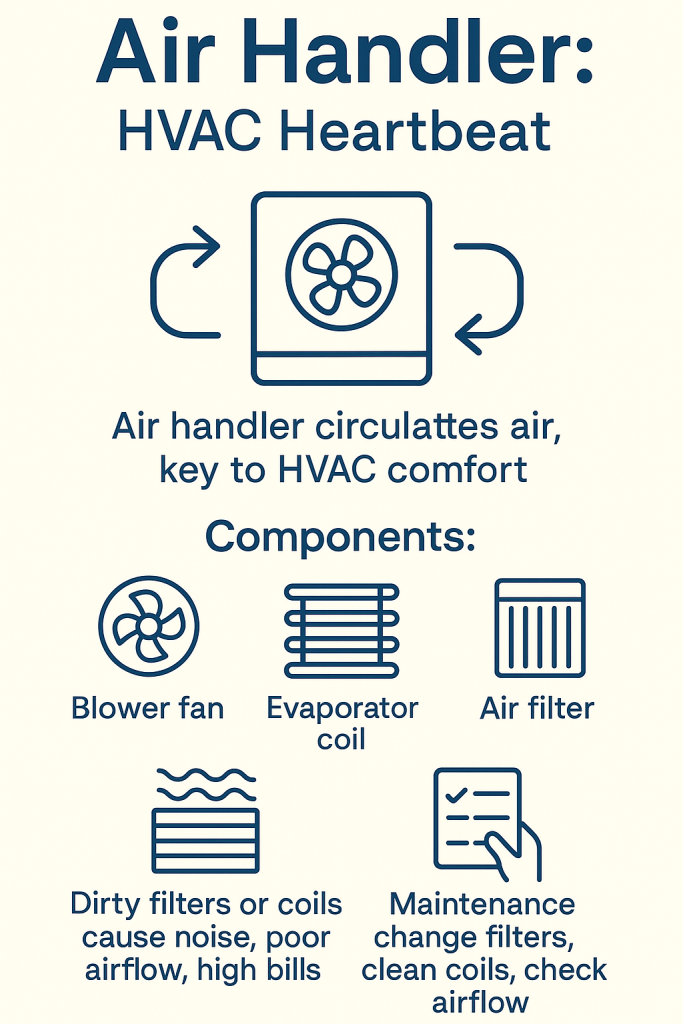
Here’s where the problems start showing up. Because even the best air handler can fall apart when ignored.
Maintenance: The Difference Between “Fine” and “Failing”
If you want a single rule that makes a bigger difference than any upgrade, any brand, any fancy thermostat?
Change your filter. Then clean the coil. Then check for airflow restrictions.
That’s it. Most air handler failures come from neglect, not mechanical breakdown.
Red Flags You Shouldn’t Ignore
When an air handler starts slipping, it whispers long before it screams. Look for:
- unusual noises Rattles, grinding, humming, or whistling. Each noise tells its own story.
- reduced airflow Not “a little weak.” Noticeably weaker. This is a sign the blower or ductwork is struggling.
- musty or dusty smells Your indoor air quality is pleading for attention.
- temperature swings The air handler isn’t circulating air evenly.
- higher energy bills A struggling blower uses more power, often without delivering better comfort.
Clogged Air Filters: The Silent System Killer
Techs say this half-jokingly, but it’s true: A clogged filter turns a healthy air handler into a wheezing, overworked problem.
When airflow drops:
- the coil can freeze
- the blower heats up
- energy efficiency tanks
- comfort evaporates
All from a $15 filter left too long.
When You Understand the Air Handler, You Understand Your Home’s Comfort
Most homeowners don’t realize it, but the air handler is the place where everything the HVAC system promises, cooling, heating, clean indoor air, improved comfort, lower energy bills, either comes together beautifully or falls apart.
If your home ever feels:
- uneven
- stuffy
- noisy
- dusty
- or just “off”
…the odds are high the air handler is trying to tell you something.
A well-maintained air handler quietly circulates conditioned air, stabilizes your indoor environment, and keeps your entire heating and cooling system from working harder than it should.
When it works, you feel it. When it doesn’t, you really feel it.
And now that you understand what it does? You’ll notice the signs long before they become expensive problems.
Ready to get your system checked, tuned, or upgraded?
Schedule a quick visit with [brand placeholder] and bring your home’s comfort back under control.
References
- https://en.wikipedia.org/wiki/Air_handler
- https://en.wikipedia.org/wiki/Sound_attenuator