
You’ve probably felt it before, the moment you walk into a room and the air feels heavy, almost like it hasn’t moved in days. A homeowner once told me their living room felt “swampy in summer and papery-dry in winter,” even though the thermostat insisted everything was normal.
That’s the quiet warning sign most people miss. The house is sealed tight for efficiency… but the air inside is wearing out. And the part most folks haven’t caught up to yet is how quickly stale air can chip away at comfort, health, and energy costs all at once.
1. The Problem: Stale Air and Wasted Energy
Credits: Matt Risinger
Here’s the thing: modern homes are built like insulated coolers. Great for energy efficiency, terrible for indoor air.
The same stale indoor air gets trapped, recirculated, reheated, and re-cooled. It carries dust, viral particles, off-gassing from furniture, pet dander, and humidity that lingers long enough to look for places to settle and create mold growth.
Indoor air quality impacts everything from allergies to respiratory stress, and the EPA has pointed out for years that indoor air can be two to five times more polluted than the air outside. Yet most homeowners still assume their HVAC unit “naturally” handles ventilation.
It doesn’t. Not without help.
Traditional ventilation demands that your heating and cooling system work harder. Every time you bring in fresh air, the HVAC system has to condition it, heat it, cool it, dehumidify it, or humidify it. That’s energy lost through the cracks.
And this is where an ERV system quietly changes the game. It steps in between your home and the outdoors, trading stale air for fresh air without sacrificing energy.
It adds ventilation without blowing up your energy bills. It controls humidity without adding another device to maintain. It turns an inefficient swap into a strategic exchange.
2. Defining the ERV: Energy Recovery Explained
So what is an ERV, really?
Strip away the acronym and you’re left with a simple idea that solves a problem most homes never talk about. An ERV, short for energy recovery ventilator [1], is a device that trades stale air for fresh outdoor air without tossing away all the energy your house has already paid to create.
Picture it as the bouncer at the door. It decides what comes in, what goes out, and how to keep the place comfortable without wasting a thing.
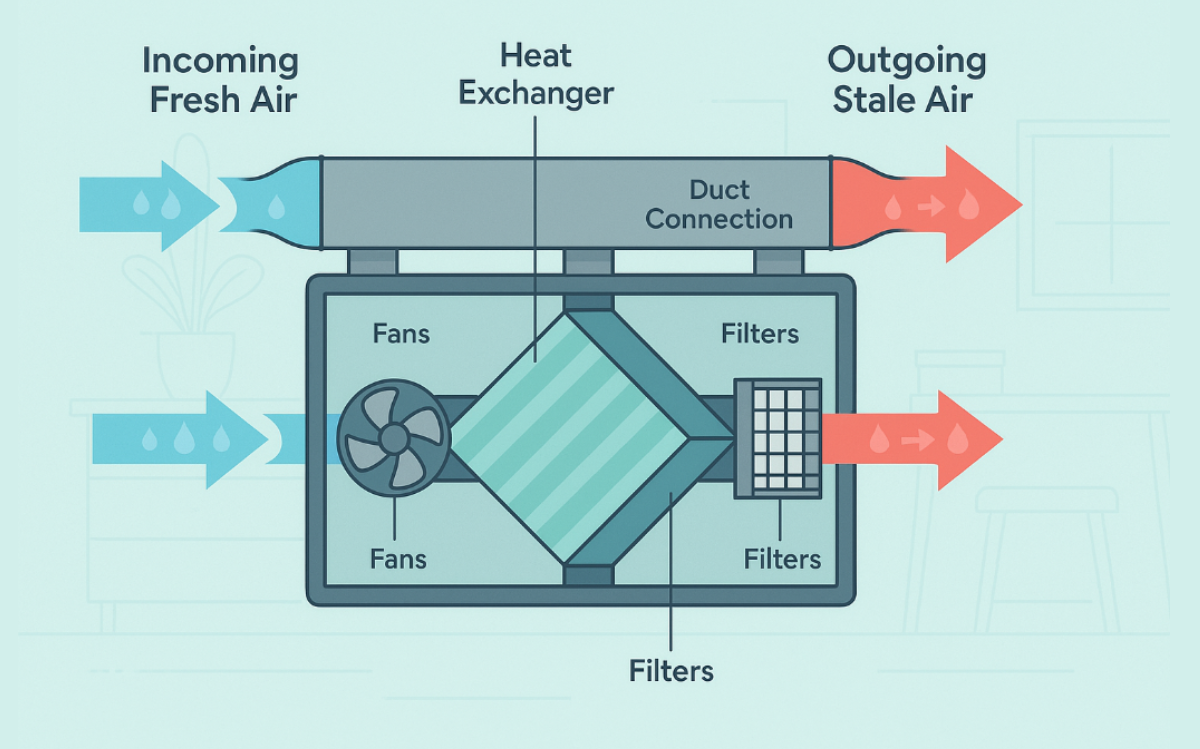
Instead of letting precious conditioned air slip out and forcing your HVAC system to muscle through more heating or cooling, the ERV quietly transfers heat and moisture between the incoming and outgoing air streams through its heat exchanger.
Warmer outgoing air lends some of its warmth to incoming cold air. Moist outgoing air helps tame the dryness of winter air or siphon off some of the heaviness of humid summer air. The two streams never touch, but they share energy through the barrier between them.
Traditional ventilation doesn’t do any of this. It just dumps indoor air and pulls in outdoor air. No balancing. No finesse. No strategy. ERVs rescue the energy, the humidity, and ultimately the comfort that would’ve been thrown away, and they hand it back to your home.
That’s the part homeowners feel immediately. Energy recovery isn’t some technical extra; it’s what separates a home that breathes naturally from one that constantly swings between too humid, too dry, too stuffy, or too expensive to condition.
3. How an ERV Works: The Heat Exchange Process
So what is an ERV, really? Strip away the acronym and you’re left with a simple idea that solves a problem most homes never talk about. An ERV, short for energy recovery ventilator [1], is a device that trades stale air for fresh outdoor air without tossing away all the energy your house has already paid to create.
Picture it as the bouncer at the door. It decides what comes in, what goes out, and how to keep the place comfortable without wasting a thing.
Instead of letting precious conditioned air slip out and forcing your HVAC system to muscle through more heating or cooling, the ERV quietly transfers heat and moisture between the incoming and outgoing air streams through its heat exchanger.
Warmer outgoing air lends some of its warmth to incoming cold air. Moist outgoing air helps tame the dryness of winter air or siphon off some of the heaviness of humid summer air. The two streams never touch, but they share energy through the barrier between them.
Traditional ventilation doesn’t do any of this. It just dumps indoor air and pulls in outdoor air. No balancing. No finesse. No strategy. ERVs rescue the energy, the humidity, and ultimately the comfort that would’ve been thrown away, and they hand it back to your home.
That’s the part homeowners feel immediately. Energy recovery isn’t some technical extra; it’s what separates a home that breathes naturally from one that constantly swings between too humid, too dry, too stuffy, or too expensive to condition.
3. How an ERV Works: The Heat Exchange Process
Even if you’ve never taken apart an HVAC system, the way an ERV works is surprisingly intuitive once you see the path the air takes.
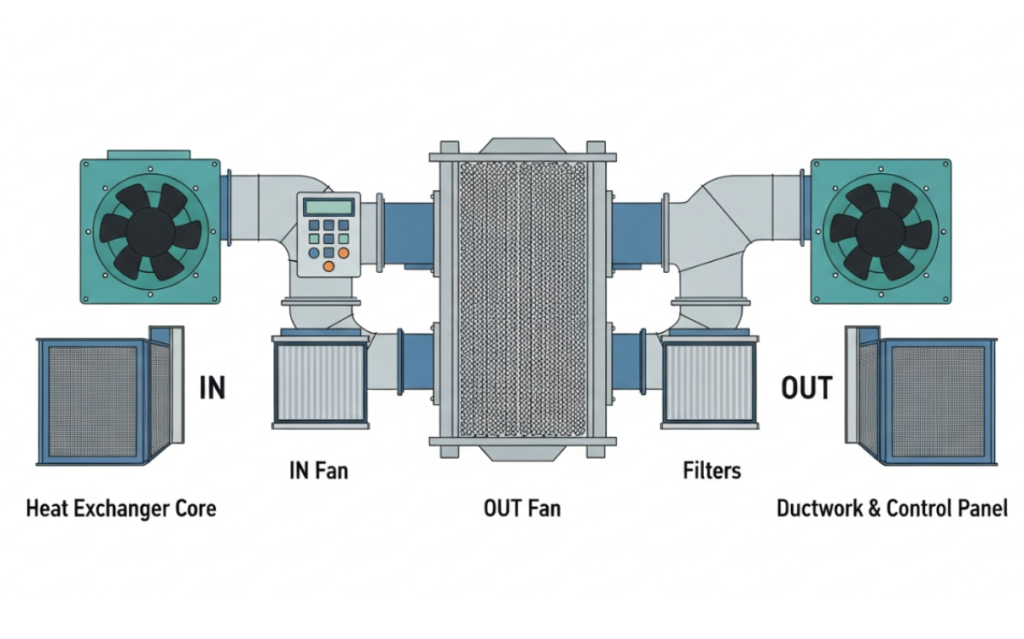
Inside the box, four parts run the show:
- The heat exchanger core – where heat and moisture are traded between the two streams.
- Two fans – one brings in outdoor air, the other carries out exhaust air.
- Filters – they catch dust, allergens, and anything you don’t want blowing through the house.
- Ductwork – tying everything into your HVAC system so the airflow lands where it should.
Once air begins to move, the exchange process starts.
Sensible heat transfer
This is simply temperature swapping. In winter, the warm outgoing air softens the chill of the incoming air before it enters the home. In summer, the cooler outgoing air knocks down the intensity of the heat outside. Your heating and cooling equipment doesn’t have to fight nearly as hard.
Latent heat transfer
Here’s where most homes feel the biggest difference: moisture control.
If you live somewhere muggy, the ERV pulls some of that humidity out of the incoming fresh air before it hits the rooms you live in. If you’re in a dry, cold climate, it pushes some moisture back into that parched incoming air so your home doesn’t feel brittle. This balancing act keeps humidity levels steadier without your air conditioning or humidifier carrying the whole load.
The exchange between air streams
Imagine two lanes on a highway running side by side. One lane carries stale outgoing air; the other carries fresh incoming air. They never merge, never collide, but energy moves through the barrier separating them. That barrier, the heat exchanger, is where the real recovery happens. And once you see it that way, the whole concept clicks.
The implication is simple: adding an ERV lets your home breathe without paying a comfort or energy penalty. You keep more conditioned air in play, you protect your HVAC system from unnecessary strain, and the fresh air coming in finally feels like it belongs indoors.
4. Benefits of ERVs: Energy Savings and Air Quality
Once homeowners see an ERV work day to day, they realize it’s doing three jobs at once, quietly and constantly.
Energy Efficiency
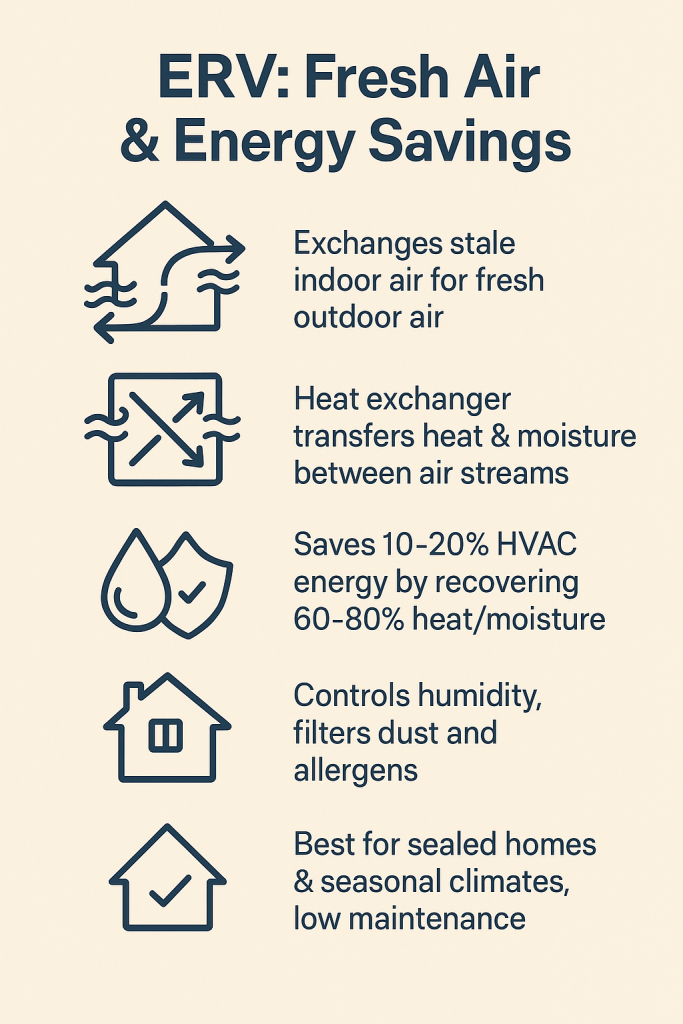
Most ERVs recover 60–80% of the heat and moisture hiding in exhaust air. That’s not a trivia stat, that’s real money saved. Less heating. Less cooling. Less constant cycling from your HVAC unit. Many households see a 10–20% cut in overall energy consumption once the ERV takes over ventilation.
Humidity Control
Humidity is sneaky. Too much and the house feels sticky; too little and everything gets dry and brittle. Worse, uncontrolled humidity invites mold growth, eats away at wood, and makes your air conditioning fight harder than it should.
An ERV lightens that load. By balancing humidity levels across seasons, it keeps rooms comfortable in three noticeable ways:
- Those suffocating summer rooms calm down.
- Winter dryness doesn’t crack your skin, or your hardwood floors.
- The home feels consistently comfortable instead of swinging between extremes.
Improved Indoor Air Quality
Here’s where the difference becomes personal. The ERV constantly trades stale indoor air for fresh outdoor air, but it filters what comes in so you aren’t pulling pollen, dust, or pollutants into your living space. Odors fade. Air feels lighter. Circulation improves.
And because ERVs help prevent the buildup of VOCs, pet dander, allergens, and excess moisture, they naturally align with ASHRAE ventilation [2] and energy efficiency standards. Fresh air starts feeling less like a luxury and more like the baseline your home should’ve had from day one.
5. ERV Components: A Closer Look
When you pop the lid on an ERV, you realize quickly that nothing inside is there by accident. Every piece has a job, and together they keep the whole system running like a quiet little engine in the background.
Heat Exchanger Core
This is the heartbeat of the unit. It’s the place where heat and moisture get traded between the outgoing air and the incoming air without ever letting those two streams touch. Some homes use a fixed plate core, others use a rotating wheel. The designs differ, but the mission’s the same, hang on to the energy you’ve already paid for.
Fans
You’ve got two of them working in tandem. One brings in fresh outdoor air, the other sends exhausted indoor air out. When they run in sync, your home avoids that “tight house” feeling where the air gets stale or the pressure feels off. Instead, everything breathes the way it should.
Filters
These are the unsung heroes. They catch the dust, pollen, pet dander, and whatever else tries to ride along in the air streams. Clean filters keep the air healthy and protect the heat exchanger so it can keep doing its job without getting choked up.
Ductwork and Controls
The ductwork is the stitching that ties the ERV into your HVAC system. And then there are the controls, sometimes basic, sometimes smart enough to adjust airflow based on conditions inside the house. When everything is set up correctly, the ERV doesn’t feel like a separate system. It feels like a natural extension of the home’s airflow.
6. ERV Applications and Considerations
You’d be surprised how many homes are a perfect match for an ERV. Most people assume it’s only for high-end builds or extreme climates, but that’s not the story.
Ideal Climates
ERVs really shine in places where the weather swings, humid, sticky summers followed by bone-dry winters. Homes that stay sealed up for months at a time see enormous benefits, because the ERV keeps the air fresh without letting the outdoors walk right inside.
If your home battles humidity half the year and dryness the rest, an ERV isn’t just “nice to have.” It’s a pressure relief valve for the entire house.
Installation Considerations
Putting an ERV in place means tying it into your existing ventilation or HVAC system so every room gets the benefit. Most units sit quietly in a basement, attic, or utility room. Because the setup requires clean duct paths and a route to an exterior wall, it’s definitely a job for a seasoned technician.
If you’re remodeling or building new, adding an ERV early is one of those decisions in the future-you will thank you for, right up there with good insulation and proper drainage.
Maintenance and Filter Replacement
ERVs don’t demand much, but they do need a little attention. Filters usually need a check every few months. The heat exchanger core likes a yearly cleaning. The fans and ductwork… honestly, once they’re installed correctly, they tend to mind their own business.
What really matters is keeping the airflow moving the way it was designed to. When the filters stay clean, the whole system breathes easier: the air feels lighter, the ERV doesn’t strain, and the comfort in the house stays predictable instead of drifting from room to room.
7. TL;DR Summary Table: ERV Benefits and Components
| Feature | Benefit | Component | Function |
| Energy Recovery | Lower energy bills and a lighter HVAC load | Heat Exchanger Core | Trades heat and moisture between air streams |
| Air Filtration | Cleaner, healthier indoor air | Filters | Catches dust, allergens, and everyday debris |
| Humidity Control | More comfort and fewer moisture problems | ERV System Overall | Keeps humidity in the sweet spot |
The Quiet Upgrade That Changes Everything
A lot of people assume ventilation is something their house just “figures out” on its own. You shut the door, crank the thermostat, and trust the place to handle the rest. But when an ERV kicks in, the change doesn’t creep up on you, it’s something you feel in the way a room no longer gets stuffy, or how the air doesn’t hang in the corners anymore.
You walk in after a long day, and the air actually feels… fresh. Not perfumed. Not forced. Just clean and steady in a way that most homes never quite manage.
It’s the kind of difference you don’t realize you were missing until it’s there.
References
- https://en.wikipedia.org/wiki/Heat_recovery_ventilation
- https://www.ashrae.org/file%20library/technical%20resources/standards%20and%20guidelines/standards%20addenda/62_1_2013_p_20150707.pdf