
Worcester County deals with a 47-degree average seasonal temperature swing – down to 23.7°F in January, up to 70.8°F in July. That’s a wide range to keep a house comfortable across, and it puts real demands on a heating and cooling system. Following basic HVAC maintenance tips for homeowners can help manage this workload. The key isn’t just having enough capacity; it’s making sure conditioned air actually gets to the right rooms.
That’s where the HVAC damper comes in. A lot of homeowners spend years dealing with a sweltering second floor or a basement that feels like a walk-in freezer, never realizing there’s a metal valve sitting in their ductwork that could fix most of it. Once you understand what these valves do, the whole system makes a lot more sense.
What an HVAC Damper Does
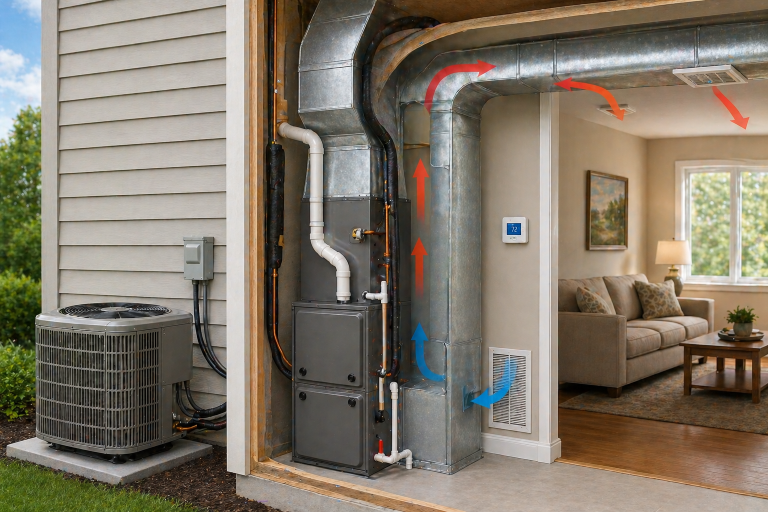
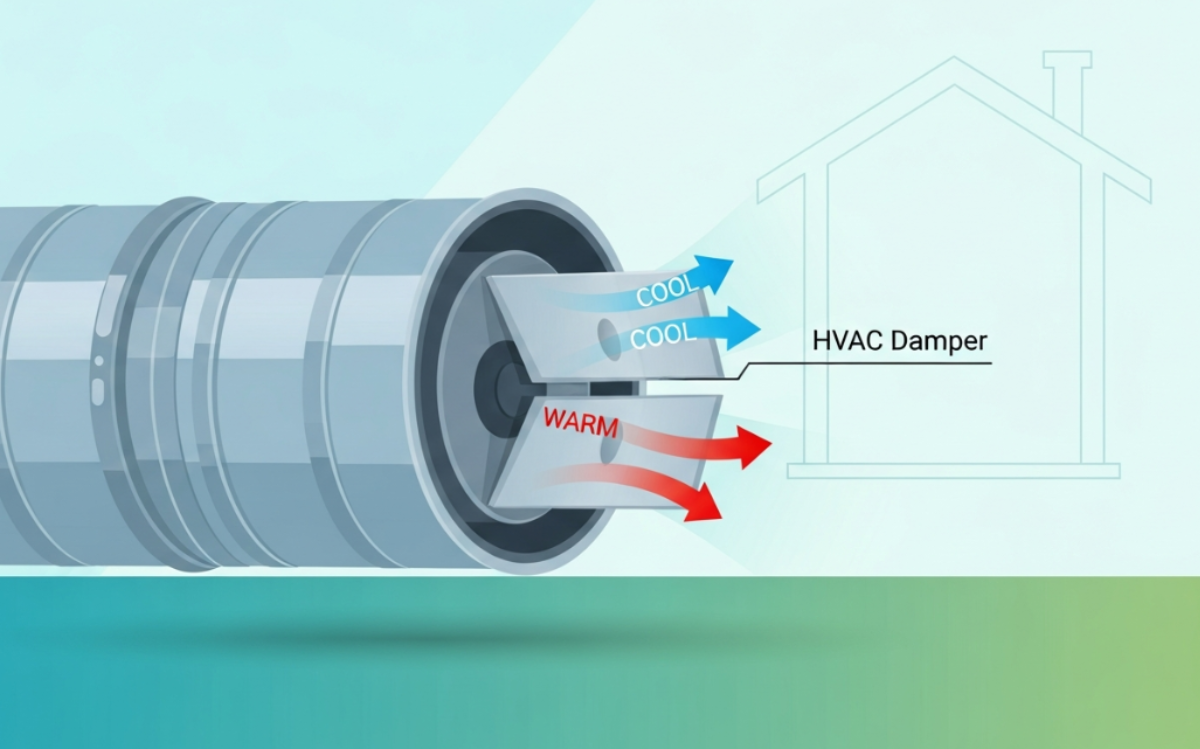
An HVAC damper is a movable plate or valve inside your ductwork. It sits between the furnace or air conditioner and the vents in individual rooms, regulating how much conditioned air travels down each branch of the duct system.
Think of it as a traffic cop for your ducts. Close one down slightly and you restrict airflow to that branch. Open it fully and air moves through at maximum volume. The result is that you’re shaping where the conditioned air goes before it ever reaches the registers – which is a more effective approach than trying to manage room temperature by fiddling with the vent covers themselves. Most dampers are located close to the main trunk line, typically in a basement, attic, or utility closet, which is why a lot of homeowners never notice them.
Credits: GalcoTV
Types of Dampers in Worcester County Homes
Worcester County has a wide mix of housing stock – historic colonials, mid-century ranches, newer builds – and the ductwork technology varies just as much. The type of damper installed in a given house determines how much control you actually have over the climate in different parts of it.
The simplest versions use a physical lever on the outside of the duct. More advanced setups connect electronic valves directly to a thermostat or zoning panel and handle the adjustments automatically.
Manual Dampers
Older New England homes with retrofitted central air or forced-hot-air systems typically use manual dampers. There’s a small metal handle on the outside of the duct pipe, and you adjust airflow by turning it to change the angle of the plate inside.
When the handle runs parallel to the duct, the valve is fully open. When it sits perpendicular to the pipe, the valve is closed and air can’t travel down that branch. Simple, reliable, and requires you to actually walk to the basement to make a change.
Motorized Dampers
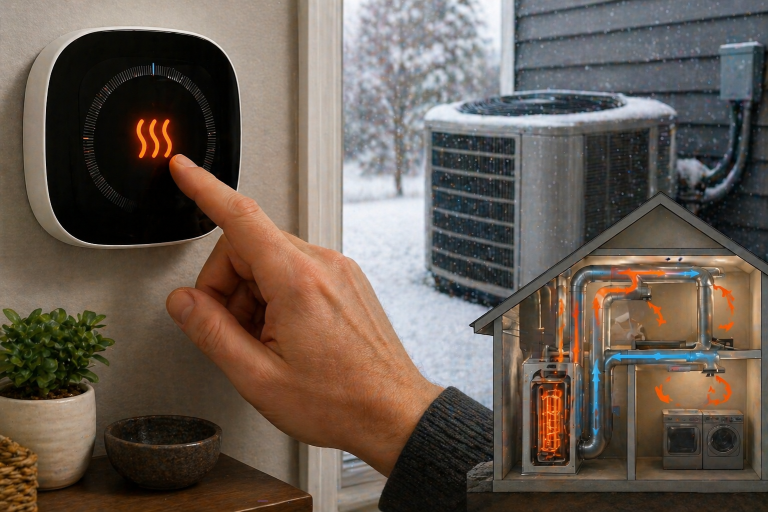
Newer builds and upgraded systems use motorized or automatic dampers wired to a central zoning panel and smart thermostats. When the upstairs thermostat reads 75°F and the downstairs is sitting at 68°F, the system adjusts the valves on its own to push more cold air to the second floor – no manual intervention needed.
Why Proper Airflow Matters for Your Home
Massachusetts weather is not gentle. Roughly 57 inches of annual snowfall, humid summers, and everything in between means your HVAC system is working hard for most of the year. When airflow is properly balanced, the system directs conditioned air only where it’s needed rather than running constantly to compensate for a single problem area. That translates to lower energy bills and less wear on the equipment over time.
Temperature Control and Zoning
Multi-story homes have a fundamental physics problem: heat rises. The second floor gets warm, the basement stays cold, and the thermostat on the main level calls it a draw. Dampers let you create distinct climate zones without installing separate heating and cooling units for each floor.
Restrict flow to an empty guest room or a naturally cool basement and you push that conditioned air toward the spaces you’re actually using. It’s a straightforward fix for what feels like a complicated problem.
Energy Efficiency and Massachusetts Rebates
Massachusetts doesn’t offer a rebate with a label specifically for HVAC zoning systems, but the statewide Mass Save program covers related efficiency upgrades. Homeowners can access 0% financing HEAT Loans up to $25,000 toward qualified improvements.
For heat pump zoning work, an integrated control from the Mass Save Qualified Product List must be installed for heating zones where oil, propane, or natural gas are still in use. Eligible homeowners who install properly sized partial heat pumps can qualify for a $500 bonus, with total rebates capped at $8,500 per account.
Finding and Adjusting Your Duct Valves
Most duct valves are located near the main HVAC unit, within the first few feet of the branch lines splitting off the main trunk. If your basement or attic is unfinished, you can usually spot them without much searching – they’re the metal levers sticking out of the ductwork.
When balancing the system, make small adjustments and give it a full day before evaluating the result. Move the handle a bit, wait 24 hours, and check whether the room temperature shifted. Overadjusting all at once makes it hard to know what actually worked.
Seasonal Adjustments for New England Weather
Worcester County averages 19°F in winter and 81°F in summer. Because cold air sinks and warm air rises, the same damper positions that work in July will fight you in January. Adjusting the valves twice a year – once at the start of the cooling season and once before heating season – keeps the system working with physics rather than against it.
During warm July weeks, partially close the valves on branches leading to the first floor and basement to force more air conditioning up to the second floor. When January arrives, reverse that to push warm furnace air down into the lower levels.
Recognizing a Broken or Stuck Valve
The most obvious sign is uneven temperatures – one room running cold while the rest of the house is comfortable, or a single space that never seems to cool down. You might also hear whistling or rattling from the ductwork, which typically means a motorized valve has failed to open fully and air is being forced through a narrow gap. Unexpectedly high energy bills are another signal, since a blocked duct forces the system to run longer to hit the thermostat setpoint.
Directory sites like Houzz list over 700 HVAC contractors in the Worcester area. Companies like Basnett Plumbing, Heating & AC have been servicing local zone control systems since 1987. For a standard residential service call in Worcester County, you’re likely looking at $89 to $250; emergency after-hours visits can run $150 to $300.
Frequently Asked Questions
How much does it cost to replace a broken HVAC damper in Worcester County?
It depends on what you have. A basic manual damper replacement typically runs $80 to $300. Replacing a motorized damper usually costs between $350 and $800 in the Northeast, depending on labor rates and the complexity of the zoning panel.
Can you install HVAC zone dampers in older Worcester colonials with existing ductwork?
Yes. HVAC professionals can retrofit motorized or manual dampers into existing ductwork. The work usually involves cutting into exposed ducts in the basement or attic to insert the new valves, then wiring them to a central control panel.
Will a stuck HVAC damper fail a Massachusetts home inspection?
It depends on the severity and the inspector. A stuck manual lever might be noted as a minor defect needing repair. If a broken motorized damper is preventing heat from reaching a habitable room during a winter inspection, it will likely be flagged for correction.
Should I add duct dampers or install mini-splits to fix a hot second floor in Central, MA?
It depends on your current setup and budget. If your existing central air unit is properly sized and your ductwork is accessible, adding dampers is usually the more cost-effective fix. If you want to claim Mass Save heat pump rebates and eliminate ductwork altogether, a ductless mini-split might be the better long-term choice.
What are the signs a manual HVAC damper is stuck closed before I list my house for sale?
The clearest sign is little to no airflow from the vent registers in a specific room while the system is running. The room will feel noticeably hotter or colder than the rest of the house. You may also hear a whistling noise near the corresponding ductwork branch in the basement.
Does upgrading to a motorized HVAC damper system increase home resale value in Worcester County?
It can add appeal for buyers. It may not return dollar-for-dollar on investment, but a fully functional zoning system signals that the home is energy-efficient and comfortable across all floors – and that’s not a hard thing to sell.