
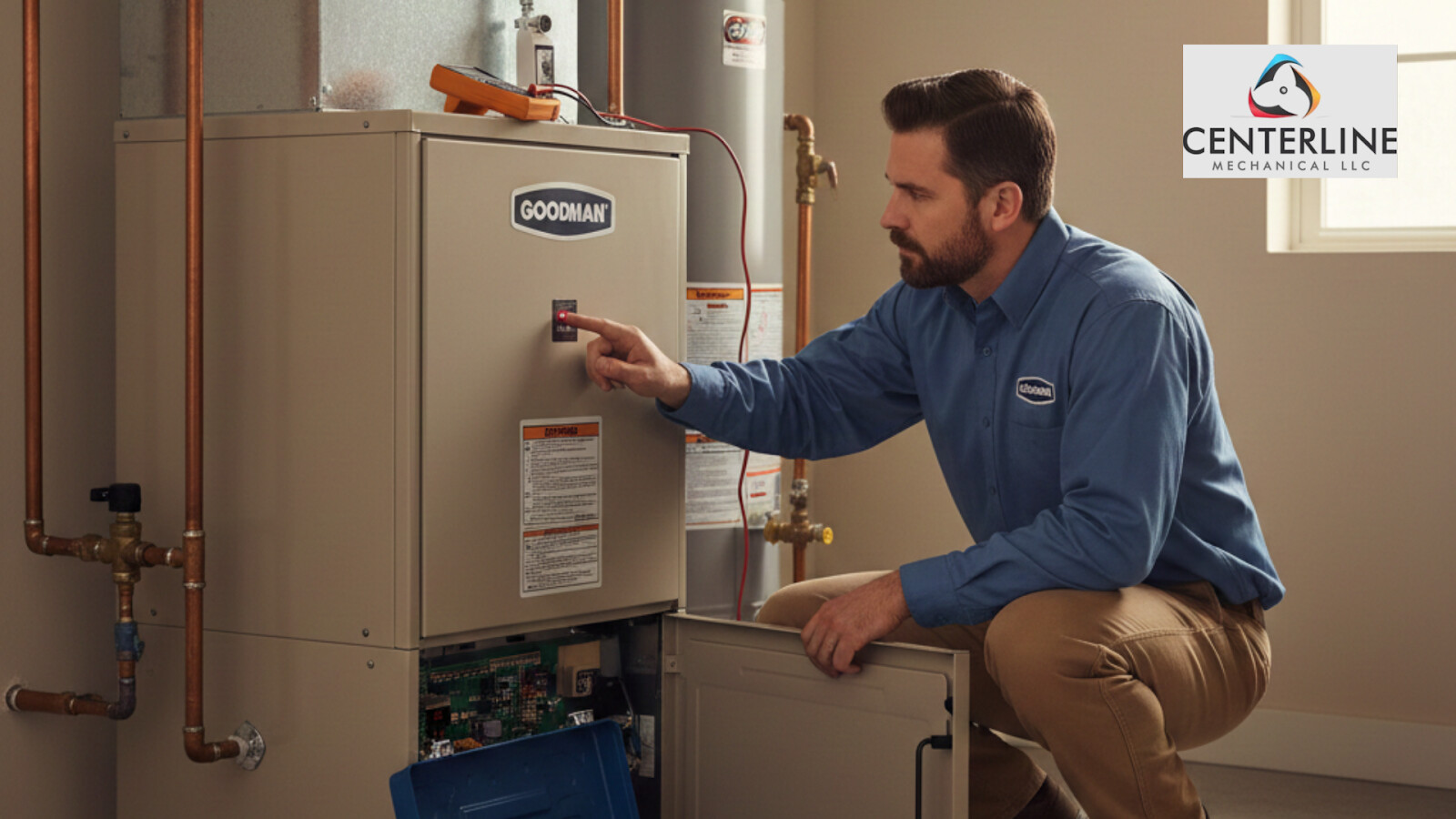
Sometimes a furnace quits over something small: a thermostat setting, a power hiccup, a clogged filter, or a safety switch doing exactly what it’s designed to do. If you’re asking “why is my furnace not working,” you’re not alone. Most no-heat calls trace back to a short list of common issues you can check without taking anything apart.
Start with the basics. If those don’t solve it, pay attention to the warning signs. That’s where a “simple fix” turns into a safety issue.
Key Takeaways
- Start with thermostat settings and power. Many “dead furnace” calls end here.
- A clogged filter is the most common cause of overheating and shutdown.
- Gas smells, CO alarms, banging at ignition, or unstable flames are stop-and-call signals.
Step 1: Check the Thermostat and Power First
A thermostat is simple, but it controls everything. If it’s not sending a clear signal, the furnace won’t start.
Look at the thermostat screen. If it’s blank, replace the batteries and try again. If it’s on, confirm it’s set to Heat, not Cool or Off, and set the temperature at least 5°F above the room temperature. If you want a quick reset, switch it to Off, wait 10 seconds, then set it back to Heat.
If the thermostat looks fine, move to power. Check the breaker labeled Furnace / Heat / HVAC. If it’s tripped, flip it fully off, then back on. Then find the furnace service switch near the unit (it looks like a normal light switch). Make sure it’s on. That switch gets bumped more often than people realize.
If you have power and the furnace is still completely unresponsive, the problem is likely deeper than basic settings.
Step 2: Don’t Skip the Air Filter
If the furnace starts, runs briefly, then shuts down, the air filter is the first place to look.
A furnace needs steady airflow to carry heat safely away from the heat exchanger. When the filter is clogged, airflow drops. The heat exchanger overheats. The furnace responds by shutting the burners off through a safety limit switch. The blower may keep running to cool things down, which makes the problem confusing. You hear activity, but the house doesn’t warm up.
Here’s the simplest filter check: pull it out and hold it up to a light. If you can’t see light through it, replace it.
Filter types and realistic replacement timing
| Filter type | Typical replacement | Notes |
| Fiberglass (thin) | About every 30 days | Low filtration, clogs fast |
| Pleated 1-inch (MERV 8–11) | About every 60–90 days | Most common |
| Pleated 4–5 inch media | About every 6–12 months | If you have a media cabinet |
| High-MERV / specialty | Follow manufacturer guidance | Can restrict airflow if not designed for it |
If you have pets, allergies, or renovation dust, lean toward the shorter end of those ranges.
Step 3: If It’s Gas, Watch the Ignition Sequence
If the thermostat and filter are good but the furnace still won’t light, it’s often an ignition or safety-control issue.
Modern gas furnaces follow a start sequence. If any step fails, the control board shuts the whole process down. That’s why you might hear a click or fan, then nothing.
The flame sensor problem (common, usually fixable)
The flame sensor is a thin metal rod that “proves” flame. If it’s dirty, the furnace may light briefly, then shut off the gas within a few seconds. The blower can continue, so it feels like the furnace is running but not heating.
If you’re comfortable and careful, cleaning a flame sensor can be a homeowner-level task. Turn off power to the furnace first. Remove the sensor (usually one screw and one wire). Clean the rod gently with fine steel wool or fine-grit sandpaper. Reinstall and test.
One warning: don’t touch the ignitor (it’s fragile), and don’t attempt anything involving gas piping or valves beyond checking the shutoff handle position.
The hot surface ignitor problem (fragile, often needs replacement)
If the ignitor doesn’t glow at all during startup, it may be cracked or burned out. That part is delicate. Replacement is usually straightforward for a technician, but it still involves opening the burner compartment and handling a fragile component.
Step 4: Check the Simple Gas Supply Basics
Before assuming a major failure, confirm the gas shutoff valve to the furnace is on.
The handle should be parallel to the gas pipe when open. If it’s perpendicular, gas is off. If you have propane, check the tank gauge too.
If you ever smell strong gas, stop. Leave the area and contact the gas provider or emergency services from outside.
Safety Switches: When the Furnace Is Protecting You
Safety switches are supposed to shut the furnace down when something isn’t right.
A high-limit switch trips when the unit overheats (often airflow-related). A pressure switch can prevent ignition if venting is blocked. A flame rollout switch can trip if flames aren’t staying where they belong.
If a safety switch trips once, it may be a clue. If it trips again, don’t keep resetting things. Repeated trips mean the furnace is warning you.
When to Stop Troubleshooting and Call a Technician
Some symptoms aren’t “diagnosis” problems. They’re safety problems.
Stop and get help immediately if:
- You smell gas (rotten egg odor).
- A carbon monoxide alarm goes off.
- You see smoke or smell burning electrical odor.
- You hear loud banging at ignition (possible delayed ignition).
Call for service soon if:
- The furnace short-cycles even after replacing the filter.
- Burners light, then shut off after a few seconds (common flame sensor issue).
- You hear grinding/screeching (blower motor or bearings).
- Flames look yellow and lazy instead of mostly blue.
A technician can test combustion, verify venting, read diagnostic codes, check gas pressure, and confirm the unit is operating safely. That’s not guesswork work.
Comparing DIY Fixes vs Professional Repair
Most homeowners can safely handle:
- Thermostat settings and batteries
- Breaker and furnace switch checks
- Filter replacement
- Basic visual inspection (vents, obvious blockages, gas shutoff handle position)
Professional-only territory includes:
- Control board diagnostics
- Gas valve issues or gas pressure adjustments
- Electrical diagnosis beyond resetting a breaker
- Venting problems and safety switch root causes
- Heat exchanger concerns and combustion testing
A professional tune-up is usually a few hundred dollars, but it can prevent mid-winter failures and catch safety issues early.
FAQ
Why is my furnace not working even though the thermostat is set to Heat?
Start with power and signal. Replace thermostat batteries if needed, confirm it’s set to Heat, raise the setpoint above room temperature, and verify the furnace breaker and service switch are on. If the furnace is still dead, it may be a safety lockout or a control problem that needs a technician.
Can a dirty air filter really shut my furnace down?
Yes. Restricted airflow can overheat the heat exchanger and trip the high-limit switch. The burners shut off for safety, and the furnace may short-cycle until airflow is restored.
My furnace turns on and shuts off after a minute. What does that mean?
Most commonly it’s airflow or overheating. Replace the filter and make sure returns and vents aren’t blocked. If it keeps happening after that, it can be a safety control, venting issue, or flame-sensing problem.
Why won’t my gas furnace ignite?
Common causes include a dirty flame sensor, a failing ignitor, or a gas supply issue (shutoff valve off). If you smell gas, stop immediately and follow safety steps. If ignition keeps failing, call a technician.
When should I stop troubleshooting and call a technician right away?
Right away if you smell gas, a CO alarm sounds, you hear banging at ignition, you see unstable/yellow flames, or the breaker trips repeatedly. Those are safety and electrical risks, not DIY fixes.
Getting Your Heat Back On
Losing heat affects more than comfort. Start with the thermostat, breaker, furnace switch, and air filter. Those resolve a surprising number of no-heat situations.
If you’ve tried the basics and your home is still cold, it’s time to call Centerline Mechanical for a safe, accurate diagnosis and dependable heat restoration.