
Your old furnace makes a sound like a coffee grinder full of rocks. The air conditioner blows warm air on the hottest day of July. You know it’s time, but the thought of buying a new HVAC system feels overwhelming.
The process isn’t as mysterious as it seems. It’s about asking the right questions and understanding a few key principles. This guide cuts through the complexity, giving you the confidence to make a smart investment in your home’s comfort. Keep reading to learn the steps that will save you money and frustration for years to come.
Key Takeaway
- Size is Everything: An accurate load calculation prevents costly inefficiency.
- Efficiency Pays Off: Higher SEER2 and AFUE ratings lead to significant energy savings.
- The Installer Matters Most: A qualified contractor is as important as the equipment itself.
Assessing Your Home’s HVAC Needs Before Replacement
If the repair cost is more than half the price of a new system, and your unit is over twelve years old, replacement is usually the wiser long-term investment.
- Identify problem areas like uneven temperatures.
- Analyze recent energy bills for spikes.
- Consider the age and repair history of your current system.
This isn’t about square footage alone. It’s about how your house lives and breathes. Do you have hot and cold spots? Are your energy bills creeping up each year? Is your system more than twelve years old? These are the clues.
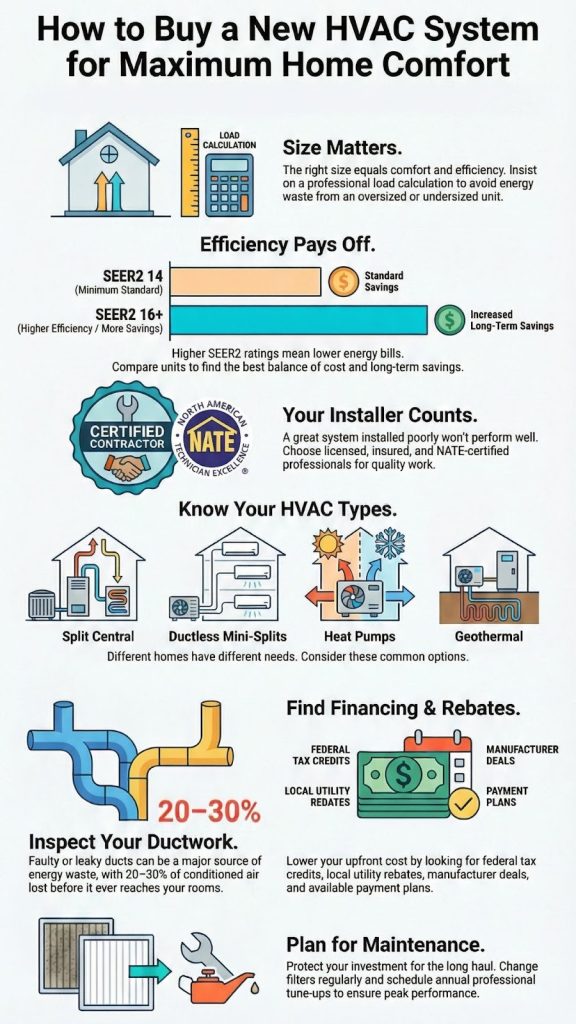
A professional assessment should always include a Manual J load calculation. This isn’t a rough guess. It’s a precise analysis that considers your insulation, window types, and even the direction your home faces.
Getting this wrong is the most common and expensive mistake. An oversized system will short-cycle, turning on and off constantly, wearing itself out while failing to control humidity. An undersized one will run nonstop, struggling to keep up.
Understanding the Different Types of HVAC Systems
| HVAC System Type | Best For | Key Advantages | Potential Limitations |
| Split Central System | Homes with existing ductwork | Familiar, cost-effective, reliable | Requires good duct condition |
| Ductless Mini-Split | Homes without ducts or room additions | Zoned control, high efficiency | Higher upfront cost per room |
| Heat Pump | Mild to moderate climates | Heating & cooling in one system, very efficient | May need backup heat in cold climates |
| Geothermal System | Homes with land and higher budgets | Extreme efficiency, long lifespan | Very high installation cost |
| Packaged Unit | Small homes or limited indoor space | Compact, all-in-one design | Less efficient than split systems |
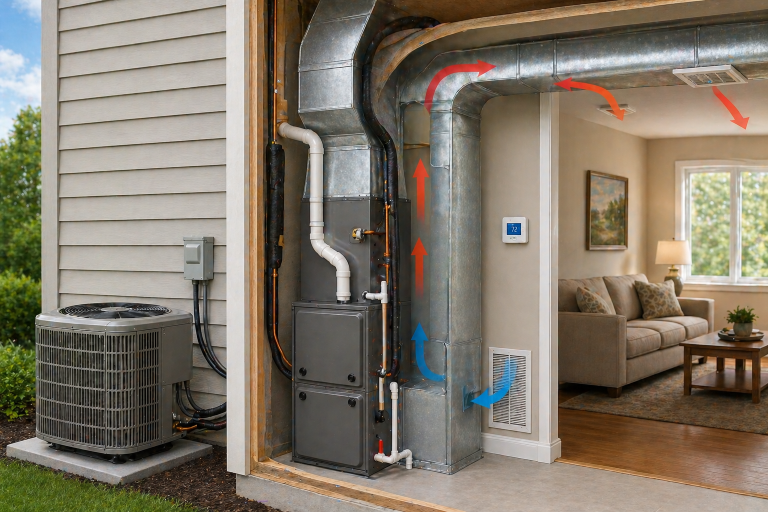
The world of HVAC has evolved. The standard split system, with an outdoor condenser and indoor furnace or air handler, is still the most common choice for homes with existing ductwork. It’s reliable and familiar. But it’s no longer the only game in town.
These systems use individual air handlers mounted on walls or ceilings, connected to an outdoor unit by a small conduit. They offer incredible zoning flexibility, allowing you to control the temperature in each room independently.
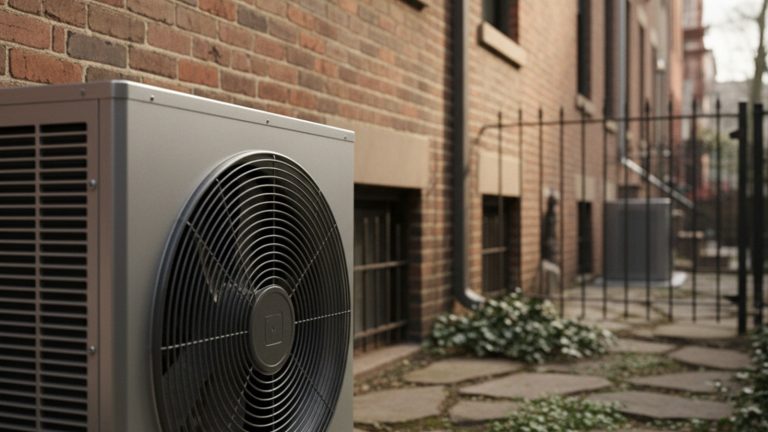
Then there’s the heat pump, the technology that’s changing the game. Think of it as a reversible air conditioner. In summer, it moves heat from inside your house to the outside. They are incredibly efficient and are often paired with a backup furnace for the deepest freezes.
- Split Central Systems: Best for homes with existing, functional ductwork.
- Ductless Mini-Splits: Ideal for targeted comfort and ductless applications.
- Heat Pumps: The versatile, all-in-one solution for heating and cooling.
For those with the budget and space, geothermal systems tap into the earth’s constant temperature for extreme efficiency, while packaged units combine everything into a single rooftop or slab-mounted cabinet for compact homes.
HVAC Efficiency Ratings Explained: SEER2, AFUE, and Energy Savings
When you start comparing models, you’ll be hit with a alphabet soup of acronyms. Understanding them is the key to long-term savings.
SEER2 is the updated standard for measuring cooling efficiency, building on what SEER ratings in HVAC systems have long indicated about how much energy a unit uses to deliver comfort.
The higher the number, the less electricity it uses. While the minimum is now 14, aiming for 16 or higher is where you’ll see real bill reductions.
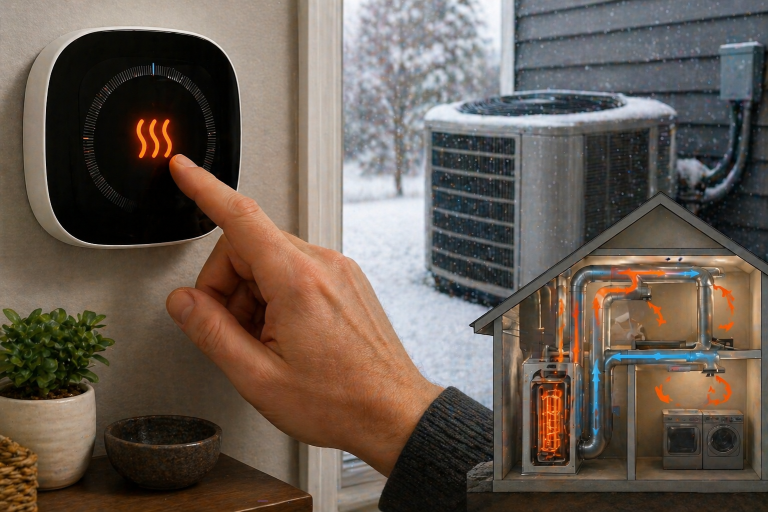
But efficiency isn’t just about the unit itself. Smart thermostats learn your schedule and adjust temperatures to save energy when you’re away.
Why Ductwork, Airflow, and Zoning Matter for HVAC Performance
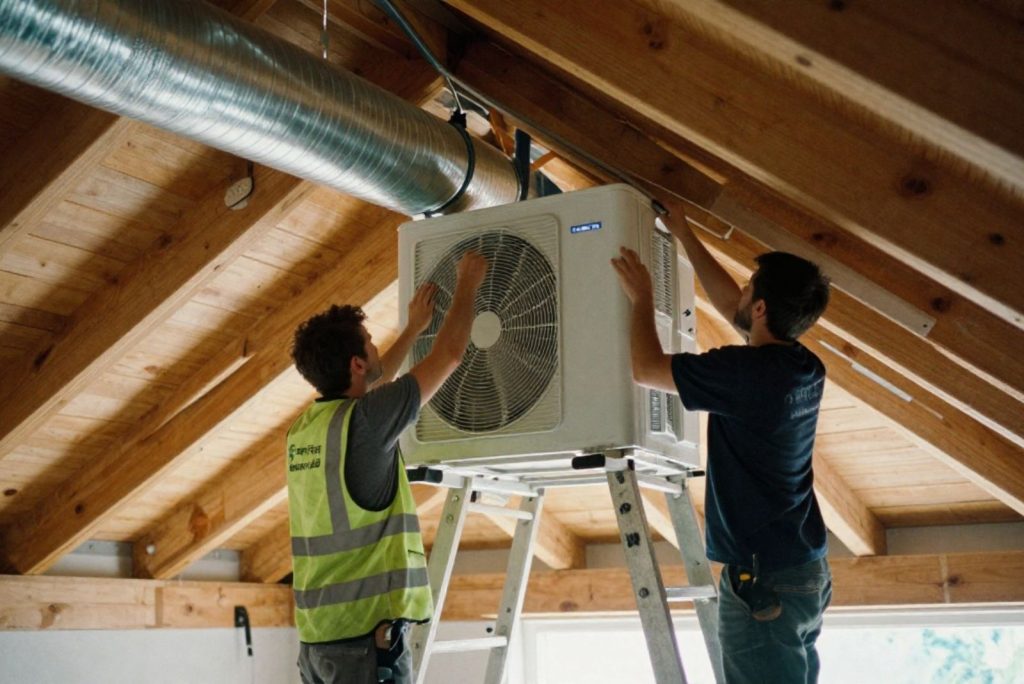
Zoning systems use multiple thermostats and HVAC dampers inside the ductwork to direct air only where it’s needed, solving those pesky hot and cold spots for good. These features add to the upfront cost but contribute significantly to comfort and savings.
Your ductwork is the circulatory system of your HVAC. If it’s leaky, poorly insulated, or improperly designed, even the most expensive, efficient system will waste huge amounts of energy. Studies suggest that faulty ducts can waste 20% to 30% of the conditioned air moving through them (1).
Before installation, a good contractor should evaluate your ducts. This might involve a pressure test to measure leakage. In some cases, if the ductwork is beyond repair or you’re adding a new space, a ductless system might be a more cost-effective path than a full duct replacement.
This is why the installer’s expertise is critical. They need to see the whole picture,the equipment, the ducts, and the house itself,as one interconnected system. A perfect unit connected to a flawed duct system is a flawed system.
How to Choose a Qualified HVAC Contractor for Installation
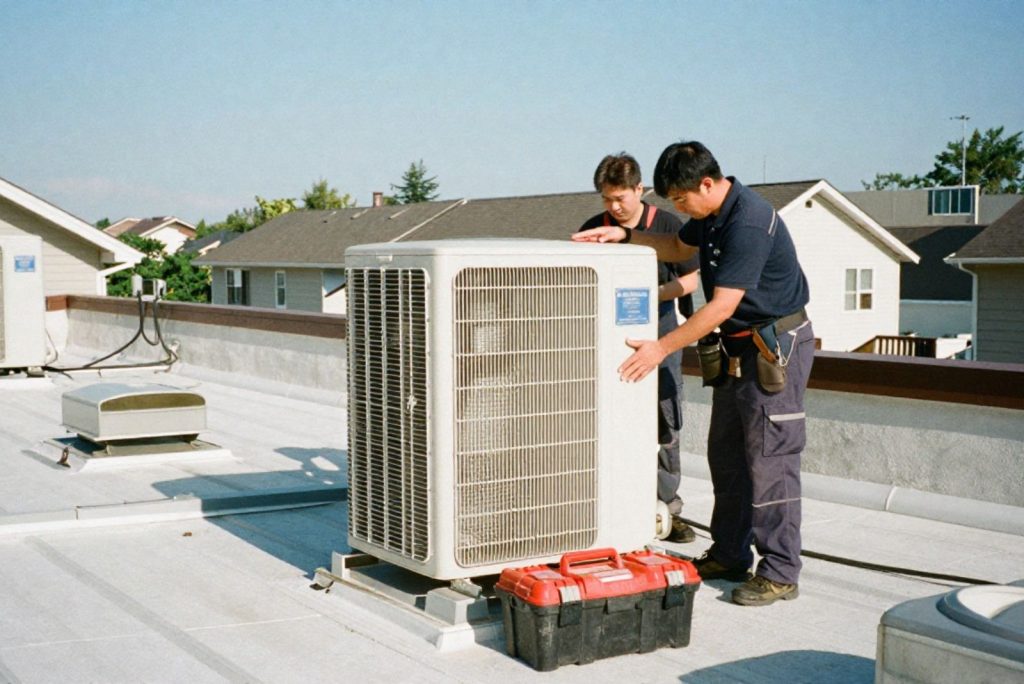
This is the most critical step. The best equipment in the world will perform poorly if a new HVAC system installation isn’t handled correctly from load calculation to final airflow balancing.
You should get at least three detailed quotes from licensed, insured, and preferably NATE-certified contractors. NATE certification is the industry standard for technician excellence.
When comparing quotes, look beyond the bottom line. Compare the specific model numbers being proposed, the warranty details (including labor), and the scope of work. Are they including duct sealing? Thermostat installation? The cheapest option is often the most expensive in the long run.
- Get 3-5 detailed, in-home quotes.
- Verify licenses, insurance, and NATE certification.
- Compare warranties, model numbers, and included services.
Be wary of any contractor who gives you a quote over the phone without seeing your home. They should perform a Manual J load calculation and a Manual D duct assessment. Ask for references and check online reviews. A reputable pro will be transparent, answering all your questions without pressure.
HVAC Rebates, Tax Credits, and Financing Options Explained
A new HVAC system is a major investment, but you don’t have to shoulder the full cost alone. Take advantage of financial incentives. The federal government offers tax credits for high-efficiency systems, particularly heat pumps, through the Inflation Reduction Act. These can save you up to $2,000.
Many state and local governments, as well as utility companies, offer additional rebates for installing ENERGY STAR certified equipment. These incentives can significantly reduce your upfront cost.
Also, most HVAC companies offer financing options, allowing you to pay for the system over time with manageable monthly payments. Be sure to ask every contractor about available rebates and financing,they should be proactive in helping you find them.
Finalizing Your HVAC Purchase and Planning for Long-Term Maintenance
Credits: Comfort Engineer, Inc.
Once you’ve chosen a system and a contractor you trust, review the contract carefully. Ensure it includes the exact model numbers, the total cost, the payment schedule, the project timeline, and the warranty information. Don’t sign anything until you’re completely comfortable.
After installation, your job shifts to maintenance. Your system’s longevity and efficiency depend on it. Change your air filters every one to three months.
Schedule an annual professional tune-up, typically in the spring for cooling and fall for heating. This preventative maintenance will catch small issues before they become big, costly repairs and will keep your system running at peak efficiency.
The HVAC industry is seeing a massive shift, with 62.5% of the market now focused on replacing old systems (2). This means contractors are highly experienced in retrofitting new, smarter technology into existing homes. You’re not just buying a machine; you’re upgrading your entire home’s comfort ecosystem.
FAQs
How do I know it is time to buy a new HVAC system?
It may be time for a new HVAC system if your old one is very noisy, blows warm air, or breaks often. If your system is over twelve years old and repairs cost a lot, replacing it can save money. High energy bills and rooms that feel too hot or too cold are also signs. A new system can bring better comfort and lower monthly bills.
Why is system size so important?
System size matters because bigger is not always better. A system that is too big turns on and off too fast and wastes energy. A system that is too small runs all the time and still feels uncomfortable. The right size keeps your home comfortable and controls humidity. A professional uses a special test to find the correct size for your home.
What is a load calculation?
A load calculation is a test that shows how much heating and cooling your home needs. It looks at insulation, windows, home size, and sun exposure. This test helps choose the right system size. Without it, the system may not work well. A load calculation helps save energy, improve comfort, and protect your new HVAC system from wearing out too fast.
What type of HVAC system should I choose?
The best HVAC system depends on your home. Homes with ducts often use central systems. Homes without ducts may use ductless mini-splits. Heat pumps can heat and cool using less energy. Some homes use special systems like geothermal. A professional can help you choose the best option based on comfort needs, budget, and how your home is built.
What does SEER2 mean?
SEER2 shows how efficient an air conditioner or heat pump is. A higher number means it uses less electricity. This helps lower energy bills. The minimum is usually 14, but 16 or higher can save more money over time. Choosing a higher SEER2 system may cost more at first, but it often pays off with lower monthly bills.
Why does the installer matter so much?
The installer is very important because even good equipment can fail if installed wrong. A trained installer makes sure the system is sized right, connected properly, and tested. Poor installation can cause high bills, noise, and breakdowns.
Always choose a licensed and experienced contractor. A good installer helps your system last longer and work better every day.
Should I replace my ductwork too?
Sometimes ductwork needs repair or sealing when you get a new system. Leaky ducts can waste air and money. If ducts are damaged or poorly designed, your home may feel uneven. A contractor should inspect them first. In some cases, ductless systems may work better. Good ducts help your new HVAC system deliver comfort to every room.
Are smart thermostats worth it?
Yes, smart thermostats can be very helpful. They learn your schedule and adjust temperatures to save energy. They can lower heating or cooling when you are away. Some can be controlled by phone. This helps reduce energy bills and keeps your home comfortable.
How can I pay for a new HVAC system?
Many homeowners use rebates, tax credits, or financing. High-efficiency systems may qualify for federal tax credits. Local utility companies may offer rebates too. Many HVAC companies provide payment plans. These options help lower upfront costs. Always ask contractors about savings programs. Using incentives can make a new HVAC system much more affordable.
What should I do after installation?
After installation, take care of your new system. Change air filters every one to three months. Schedule yearly professional checkups. Keep vents clear and listen for strange noises. Good maintenance keeps the system running well and saves money. A little care helps prevent big repairs and keeps your home comfortable for many years to come.
Your New Standard of Comfort
Buying a new HVAC system is a significant decision, but it doesn’t have to be a stressful one. By methodically assessing your needs, understanding the technology, and choosing a qualified professional, you can transform your home into a haven of consistent, efficient comfort.
The right system will pay for itself over time through lower utility bills and fewer repair calls. You’ve done your research. Now, take the final step toward a more comfortable home with Centerlinemech.
References
- https://www.sciencedirect.com/science/article/abs/pii/S0360132323001014
- https://www.sciencedirect.com/science/article/pii/S2352484721014037