
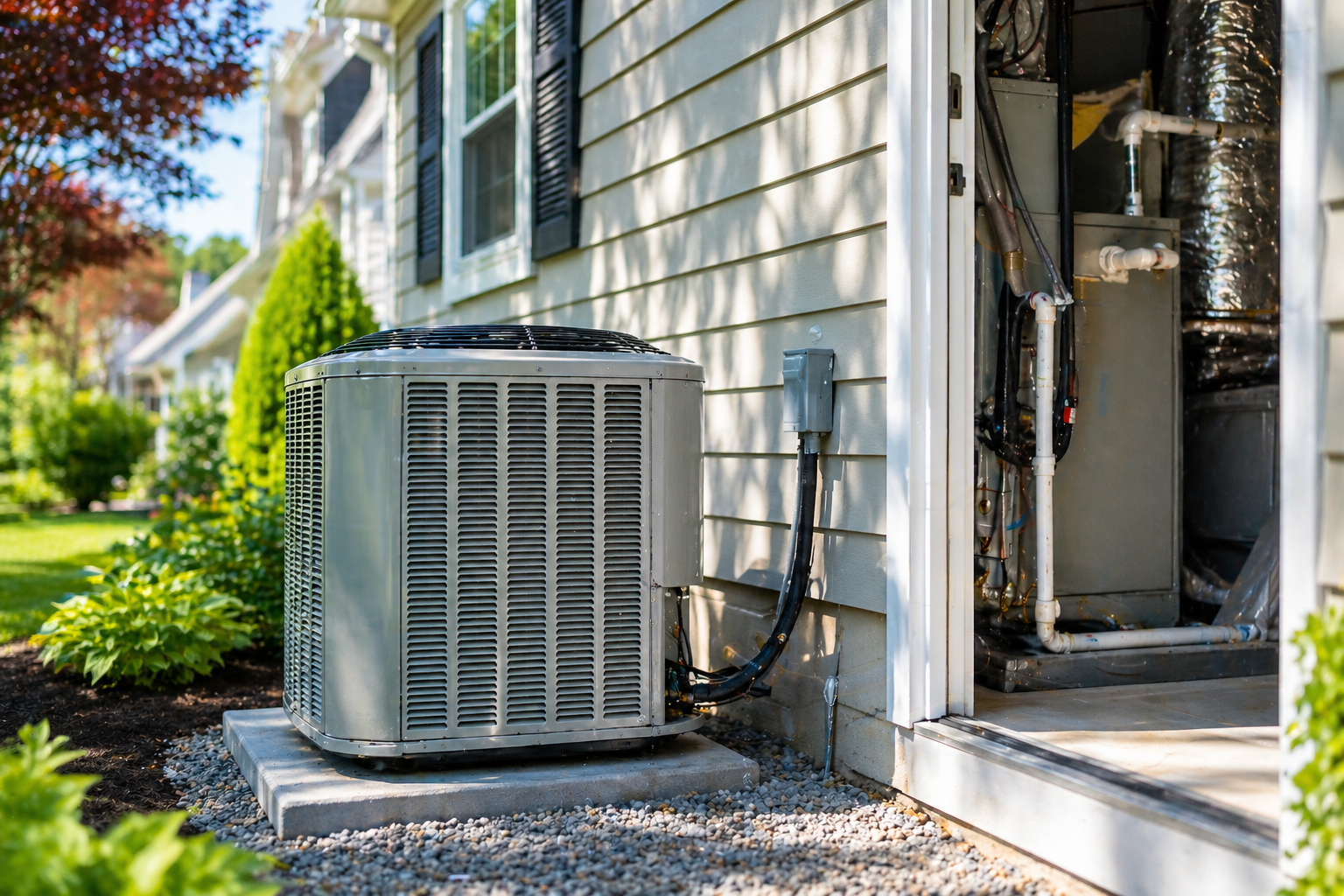
As the humid New England summer approaches, many homeowners start evaluating their cooling options. Relying on noisy window units that block the view and struggle to cool multiple rooms can quickly become frustrating. Central air conditioning offers a permanent, whole-house solution that keeps indoor temperatures consistent regardless of the sweltering heat outside.
Understanding exactly what is central air conditioning helps buyers make informed decisions about installation and maintenance. These systems provide seamless climate control by utilizing a network of hidden ducts to distribute conditioned air throughout the property. For residents in Worcester County and across MA, upgrading to a modern central cooling setup significantly improves daily comfort and adds lasting value to the home.
How Central Air Conditioning Works
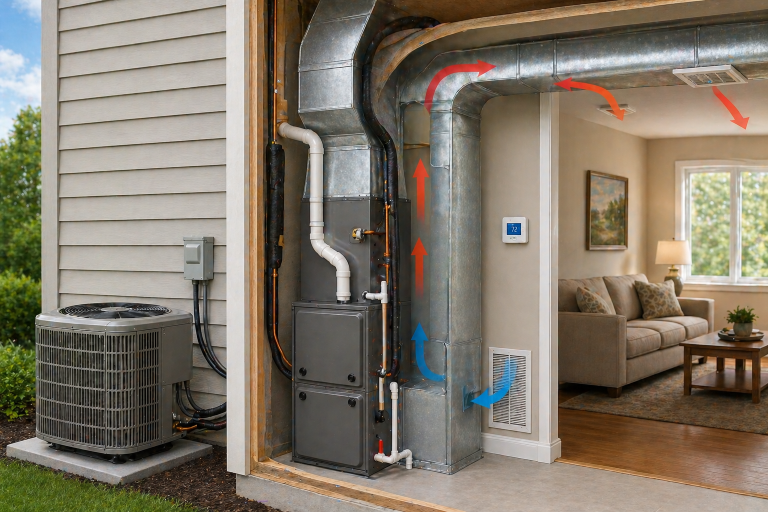
A central air conditioning system operates on a continuous cycle of absorbing indoor heat and releasing it outdoors. It uses a specialized chemical refrigerant that travels between an outdoor condenser and an indoor evaporator coil. As warm air from the house blows across the chilled indoor coil, the refrigerant absorbs the heat and carries it outside to be expelled.
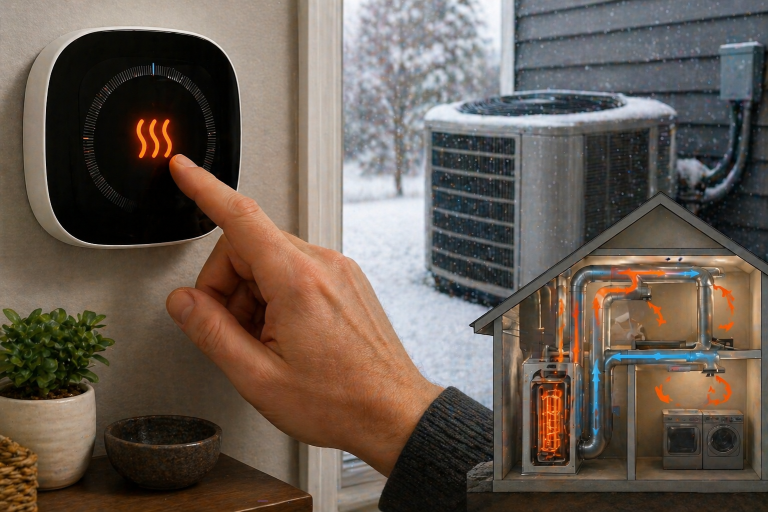
Once the heat is removed, the newly cooled air is pushed through the home’s ductwork by a powerful blower motor. A typical residential system moves approximately 400 cubic feet per minute of air for every ton of cooling capacity. The thermostat constantly monitors the indoor temperature and signals the system to cycle on or off to maintain your desired comfort level.
This continuous loop ensures that every room connected to the ductwork receives an even distribution of cool air. Efficient airflow is critical to this process, meaning the return vents must pull enough warm air back into the system to keep the cycle balanced. Homeowners who understand this basic heat exchange process are much better equipped to manage their home climate effectively.
Core Components of a Central AC System
Knowing the anatomy of your HVAC system makes it easier to communicate with technicians during routine maintenance or repairs. A standard split system relies on several critical parts working in perfect harmony to cool the property. If even one of these elements fails, the entire cooling cycle can grind to a halt.
The outdoor unit houses the most expensive components, while the indoor unit handles the air distribution. Homeowners should familiarize themselves with these key pieces to better understand where their maintenance budget goes.
- Compressor: This outdoor component pressurizes the refrigerant, preparing it to release heat. Replacing a failed compressor alone typically costs between $1,500 and $3,000.
- Condenser coil: Located in the outdoor unit, this coil dissipates the absorbed indoor heat into the outside air.
- Evaporator coil: Housed indoors, this cold coil absorbs heat and removes humidity from the air passing over it.
- Air handler: This indoor blower motor forcefully circulates the conditioned air throughout the ductwork.
- Ductwork: The hidden network of metal or fiberglass tubes that delivers cool air to individual rooms and returns warm air to the system.
- Thermostat: The central control brain that dictates when the cooling cycle starts and stops based on room temperature.
Central Air vs Ductless Mini Splits
Choosing between central air conditioning and ductless mini splits largely depends on the existing architecture of your home. Central air requires a comprehensive network of ductwork to function properly. This makes it an ideal choice for properties that already have forced-air heating systems in place.
Ductless systems bypass the need for ducts entirely by placing individual air handling units directly in the rooms that need cooling. Many older homes in Worcester County lack the wall cavities required to install traditional ductwork easily. For these historic MA properties, a ductless setup often provides a less invasive installation path.
Central systems generally offer more uniform temperature control across a large floor plan. They typically cost between $3,500 and $7,500 for a standard installation utilizing existing ducts. In contrast, a multi-zone ductless system can run from $5,000 to $15,000, but it grants the ability to set different temperatures in different rooms.
Understanding SEER2 Ratings in 2026
Energy efficiency standards for cooling equipment received a major overhaul recently, changing how homeowners evaluate new units. The industry now uses the SEER2 rating system, which replaced the older SEER metric in January 2023. This updated testing protocol reflects real-world operating conditions much more accurately than the previous standard.
The federal minimum efficiency requirement for the Northern US currently sits at 13.4 SEER2. Upgrading to a higher rating, such as a 16 or 18 SEER2 unit, requires a larger upfront investment but yields noticeable savings on monthly utility bills. A 16 SEER2 system typically uses about 20 percent less energy than a baseline 13.4 model.
Beyond efficiency ratings, the refrigerants used in these systems are also evolving to meet strict environmental standards. As of January 2025, all newly manufactured units must utilize low global warming potential refrigerants. Purchasing high-efficiency equipment with modern refrigerants is the smartest long-term investment a homeowner can make today.
How Much Does Central Air Cost in Massachusetts?
Budgeting for a new cooling system requires looking at both the upfront installation costs and the long-term operational expenses. The physical equipment, such as a new outdoor condenser, generally runs between $1,500 and $4,000. However, the total installed price for a complete system ranges from $3,500 to $12,000 depending on the tonnage and labor required.
Adding brand new ductwork to a home that has never had central cooling will increase the project cost by $2,000 to $5,000. For a typical Massachusetts home, installing a standard 3-ton, 16 SEER2 unit using existing ducts averages roughly $5,000 to $7,000. These figures represent a significant capital improvement that directly enhances the resale value of the property.
Operating costs are heavily influenced by local utility rates and system efficiency. With MA electricity rates hovering around $0.30 per kilowatt-hour, running a central air conditioner typically costs homeowners between $500 and $1,200 annually. Investing in routine maintenance helps keep these seasonal operating costs as low as possible.
Signs You Need AC Repair or Replacement
Even the most reliable heating and cooling systems eventually show signs of wear and tear. Recognizing the early warning signs of a failing air conditioner can save homeowners from an uncomfortable breakdown during a mid-summer heatwave. Addressing minor issues promptly often prevents them from cascading into total catastrophic failures.
The average lifespan of a standard central air unit is 15 to 20 years with proper maintenance. When a system nears this age limit, homeowners must carefully weigh the cost of ongoing repairs against the benefits of a full replacement. A general rule in the HVAC industry is to replace the unit if repair costs exceed 50 percent of the price of a new system.
- Running constantly but failing to lower the indoor temperature effectively.
- Unusual grinding, squealing, or banging noises coming from the outdoor cabinet.
- Visible ice forming on the indoor evaporator coil during operation.
- Frequent short cycling, where the system turns on and off rapidly without completing a full cooling cycle.
- Unexplained spikes in monthly electricity bills despite normal usage patterns.
Frequently Asked Questions
What’s the difference between AC and central air?
AC is a broad term that covers any system designed to cool indoor air, including small window units and portable coolers. Central air refers specifically to a whole-house system that uses a centralized indoor unit and ductwork to distribute cooled air to multiple rooms simultaneously. A central system moving 400 cubic feet of air per minute per ton provides vastly superior climate control compared to a standalone AC unit.
How do I know if I have central air?
You can identify a central air system by looking for a large metal condenser unit sitting outside your home. Indoors, you will see supply vents in the ceilings or floors of each room, along with a central thermostat on the wall. If your property only has radiators or baseboards without any ductwork, you do not currently have a central cooling setup.
How long does a central air conditioner last?
A well-maintained central air conditioning system typically lasts between 15 and 20 years. Regular filter changes and annual professional tune-ups are critical for reaching the upper end of that lifespan. Once a unit crosses the 15-year mark, homeowners should start budgeting for a modern, high-efficiency replacement.
Can you add central air to a house without ductwork?
Yes, but it requires retrofitting the property with a network of hidden ducts, which adds $2,000 to $5,000 to the total installation cost. For many older MA homes lacking wall space, installing a ductless mini-split system is often a more practical alternative. Ductless setups provide excellent cooling power without the need to tear open historic plaster walls.
What size central AC do I need?
System sizing is based on the square footage of your home, ceiling height, insulation quality, and window layout. A licensed HVAC technician must perform a formal load calculation to determine the exact tonnage required for your specific property. Installing an oversized unit leads to rapid short cycling, while an undersized unit will run constantly without properly cooling the space.