

Summer in central Massachusetts brings thick, muggy air that easily settles into local homes. When the system struggles, many homeowners end up asking why is my ac not cooling my house. Buyers touring properties in July often notice when a house feels cold but uncomfortably sticky. The indoor climate directly impacts how a home feels to live in and how well its structure holds up over time.
Understanding how an HVAC system manages moisture helps homeowners maintain comfort and protect their property value. While dropping the temperature is the primary function of an air conditioning unit, a properly sized system naturally pulls moisture out of the environment as it runs. Getting this balance right is a major factor in home maintenance.
How Your HVAC System Manages Indoor Moisture
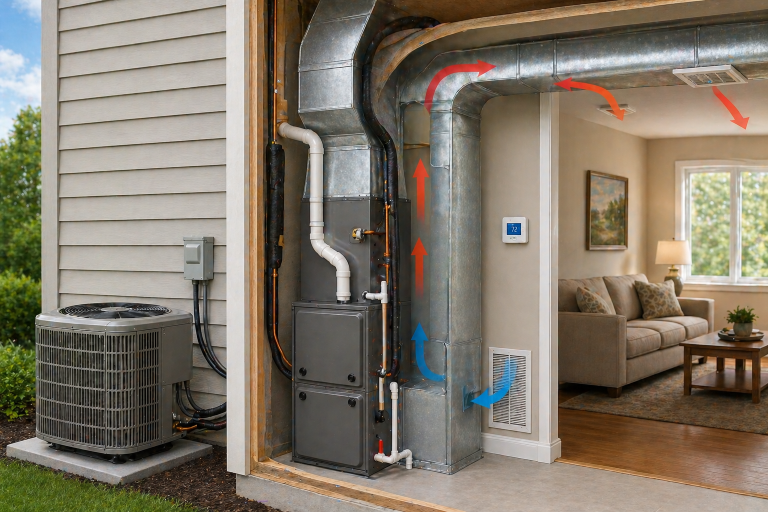
A standard central air conditioner removes heat and moisture simultaneously by passing warm indoor air over cold evaporator coils. As the warm air hits the chilled metal coils, the moisture in the air condenses into liquid water. This process mirrors what happens when a cold glass of iced tea sweats on a hot July afternoon. The extracted water then drips into a drain pan and flows safely out of the house.
By removing this water, the air conditioner lowers the indoor humidity level before circulating the cooled air back through the ductwork. The longer the system runs in a continuous cycle, the more moisture it extracts from the living space.
The Problem with Oversized Cooling Units
Homeowners sometimes assume a larger air conditioner will perform better during a heatwave. An oversized unit drops the indoor temperature rapidly, satisfying the thermostat in just ten or fifteen minutes.
Because the unit shuts off so quickly, it never runs long enough to extract meaningful moisture from the air. This rapid on-and-off process, known as short-cycling, leaves the home feeling cold and clammy. Homebuyers should check the sizing of an HVAC unit relative to the home’s square footage before assuming a massive system is an upgrade.
Variable-Speed Technology
Modern variable-speed air conditioners offer a different approach to climate control. Instead of blasting at full capacity and shutting off, these systems run continuously at a lower speed.
This steady operation maximizes the time air spends moving over the cold coils. The continuous cycle aggressively pulls water out of the air, keeping indoor humidity low even on the muggiest New England afternoons.
Moisture Control and Home Inspections
Indoor humidity sustained above 50% creates an environment where mold and mildew easily grow. When selling a home in Worcester County, MA, poorly managed indoor moisture often shows up as a red flag during the buyer’s inspection. Inspectors actively look for condensation on windows, water stains near vents, and musty odors in ductwork.
Addressing moisture problems before listing a property prevents delays at the negotiating table. Sellers should have their HVAC systems serviced and ensure the condensate drain lines are clear. A system that efficiently cools and dries the air signals to buyers that the home is well-maintained.
Using Supplemental Dehumidifiers
Even a properly sized air conditioner cannot handle the heavy moisture loads found in subterranean spaces. Basements naturally absorb moisture from the surrounding soil, regardless of what the central AC is doing upstairs.
Homeowners should install a dedicated, self-draining dehumidifier in the basement to handle this constant moisture intrusion. Running a standalone unit alongside the central air system provides complete climate control throughout the entire property.
Frequently Asked Questions
Why does the central AC in my newly purchased home cool the rooms quickly but leave the air feeling sticky and humid?
Your air conditioner is likely oversized for the square footage of your house. An oversized unit cools the space too fast and shuts off before it has time to extract moisture from the air. You should have an HVAC technician evaluate the system to see if adjustments to the blower speed can help.
Will installing ductless mini-splits adequately lower the summer humidity in an older Worcester County, MA colonial?
Ductless mini-splits are excellent at removing moisture because they operate on variable speeds. They run continuously at low power, drawing steady amounts of water out of the air while maintaining a consistent temperature. This makes them a popular solution for historic homes lacking ductwork.
If central air conditioning lowers moisture naturally, do I still need a dedicated dehumidifier for my Worcester County basement?
Yes, basements deal with moisture seeping in through the foundation walls and floor. The central air conditioner mainly handles the humidity generated in the above-ground living spaces. A dedicated basement dehumidifier is necessary to prevent mold growth in those lower, cooler areas.
Does upgrading to an HVAC system with advanced humidity control increase a property’s resale value in the local market?
Buyers actively look for properties with modern, high-efficiency mechanical systems. While it might not add a specific dollar amount to the appraisal, a top-tier HVAC system makes the home stand out against competing listings. It provides peace of mind that the indoor climate is comfortable and well-managed.
Can an air conditioner failing to control indoor moisture lead to red flags for mold during a buyer’s home inspection?
Poor moisture control often leads to condensation around vents and dampness in the ductwork. Home inspectors document these conditions because they create an ideal environment for mold. Sellers should address short-cycling or drainage issues before putting the house on the market.
How long does an air conditioning unit need to run consecutively to effectively pull high humidity out of a house during a muggy Massachusetts summer?
A standard cooling cycle needs to run for about 15 to 20 minutes to meaningfully lower indoor humidity. If the system shuts down in under ten minutes, the air will remain sticky. Variable-speed units will run much longer at a lower output, which is the most effective way to dry out the house.