
When evaluating a home’s mechanical systems, buyers and owners often focus entirely on the age of the furnace or the brand of the air conditioner. However, the hidden mechanics of how air moves through the property dictate both daily comfort and long-term utility expenses. One of the most critical but misunderstood elements of residential heating and cooling is the physical resistance working against your equipment.
Understanding what is static pressure in hvac can save you thousands of dollars in premature replacement costs. This invisible force determines whether your system runs efficiently or struggles to push conditioned air into your living spaces. Mastering the basics of airflow management ensures your equipment performs exactly as designed throughout its lifespan.
Understanding Static Pressure in Simple Terms
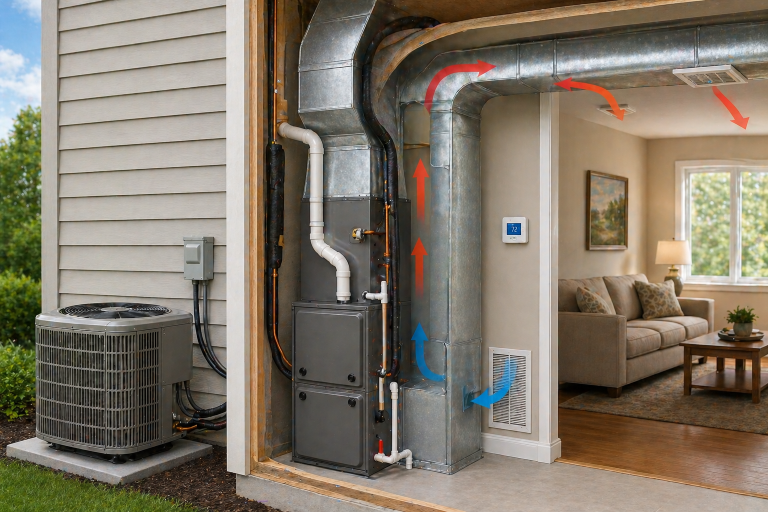
You can think of static pressure as the resistance to airflow within a home’s heating and cooling system. The blower motor must generate enough force to push conditioned air through the ductwork, past the air filter, and out of the vents. When the resistance is too high, the system has to work significantly harder to deliver the right amount of air.
A helpful way to visualize this concept is to compare HVAC static pressure to human blood pressure. Just as high blood pressure forces the heart to strain to circulate blood, high static pressure forces your compressor and blower motor to overwork. An ideal static pressure allows the optimal amount of air to flow smoothly through the supply and return ducts without stressing the mechanical components.
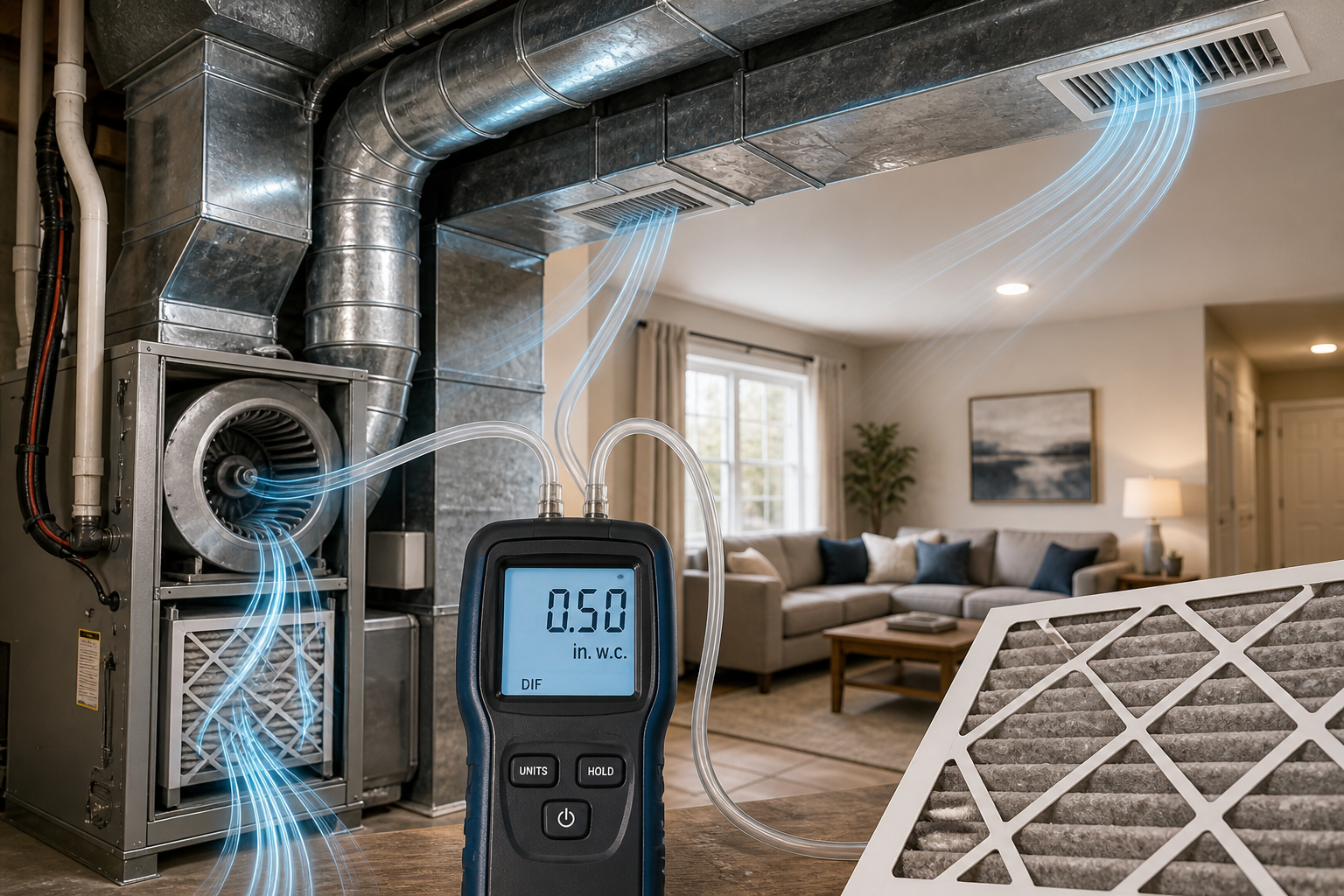
HVAC professionals generally look for a specific pressure measurement to confirm the system is breathing properly. In a standard residential setup, the ideal target is often measured around 0.5 inches of water column. Keeping the system near this baseline ensures maximum energy efficiency and prevents unnecessary wear and tear.
Recognizing the Symptoms of High Static Pressure
Identifying airflow issues early can prevent minor inefficiencies from turning into complete system failures. Homeowners often mistake the signs of improper static pressure for a failing furnace or a low refrigerant charge. Paying attention to how your system sounds and performs during peak seasons provides clear clues about its operational health.
The symptoms of elevated pressure are usually obvious once you know what to look for around the house. If you notice any of these warning signs, your equipment is likely fighting against severe airflow restrictions.
- Uneven heating and cooling across the house, resulting in noticeable hot and cold spots in different rooms.
- Loud, rushing sounds at the return registers or high-pitched whistling noises coming from the supply vents.
- Unexpected spikes in your monthly energy costs despite maintaining normal thermostat habits.
- Poor indoor air quality or a persistent feeling of stagnant air in specific areas of the home.
Common Causes of High Static Pressure in Ductwork
Several common household factors can restrict airflow and cause static pressure to rise above normal levels. One frequent culprit is a severely clogged or dirty air filter that acts as a solid barrier to the return air. When the system cannot pull in enough air, it struggles to push anything out, creating an immediate pressure imbalance.
Another major issue involves blocked or intentionally closed return and supply vents throughout the property. Homeowners sometimes cover floor registers with heavy rugs or large furniture, inadvertently choking the system. Even closing interior doors to unused rooms can disrupt the intended airflow path and increase the pressure drop across the entire network.
Sometimes the problem stems from the original installation rather than daily maintenance habits. Improperly sized ductwork that is too small for the volume of air the blower motor pushes will always result in high static pressure. Additionally, using aftermarket air filters with a MERV rating that is too high for your specific equipment can severely restrict the airflow.
How Poor Static Pressure Impacts Your Home and Equipment
Ignoring restricted airflow leads to significant mechanical and financial consequences over time. The most immediate impact is increased energy consumption as the system runs longer and harder to distribute air. You will end up paying higher utility bills while receiving a lower quality of indoor comfort.
The physical strain on the equipment accelerates wear and tear on critical system components. The blower motor and compressor bear the brunt of this extra workload, often leading to overheating and electrical faults. This constant stress frequently causes unexpected breakdowns and can result in premature system failure years before the expected lifespan.
Beyond the mechanical risks, poor airflow fundamentally reduces the livability of your home. The system loses its ability to properly dehumidify the air during the summer months or distribute warmth during the winter. This overall reduction in comfort makes it difficult to maintain a consistent, pleasant environment regardless of what the thermostat says.
Actionable Maintenance Steps to Prevent Static Pressure Issues
Maintaining healthy airflow requires a mix of routine homeowner maintenance and periodic professional oversight. You have direct control over several factors that keep the air moving freely through your home. Staying proactive with these basic tasks is the cheapest and most effective way to protect your HVAC investment.
While you should leave technical adjustments to the experts, you can implement several simple habits today. Following a strict maintenance schedule ensures your system never has to fight against unnecessary resistance.
- Routinely inspect and replace air filters every 30 to 90 days depending on your household usage and filter type.
- Ensure all interior doors, supply registers, and return grilles remain open and unobstructed by large furniture.
- Regularly clean vent covers to remove heavy dust and pet hair buildup that can restrict the air path.
- Hire a licensed HVAC technician to properly diagnose exact static pressure using a digital manometer and pressure probes.
Frequently Asked Questions
What is a good static pressure for HVAC?
A standard residential heating and cooling system typically aims for a static pressure of 0.5 inches of water column. This specific measurement indicates that the equipment is pushing and pulling air with minimal resistance. Operating near this baseline keeps your utility bills manageable, often saving homeowners roughly $15 to $30 a month compared to a highly restricted system.
How is static pressure measured in an HVAC system?
Professionals measure this resistance using a specialized tool called a digital manometer. The technician drills small test holes into the ductwork and inserts pressure probes to read the airflow force. This precise diagnostic test reveals exactly how hard the blower motor is working to circulate air through the house.
Can opening windows lower HVAC static pressure?
Opening windows does not lower the static pressure inside your sealed ductwork. The pressure issues exist entirely within the closed loop of your air handler, ducts, and filters. You must address the internal blockages or duct sizing problems directly rather than relying on exterior ventilation.
What is Static Pressure in HVAC: A Homeowner’s Guide for 2026
When evaluating a home’s mechanical systems, buyers and owners often focus entirely on the age of the furnace or the brand of the air conditioner. However, the hidden mechanics of how air moves through the property dictate both daily comfort and long-term utility expenses. One of the most critical but misunderstood elements of residential heating and cooling is the physical resistance working against your equipment.
Understanding what is static pressure in hvac can save you thousands of dollars in premature replacement costs. This invisible force determines whether your system runs efficiently or struggles to push conditioned air into your living spaces. Mastering the basics of airflow management ensures your equipment performs exactly as designed throughout its lifespan.
Understanding Static Pressure in Simple Terms
You can think of static pressure as the resistance to airflow within a home’s heating and cooling system. The blower motor must generate enough force to push conditioned air through the ductwork, past the air filter, and out of the vents. When the resistance is too high, the system has to work significantly harder to deliver the right amount of air.
A helpful way to visualize this concept is to compare HVAC static pressure to human blood pressure. Just as high blood pressure forces the heart to strain to circulate blood, high static pressure forces your compressor and blower motor to overwork. An ideal static pressure allows the optimal amount of air to flow smoothly through the supply and return ducts without stressing the mechanical components.
HVAC professionals generally look for a specific pressure measurement to confirm the system is breathing properly. In a standard residential setup, the ideal target is often measured around 0.5 inches of water column. Keeping the system near this baseline ensures maximum energy efficiency and prevents unnecessary wear and tear.
Recognizing the Symptoms of High Static Pressure
Identifying airflow issues early can prevent minor inefficiencies from turning into complete system failures. Homeowners often mistake the signs of improper static pressure for a failing furnace or a low refrigerant charge. Paying attention to how your system sounds and performs during peak seasons provides clear clues about its operational health.
The symptoms of elevated pressure are usually obvious once you know what to look for around the house. If you notice any of these warning signs, your equipment is likely fighting against severe airflow restrictions.
- Uneven heating and cooling across the house, resulting in noticeable hot and cold spots in different rooms.
- Loud, rushing sounds at the return registers or high-pitched whistling noises coming from the supply vents.
- Unexpected spikes in your monthly energy costs despite maintaining normal thermostat habits.
- Poor indoor air quality or a persistent feeling of stagnant air in specific areas of the home.
Common Causes of High Static Pressure in Ductwork
Several common household factors can restrict airflow and cause static pressure to rise above normal levels. One frequent culprit is a severely clogged or dirty air filter that acts as a solid barrier to the return air. When the system cannot pull in enough air, it struggles to push anything out, creating an immediate pressure imbalance.
Another major issue involves blocked or intentionally closed return and supply vents throughout the property. Homeowners sometimes cover floor registers with heavy rugs or large furniture, inadvertently choking the system. Even closing interior doors to unused rooms can disrupt the intended airflow path and increase the pressure drop across the entire network.
Sometimes the problem stems from the original installation rather than daily maintenance habits. Improperly sized ductwork that is too small for the volume of air the blower motor pushes will always result in high static pressure. Additionally, using aftermarket air filters with a MERV rating that is too high for your specific equipment can severely restrict the airflow.
How Poor Static Pressure Impacts Your Home and Equipment
Ignoring restricted airflow leads to significant mechanical and financial consequences over time. The most immediate impact is increased energy consumption as the system runs longer and harder to distribute air. You will end up paying higher utility bills while receiving a lower quality of indoor comfort.
The physical strain on the equipment accelerates wear and tear on critical system components. The blower motor and compressor bear the brunt of this extra workload, often leading to overheating and electrical faults. This constant stress frequently causes unexpected breakdowns and can result in premature system failure years before the expected lifespan.
Beyond the mechanical risks, poor airflow fundamentally reduces the livability of your home. The system loses its ability to properly dehumidify the air during the summer months or distribute warmth during the winter. This overall reduction in comfort makes it difficult to maintain a consistent, pleasant environment regardless of what the thermostat says.
Actionable Maintenance Steps to Prevent Static Pressure Issues
Maintaining healthy airflow requires a mix of routine homeowner maintenance and periodic professional oversight. You have direct control over several factors that keep the air moving freely through your home. Staying proactive with these basic tasks is the cheapest and most effective way to protect your HVAC investment.
While you should leave technical adjustments to the experts, you can implement several simple habits today. Following a strict maintenance schedule ensures your system never has to fight against unnecessary resistance.
- Routinely inspect and replace air filters every 30 to 90 days depending on your household usage and filter type.
- Ensure all interior doors, supply registers, and return grilles remain open and unobstructed by large furniture.
- Regularly clean vent covers to remove heavy dust and pet hair buildup that can restrict the air path.
- Hire a licensed HVAC technician to properly diagnose exact static pressure using a digital manometer and pressure probes.
Frequently Asked Questions
What is a good static pressure for HVAC?
A standard residential heating and cooling system typically aims for a static pressure of 0.5 inches of water column. This specific measurement indicates that the equipment is pushing and pulling air with minimal resistance. Operating near this baseline keeps your utility bills manageable, often saving homeowners roughly $15 to $30 a month compared to a highly restricted system.
How is static pressure measured in an HVAC system?
Professionals measure this resistance using a specialized tool called a digital manometer. The technician drills small test holes into the ductwork and inserts pressure probes to read the airflow force. This precise diagnostic test reveals exactly how hard the blower motor is working to circulate air through the house.
Can opening windows lower HVAC static pressure?
Opening windows does not lower the static pressure inside your sealed ductwork. The pressure issues exist entirely within the closed loop of your air handler, ducts, and filters. You must address the internal blockages or duct sizing problems directly rather than relying on exterior ventilation.