
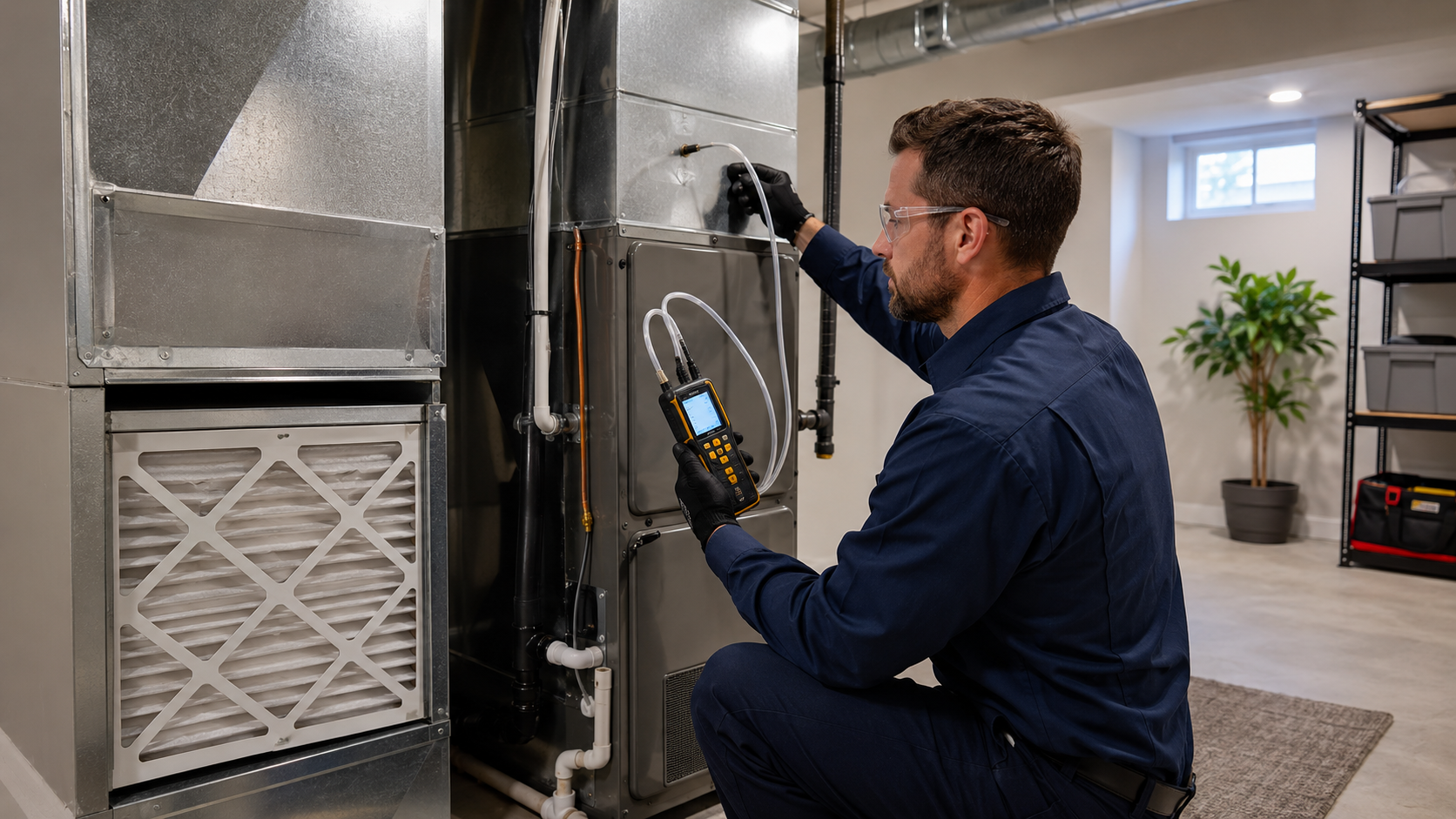
A standard residential heating and cooling system moves roughly 1,000 to 2,000 cubic feet of air per minute through your home’s ductwork. Pushing this much air requires the right balance of force and resistance.
If the resistance is too high or too low, the blower motor works harder, energy bills spike, and rooms stay uncomfortable. Understanding what is the ideal static pressure in hvac helps you spot these airflow problems before they cause an expensive breakdown.
Understanding Static Pressure in Your Home’s System
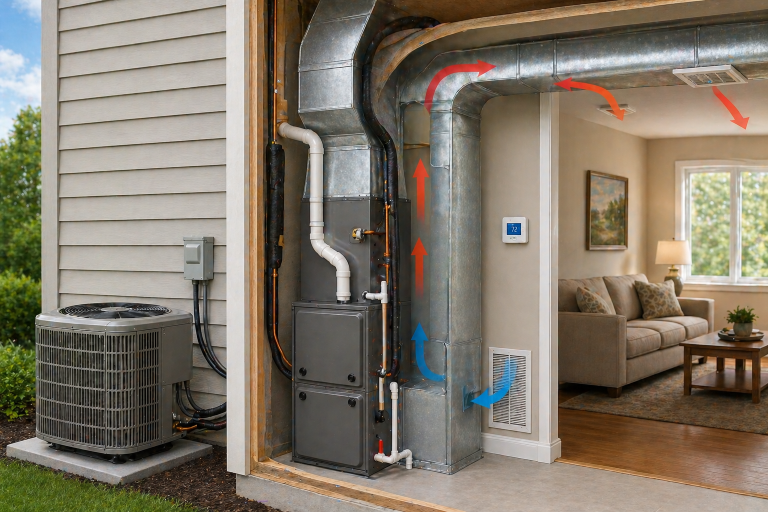
Airflow resistance inside your ductwork dictates how hard your equipment has to work to push conditioned air into your living spaces. This resistance is known as static pressure. Think of it like blood pressure for your home’s heating and cooling system.
When the pressure stays balanced, the blower motor operates efficiently without excessive strain. If the pathways narrow due to blockages or poor design, the pressure rises. The air handler then struggles to push the same volume of air through the system.
This creates a bottleneck that limits how much warm or cool air reaches your rooms. For example, a homeowner in Dallas, TX, running their air conditioning continuously will feel the impact of this bottleneck during peak summer heat.
The Target Range for Proper Airflow
Most residential heating and cooling systems are engineered to operate at 0.5 inches of water column (in. w.c.). The ideal range generally falls between 0.4 and 0.5 inches of water column. This specific metric indicates the total external static pressure measured across both the supply and return sides of the system.
An HVAC technician uses a specialized tool called a manometer to take these readings directly from the ductwork. Readings that creep up to 0.8 or 0.9 inches point to major airflow restrictions. At these levels, the blower motor consumes more electricity to move less air.
The equipment simply cannot overcome that much resistance without wasting energy. Over time, running outside the target range drives up monthly utility costs.
Warning Signs of an Airflow Problem
A system operating outside its designed pressure range often produces noticeable changes in sound and comfort. High static pressure frequently causes a whistling noise near the return vents. You might also notice hot or cold spots in certain rooms as the system struggles to distribute air evenly.
Low static pressure presents a different set of symptoms. You will likely feel weak airflow coming from the supply registers. The system will fail to heat or cool the house adequately, leaving the indoor temperature lagging behind your thermostat setting.
Ignoring these warning signs puts unnecessary stress on the entire system. Over time, the blower motor or compressor can wear out prematurely. Homeowners should pay attention to these early indicators to avoid sudden equipment failure.
Why Your System Loses Balance
A simple pleated air filter often dictates the overall health of your ductwork’s airflow. Dirty air filters represent the single most common cause of high static pressure. As dust and debris clog the filter media, the blower motor has to pull harder to draw air into the system.
Leaving a dirty filter in place for months guarantees a pressure spike. Closed or blocked vents also disrupt total system airflow. Placing heavy furniture over a return grille or shutting supply registers in unused rooms forces the air handler to work against dead ends.
This artificial restriction drives up resistance across the entire network. The physical design of the ductwork plays a role as well. Improperly sized ducts, collapsed flexible ductwork, or a clogged evaporator coil create instant pressure drops.
Steps to Restore Proper Airflow
Routine filter replacements cost around $15 to $20 but prevent hundreds of dollars in mechanical repairs. Homeowners should swap out standard one-inch air filters every 30 to 90 days. You should also walk through the house and confirm that all supply and return vents are fully open.
Move any rugs, couches, or bookshelves that block the grilles. If the system continues to struggle, overheat, or make loud noises after these basic checks, it is time to call a licensed HVAC professional. A technician will measure the exact pressure drop across the evaporator coil and air filter.
They can then pinpoint exactly where the restriction lives. Professional repairs vary depending on the root cause of the imbalance. A technician might adjust the fan speeds, clean a dirty coil, or modify sections of the ductwork to restore normal operation.
Frequently Asked Questions About HVAC Static Pressure
How much static pressure is too much for an HVAC system?
Most standard residential systems reach a danger zone when readings hit 0.8 inches of water column or higher. At this level, the blower motor uses excessive electricity and risks overheating. You should have a technician inspect the ductwork if pressure climbs past the 0.5-inch mark.
What does a 0.9 static pressure reading mean?
A reading of 0.9 indicates severe airflow restriction inside the ductwork. The system is fighting nearly twice the resistance it was designed to handle. This often points to a completely clogged evaporator coil, collapsed ducts, or an undersized return air drop.
Can high static pressure damage my HVAC equipment?
Yes, forcing a blower motor to push against high resistance shortens its lifespan. The motor runs hotter and draws more amps, which eventually degrades the internal components. This strain can also lead to cracked heat exchangers or frozen compressor coils.