
Energy costs across New England have steadily climbed over the past few years, pushing homeowners to look for more efficient ways to heat and cool their properties. The median price of electricity in the state makes running standard central air conditioning expensive during hot July afternoons. Exploring alternatives can yield substantial long-term savings.
Many buyers and property owners are turning to newer technology to keep their utility bills under control. Understanding What Is VRF HVAC in Massachusetts can help you decide if this system makes sense for your property upgrade.
These systems offer a different approach to climate control by moving refrigerant directly to the rooms that need it. They eliminate the need for bulky ductwork while providing exact temperature management for every corner of a house.
The Mechanics of Variable Refrigerant Flow
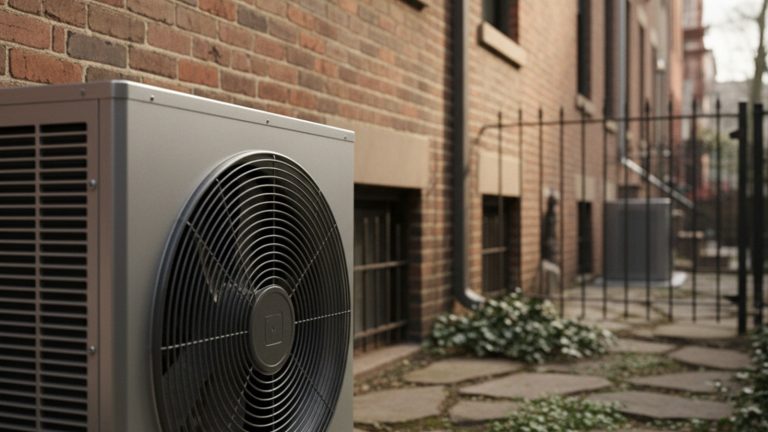
A variable refrigerant flow setup uses refrigerant as the sole medium for both heating and cooling a building. The design connects one main outdoor unit to several indoor air handlers spread throughout the property.
The system modulates the exact volume of refrigerant sent to each specific zone based on the current temperature demand of that room. An inverter compressor speeds up or slows down continuously to maintain the desired climate without the loud on-and-off cycling common in older units. This precise control prevents uncomfortable temperature swings throughout the day.
This direct-to-room delivery means you do not lose treated air through leaky ducts in an uninsulated attic or basement. The compressor adjusts its workload dynamically, which keeps power consumption low while keeping the indoor temperature stable.
Comparing New Technology to Standard Central Air
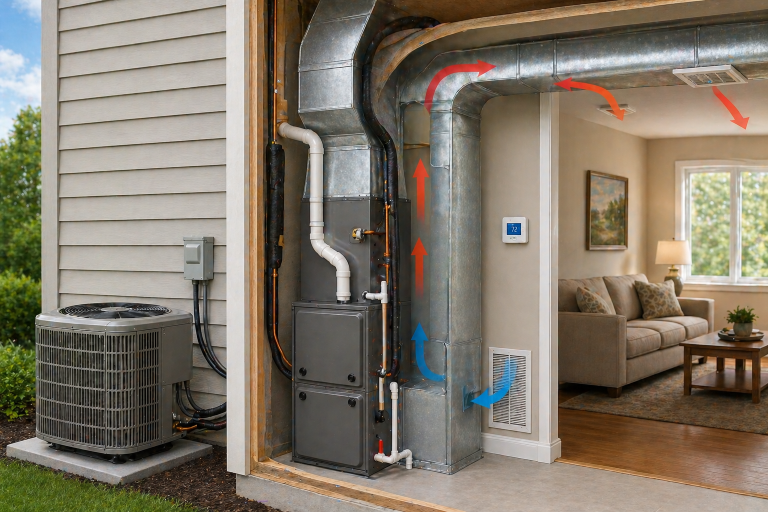
Standard central HVAC systems rely on a single central air handler to push heated or cooled air through a network of sheet metal ducts. This approach takes up a massive amount of space inside the walls and ceilings of a home.
The variable inverter-driven compressors of a VRF system operate much like a car engine adjusting its speed on the highway. Standard units operate more like a light switch, turning on at full blast until the thermostat reaches its setting, then shutting off completely.
The differences between these two approaches become clear when evaluating their daily operation:
- Space requirements: Ductless setups eliminate the need for large chases and drop ceilings, freeing up square footage.
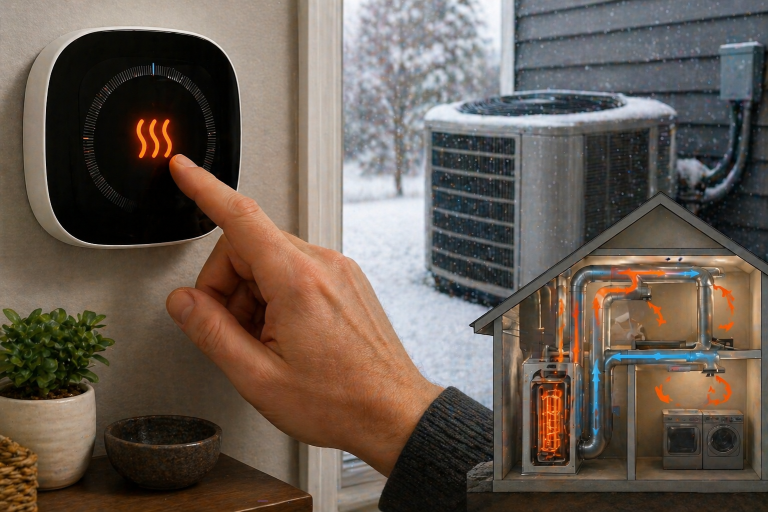
- Temperature control: Zoned heating and cooling features allow a homeowner to keep a living room at 72 degrees while a spare bedroom stays at 78 degrees.
- Energy delivery: Standard systems use air or water to move heat, whereas the newer technology uses refrigerant directly for faster thermal transfer.
Weighing the Pros and Cons of Installation
Properties equipped with this technology routinely see energy bills drop by 30 to 40 percent compared to conventional setups. Heat recovery models can even heat one side of a house while cooling the other side at the exact same time.
The indoor units operate at a whisper-quiet sound level, making them ideal for bedrooms and home offices. You will not hear the sudden rush of forced air that usually accompanies a standard furnace kicking on in the middle of the night.
The primary drawback comes down to the initial financial investment and the need for specialized labor:
- Higher upfront pricing: Purchasing and installing the equipment costs more than swapping out a standard condenser and furnace.
- Specialized technicians: The complex electronic controls require certified professionals for both the initial wiring and ongoing repairs.
- Single point of failure: A breakdown of the main outdoor compressor will temporarily halt cooling and heating for all connected indoor zones.
Installation Pricing and Property Value Impact
Contractors typically price these installations between $3,000 and $6,000 per ton of capacity. When looking at the footprint of a home, this breaks down to roughly $20 to $27 per square foot.
Standard central systems usually cost $2,500 to $4,000 per ton, making the newer technology a larger initial investment. Multi-story homes in Boston, MA, and commercial buildings often benefit the most from this setup because routing new ductwork through those structures is expensive and invasive.
High-performance HVAC upgrades can recoup about 71 percent of their cost when it comes time to sell the property. Buyers appreciate the lower monthly utility bills and the ability to control the climate in individual rooms.
The $5,000 Formula for HVAC Replacement
Industry professionals use a simple mathematical formula to help owners decide between repairing an aging unit or buying a new one. You multiply the equipment’s age in years by the estimated repair cost in USD.
If the resulting number exceeds $5,000, replacing the unit is generally the smarter financial move. This formula helps justify the leap to a more efficient technology when an old central air system faces a major compressor failure.
Routine Upkeep for Long-Term Performance
Regular filter cleaning is the most basic step an owner can take to protect their investment. The indoor air handlers rely on unobstructed airflow to distribute treated air efficiently throughout the room.
By law, an EPA-certified technician must handle any repairs involving R-410A refrigerant lines. The complex electronic controls and inverter compressors require specialized diagnostic tools that standard HVAC repair companies might not carry.
Routine maintenance prevents system-wide outages and extends the equipment’s operational life. Catching a small refrigerant leak early will save the main compressor from overworking and burning out prematurely.
Common Questions About VRF Systems
What does VRF stand for in HVAC?
The acronym stands for Variable Refrigerant Flow. This refers to the system’s ability to control the exact amount of refrigerant flowing to multiple indoor units from one outdoor compressor.
How does a VRF HVAC system work?
The outdoor unit pumps refrigerant through small copper lines directly to individual air handlers inside the building. The inverter compressor speeds up or slows down to match the exact heating or cooling demand of each room, minimizing wasted energy.
What is the $5000 rule for HVAC?
This is a simple math test used by contractors. You take the quoted cost of a repair and multiply it by the age of your hardware. If that number clears the $5,000 mark, putting that money toward a brand-new installation is usually the better investment.
Where are VRF HVAC systems commonly used?
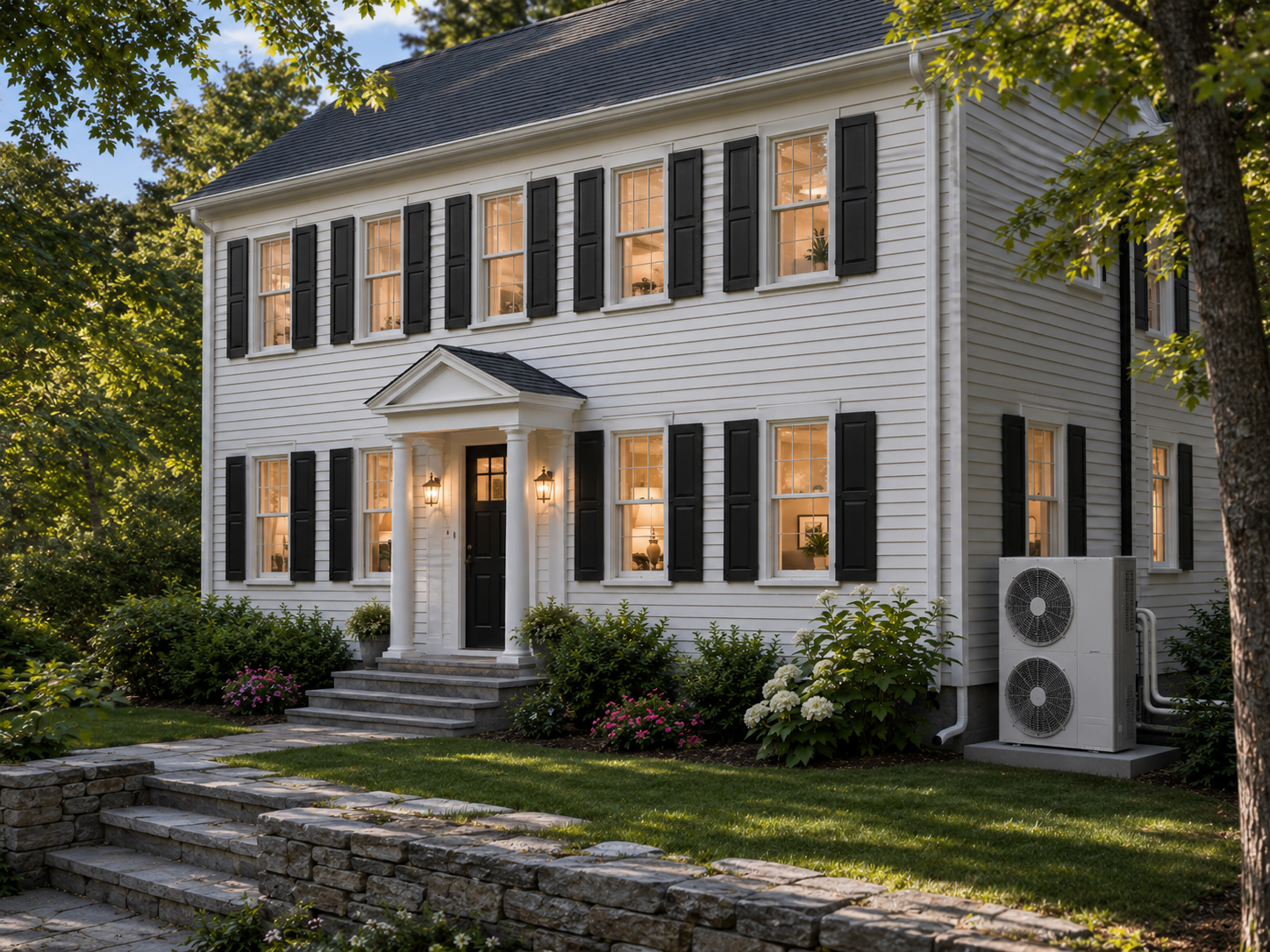
These setups are popular in older historic homes without ductwork and open-concept office spaces. They work well in buildings where individual occupants want different temperature settings for their specific rooms.