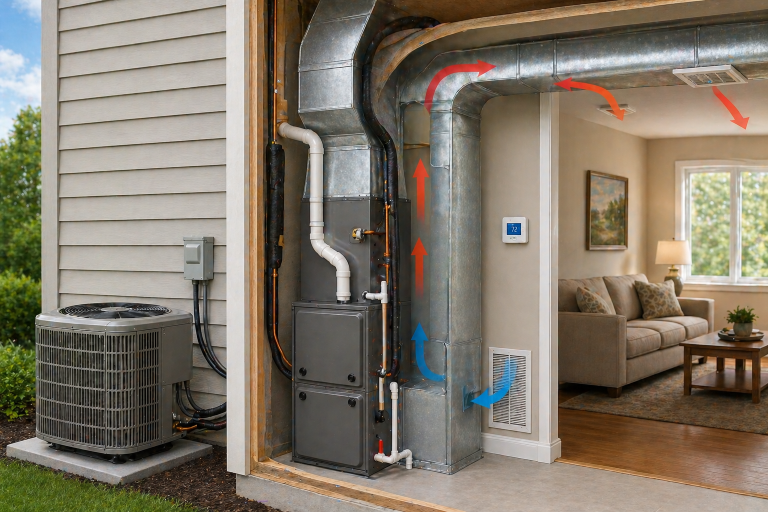

Most homeowners never think about the airflow resistance inside their ductwork until a furnace overheats on a zero-degree January night. Think of static pressure as the blood pressure of your heating and cooling system. It measures how much resistance the blower motor pushes against to circulate air throughout the house.
For anyone asking what is ideal static pressure in HVAC in New England, the target is typically 0.5 inches of water column (in. WC). Hitting that exact number in our region is often difficult. Century-old colonial homes and retrofitted capes frequently feature undersized ducts that force systems to work harder than intended.
The Target Numbers for Residential Systems
The industry standard for residential equipment is 0.5 in. WC. Manufacturers design most standard blowers to deliver their rated airflow at this specific resistance level. When the pressure stays near this mark, the system uses less electricity and distributes temperatures evenly across the home.
Modern variable-speed blower motors can operate at higher pressures, sometimes up to 0.8 in. WC. Pushing a motor to its upper limits forces it to consume much more power. Over time, this constant strain shortens the lifespan of the equipment and leads to expensive winter breakdowns.
How Blower Types Change the Equation
Older permanent split capacitor (PSC) motors cannot adjust their speed to overcome high resistance. If the pressure rises above 0.5 in. WC, a PSC motor simply moves less air. This results in cold spots in upstairs bedrooms and a furnace that cycles on and off too quickly.
Electronically commutated motors (ECM) are standard in most systems installed in 2026. These smart motors ramp up their speed to deliver the required airflow even when resistance climbs. While this keeps the house comfortable, it masks underlying ductwork problems until the motor burns out entirely.
Common Causes of High Resistance in Local Homes
Many New England homes built before 1980 had central air conditioning added decades later. Installers often squeezed small-diameter flexible ducts into tight attic eaves or narrow basement joists. Those undersized ducts restrict airflow and immediately drive up the system’s internal resistance.
Another common culprit is the oversized air filter. Many homeowners install thick, high-MERV filters to trap winter dust, completely choking off the return air supply. A standard system needs adequate return air to function properly without overheating.
The Impact of Heat Pump Upgrades
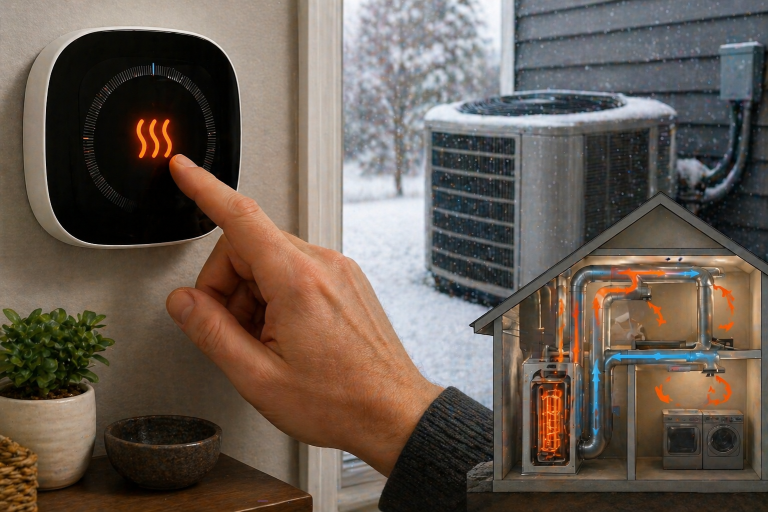
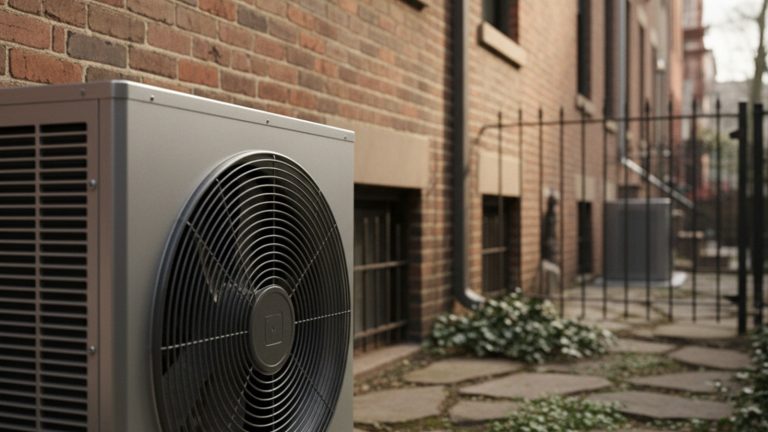
Cold-climate heat pumps are rapidly replacing traditional oil furnaces across the Northeast. These systems require specific airflow volumes to extract heat efficiently from cold outdoor air. If the existing ductwork is too small, the heat pump will struggle to meet the thermostat setting.
Installers should measure the existing duct capacity before connecting a new heat pump. If the pressure tests too high, the contractor may need to add a larger return drop or expand the supply trunk. Ignoring this step guarantees poor performance during the coldest months of the year.
Frequently Asked Questions
How do technicians measure the pressure in my ductwork?
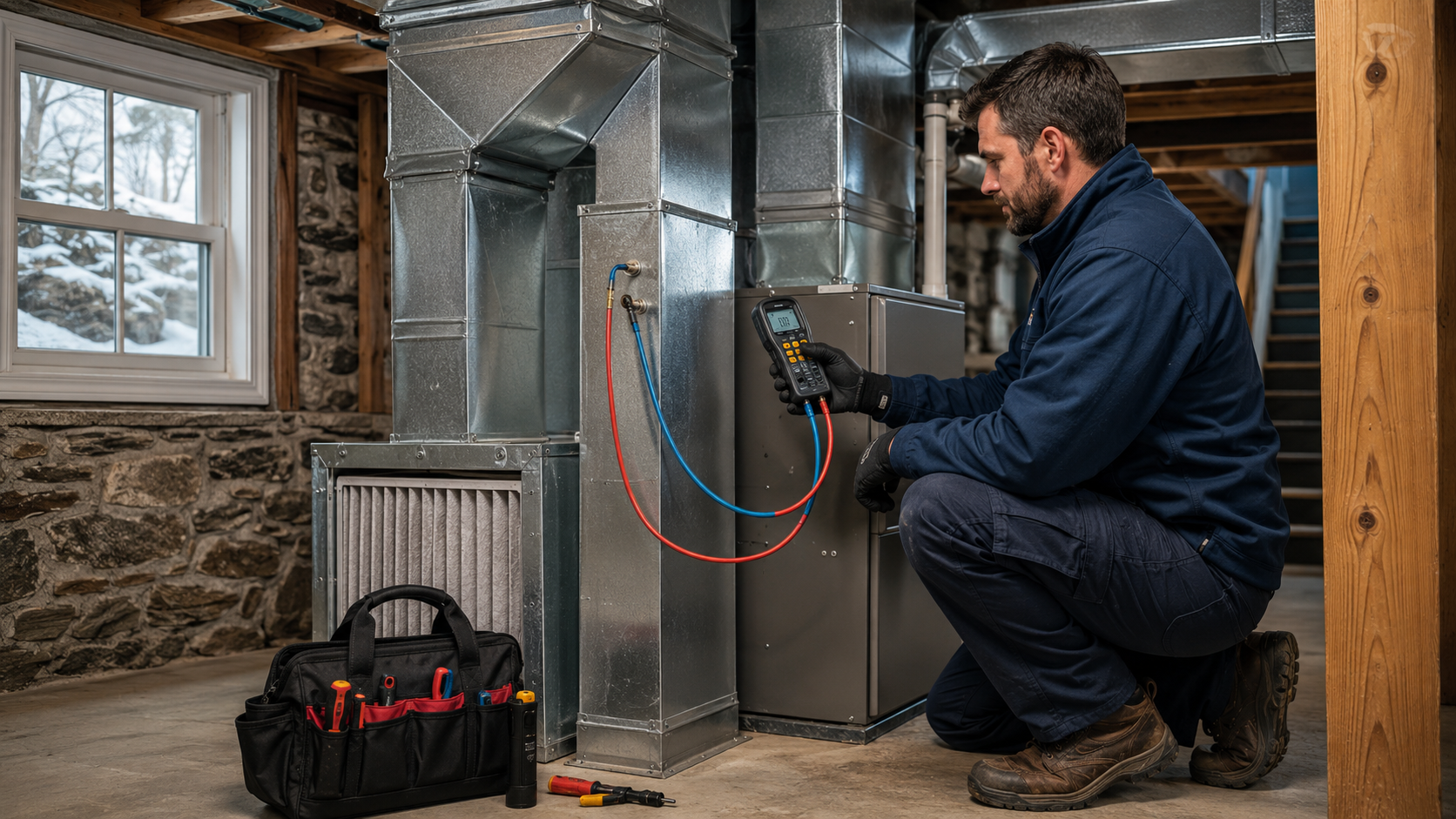
A technician uses a digital manometer to take readings inside the ductwork. They drill small holes in the supply and return plenums to measure the pressure difference across the air handler. This test takes about ten minutes during a standard maintenance visit.
Can a dirty air filter increase system resistance?
A clogged filter forces the blower motor to pull harder to draw air into the system. Replacing a dirty filter with a clean, low-resistance option often drops the pressure immediately. Homeowners should check their filters monthly during peak heating and cooling seasons.
What happens if the reading is too low?
Low pressure usually indicates a massive leak or disconnected duct somewhere in the house. The blower pushes air into an attic or crawlspace instead of the living areas. This wastes energy and makes the home difficult to heat or cool.