
Summer temperatures in New England routinely push past 90 degrees, bringing thick humidity along the coastline and inland. When the indoor air starts feeling clammy, homeowners quickly start troubleshooting their HVAC units.
A common question that comes up during these hot spells is: Does Low Coolant Affect Air Conditioning in Massachusetts? Whether you call it coolant, Freon, or refrigerant, a drop in this essential fluid will stop your system from cooling your home. Understanding how this chemical works can save you from a complete system breakdown during a July heatwave.
The Mechanics of Refrigerant in Your HVAC Unit
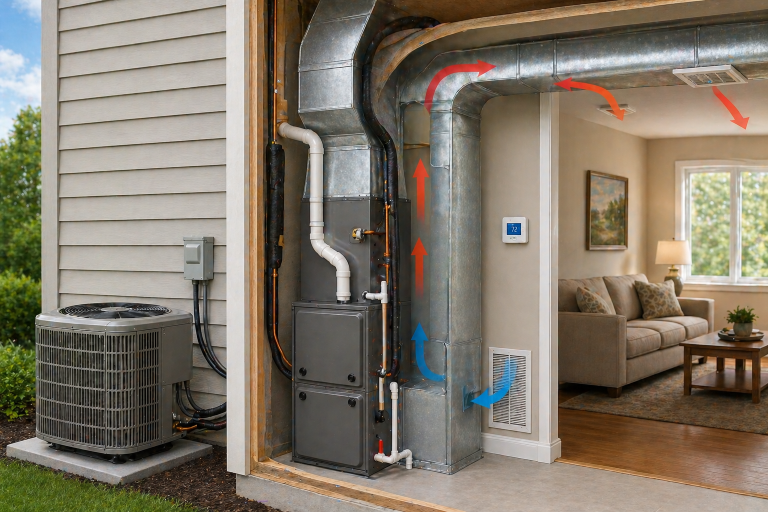
Air conditioners do not create cold air out of nothing. They use a chemical compound to absorb heat from inside your house and release it outside.
When that fluid level drops due to a leak, the entire heat-transfer process breaks down. The compressor has to run longer to achieve the thermostat setting, straining the electrical components and driving up your monthly utility bill.
Warm Air at the Vents
The most obvious symptom of a leak is a change in the air temperature coming from your registers. You might feel a weak flow of room-temperature air instead of the crisp breeze you expect.
This happens because the remaining coolant cannot absorb enough heat as it passes through the indoor coil. The blower continues to push air through the ductwork, but the air remains unconditioned.
Ice Formation on the Equipment
It seems counterintuitive, but a lack of coolant often causes the indoor evaporator coil to freeze solid. The pressure inside the copper lines drops, forcing the temperature of the remaining fluid to fall below freezing.
Moisture from the humid indoor air then collects on the freezing coil and turns to ice. This ice blocks airflow completely and can permanently damage the compressor if the system continues to run.
Environmental Rules for AC Repairs in the Bay State
Massachusetts aligns with federal EPA guidelines regarding the handling and disposal of HVAC chemicals. Older systems built before 2010 likely use R-22, a hydrochlorofluorocarbon that is now banned from production in the United States.
If your older unit develops a leak, HVAC technicians must use reclaimed R-22 to recharge it, which has become expensive. Many homeowners find that replacing the entire condenser is more cost-effective than repeatedly paying for rare, phased-out chemicals.
Transitioning to Modern Alternatives
Newer systems use R-410A or the recently introduced R-32, which have a lower environmental impact. Technicians handling any of these substances must hold specific EPA certifications.
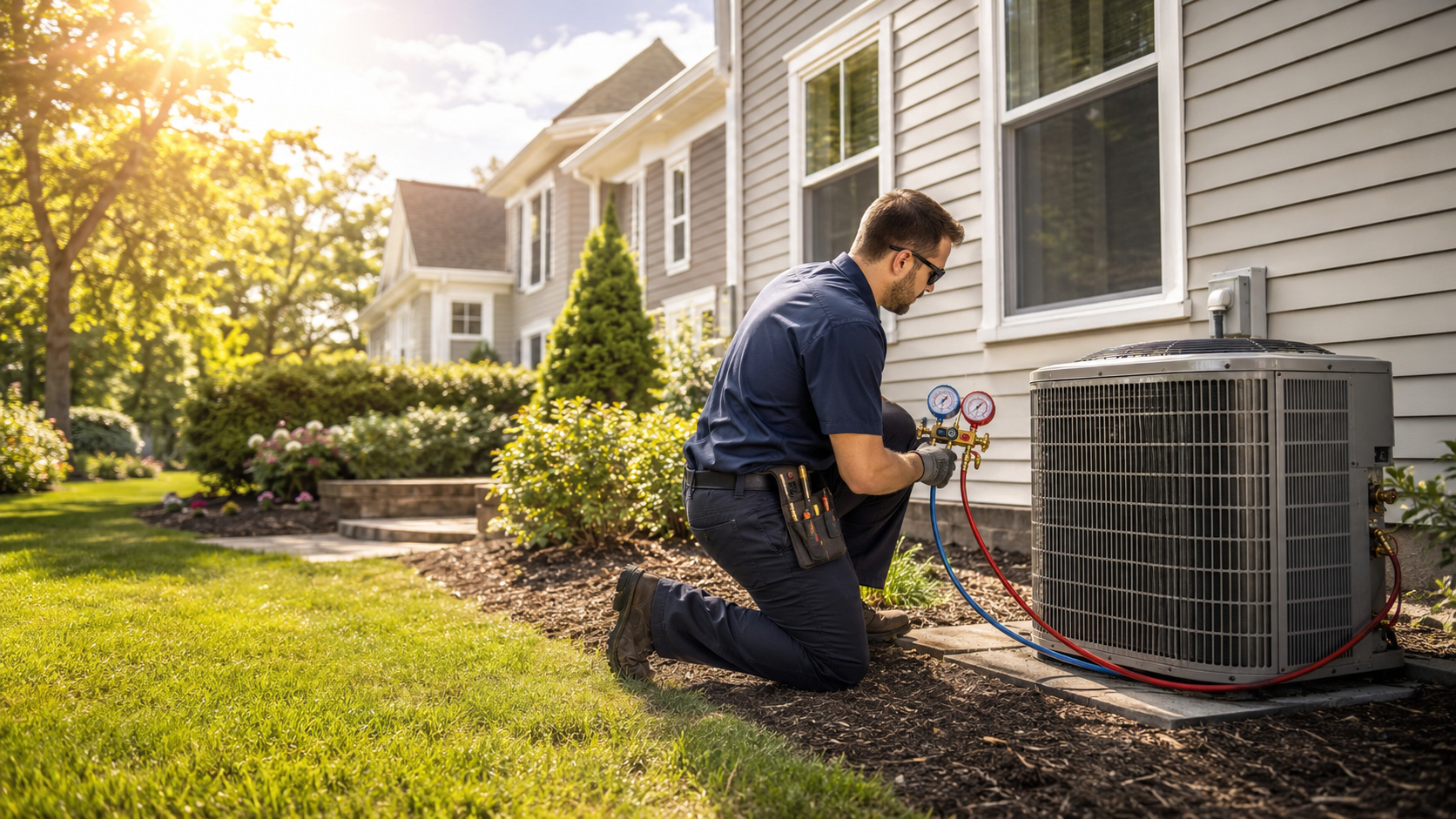
You should always verify that your chosen contractor carries the proper licensing before letting them attach gauges to your equipment. Improper handling can release greenhouse gases directly into the atmosphere and result in steep fines.
What to Do When You Suspect a Leak
An air conditioning system is a closed loop, meaning it does not consume coolant the way a car consumes oil. If the level is low, there is a physical hole or loose connection somewhere in the copper lines.
Simply adding more fluid will only provide a temporary fix until the new chemical escapes through the same hole. A licensed professional should perform a dye test or use an electronic sniffer to locate the exact source of the leak.
Weighing Repair Versus Replacement
Minor leaks at the service valves can often be tightened and sealed with minimal labor. A technician can then add the correct weight of refrigerant and restore the system to full capacity.
Leaks located deep inside the aluminum fins of the evaporator coil usually require replacing the entire coil assembly. For systems older than 12 years, investing that money into a new, high-efficiency unit is often the smarter financial move.
Frequently Asked Questions
Does Low Coolant Affect Air Conditioning in Massachusetts cars differently than homes?
The basic physics remain the same whether you are cooling a living room in Worcester, MA or driving down the Mass Pike. Low refrigerant in a vehicle will cause the dashboard vents to blow warm air.
Automotive systems use different specific chemicals, like R-134a or R-1234yf, and are subject to constant road vibration. This makes cars more prone to developing small leaks over time compared to stationary home units.
How often should I add coolant to my home AC?
You should never need to add coolant to a healthy HVAC system. The chemical continuously cycles through the closed loop without degrading or evaporating.
If a technician tells you that your unit needs an annual top-off, you have an active leak. You should insist on finding and fixing the hole rather than just paying for more gas.
Can I recharge my own air conditioning system in MA?
Federal and state laws prohibit unlicensed individuals from purchasing or handling residential HVAC refrigerants. You must hire an EPA-certified technician to perform this work.
Attempting to bypass these rules or using automotive DIY kits on a home system can destroy the compressor and void your manufacturer warranty.