
Keeping your home’s heating system in top condition is one of the most critical aspects of homeownership. A well-maintained furnace extends the lifespan of the unit and ensures your property retains its value when it comes time to sell. Buyers always check the age and condition of the HVAC system during home inspections.
Many homeowners ask themselves, “how do I clean my furnace” when winter approaches, but regular maintenance should be a year-round habit. Understanding the basics of furnace care can save you thousands of dollars in unexpected repairs or premature replacement. Taking a proactive approach keeps your system running efficiently and your utility costs predictable.
Recognizing When Your Heating System Needs Attention
Before you open up any panels or reach for your tools, it helps to know what a struggling furnace looks and sounds like. Systems rarely fail without giving you a few warning signs first. Catching these early indicators often makes the difference between a simple cleaning and a costly mechanical failure.
Dust buildup restricts airflow, forcing the system to work twice as hard to push warm air through your ductwork. This extra strain wears out internal components faster than normal and reduces the overall heat output. Paying attention to how your home feels and sounds is your first line of defense.
Listening for Unusual Noises
A healthy heating system should operate with a steady, predictable hum. If you start hearing grinding, squealing, or rattling sounds, dirt and debris have likely accumulated in the blower motor tracks. These noises indicate that the moving parts are fighting against friction caused by heavy dust buildup.
Banging or popping sounds when the unit turns on can point to dirty burners. When dust clogs the burner assembly, gas can build up before igniting, causing a small, localized pop. This issue requires immediate cleaning to maintain safe operation.
Tracking Unexplained Utility Spikes
Your monthly energy bills tell a clear story about the health of your HVAC system. If you notice a sudden 15% to 20% jump in heating costs compared to the same month last year, a dirty system is the most likely culprit. The blower motor draws significantly more electricity when it has to push air through a clogged filter.
Tracking these costs over a few months provides concrete data about your system’s efficiency. Even small layers of dust on the heat exchanger act as insulation, preventing heat from transferring effectively into the air stream. Cleaning these surfaces restores efficiency and brings those utility bills back down to normal levels.
The Essential Steps for Basic Furnace Maintenance
Tackling a basic cleaning project requires a few common household tools and a clear understanding of the safety protocols. You must always start by turning off the power to the unit at the breaker box and shutting off the gas valve. Safety is non-negotiable when dealing with high-voltage electrical components and combustible gases.
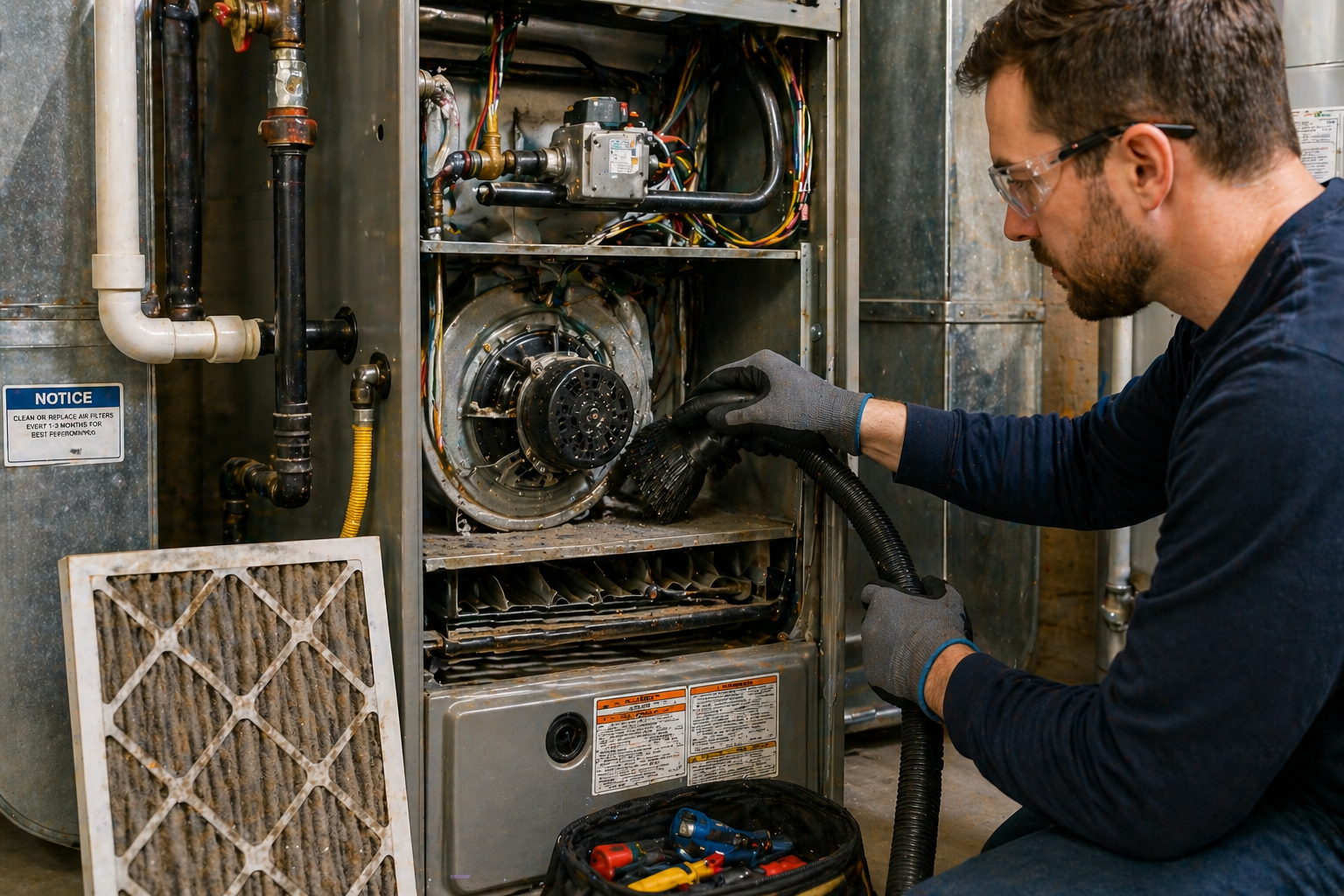
The interior of your unit contains delicate sensors and wiring that require a gentle touch. Using a soft-bristled brush and a vacuum with a HEPA filter ensures you remove the dust without damaging these sensitive parts. Working methodically from the outside in yields the best results for your seasonal maintenance routine.
Changing the Air Filter
The most impactful maintenance task you can perform is replacing the air filter regularly. A dirty filter chokes the system, leading to overheating and potential limit switch failures. You should check the filter monthly and replace it at least every 90 days for optimal performance.
Upgrading to a high-quality pleated filter captures more airborne particles before they reach the mechanical components. Just ensure the MERV rating matches your manufacturer’s recommendations. Filters that are too dense can actually restrict airflow just as badly as a clogged standard filter.
Cleaning the Blower Assembly
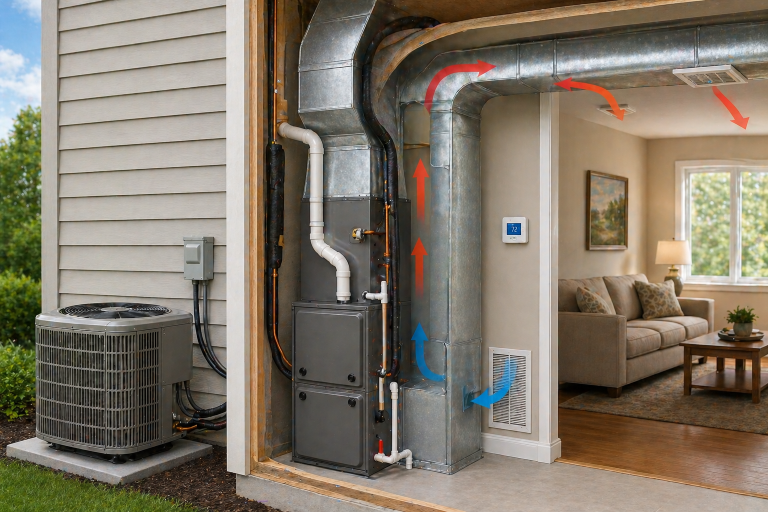
The blower assembly acts as the lungs of your heating system, pulling cold air in and pushing warm air out. After removing the front panel, you can use a vacuum attachment to carefully suck up loose dust around the motor and fan blades. A damp cloth works well to wipe down the exterior housing of the blower.
You must avoid spraying any liquid cleaners directly onto the electrical connections or the motor itself. Moisture causes corrosion and can lead to immediate electrical shorts when you restore power to the unit. Taking your time with a dry brush and vacuum is the safest approach.
Knowing When to Call a Professional Technician
While basic surface cleaning falls well within the capabilities of most homeowners, certain tasks require specialized training and equipment. Modern heating systems feature complex electronic control boards and precise gas pressure calibrations. Attempting to service these advanced components without proper knowledge can void your warranty.
Professional technicians carry tools designed specifically for cleaning delicate parts like the flame sensor and the inner chambers of the heat exchanger. They also have the expertise to spot microscopic cracks in the heat exchanger that could leak carbon monoxide. Investing in an annual professional tune-up provides peace of mind that a simple DIY cleaning cannot match.
Frequently Asked Questions
How often should I clean my furnace?
You should perform a basic surface cleaning and filter change at least once every three months during the heating season. Professional deep cleaning and inspection should happen annually, ideally in the early fall. In colder climates where systems run for six months straight, this annual $150 to $300 service is essential.
Can a dirty furnace cause a fire?
Yes, excessive dust buildup around the burner assembly and electrical components creates a serious fire hazard. Combustible debris can ignite if it comes into direct contact with the heating elements or a spark from a failing motor. Keeping the area within a three-foot radius of the unit completely clear minimizes this risk.
How much does professional furnace cleaning cost?
A standard professional cleaning and inspection typically costs between $100 and $300 depending on your location and the complexity of the unit. This fee usually covers checking the heat exchanger, calibrating the thermostat, and cleaning the blower motor. Spending this money upfront often saves homeowners over $1,000 in emergency repair costs down the line.