

Buyers touring commercial real estate or large multi-family buildings in Worcester County, MA often see large metal boxes sitting on the roof. These are Rooftop Units, commonly referred to as RTUs, and they handle the heating, ventilation, and air conditioning for the spaces below. Knowing exactly what an RTU in HVAC does helps property investors accurately assess a building’s condition and forecast future capital expenditures, such as a new HVAC system installation.
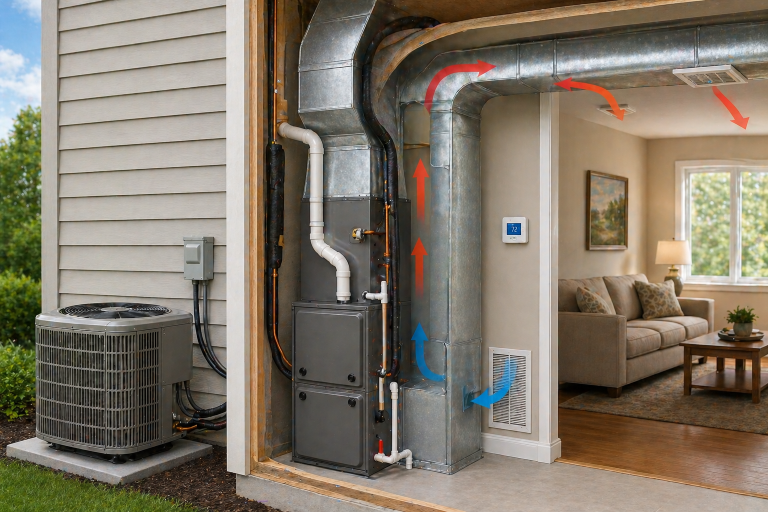
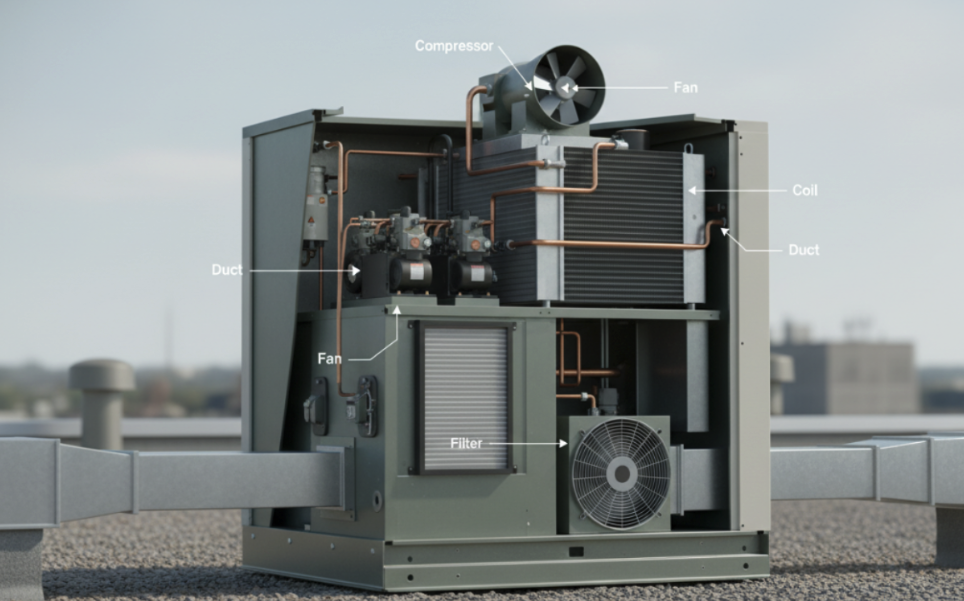
Unlike residential split systems that place a condenser outside and an air handler in the basement, an RTU is a packaged system. It contains all the heating and cooling components in a single, weather-resistant cabinet. For properties across Central Mass, from retail strip centers in Shrewsbury to industrial warehouses in Auburn, this setup frees up valuable indoor square footage while centralizing climate control.
How Rooftop HVAC Units Operate
A rooftop unit pulls warm air from the building through return ducts, cools or heats it, and pushes the conditioned air back down. The entire process happens inside the single cabinet on the roof. Because everything is housed together, technicians can perform routine maintenance or major repairs without ever entering the tenant’s leased space.
These systems are modular, meaning a large commercial facility might have several RTUs dedicated to different zones. If a tenant in a Worcester office park wants their suite cooler than the neighboring suite, a dedicated RTU handles that specific load. This modularity also means that if one unit fails, the entire building does not lose its climate control.
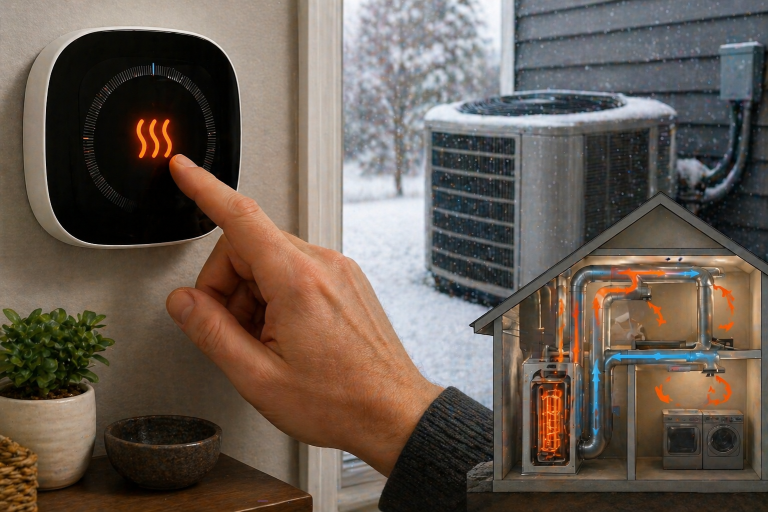
Most modern RTUs include an economizer feature that draws in outside air when the external temperature is favorable. During a crisp Massachusetts fall, the system can cool the building using free outside air rather than running the mechanical compressors. This reduces electricity usage and lowers operating costs for the property owner.
Inspecting Rooftop Systems During Due Diligence
Commercial property buyers should hire a specialized mechanical inspector to evaluate the roof and the HVAC equipment before closing. Standard building inspectors often lack the specific expertise to diagnose commercial RTUs. The mechanical inspector will check the heat exchanger for cracks, test the blower motors, and assess the overall condition of the duct connections.
The physical exterior of the cabinet requires close attention, especially given the harsh winters in Worcester County, MA. Years of heavy snow accumulation and ice melt can cause rust or compromise the weather seals around the unit. If water breaches the cabinet, it can leak directly into the building’s ductwork and cause interior ceiling damage.
Reviewing Maintenance Logs and Warranties
Sellers should provide a complete history of preventative maintenance for every rooftop unit. Consistent filter changes, belt replacements, and coil cleanings keep these systems running efficiently and extend their lifespan. If a seller cannot produce these records, buyers should assume the equipment has been neglected and budget for immediate servicing.
Buyers should also verify if any existing manufacturer warranties will transfer upon the sale of the property. Warranty transfers sometimes require a formal application and a small fee, which the buyer’s agent can help coordinate. Securing that coverage protects the new owner from unexpected compressor or heat exchanger failures during the first few years of ownership.
Frequently Asked Questions
How much should I budget to replace a commercial HVAC RTU in Worcester County?
Replacing a standard commercial RTU typically costs between $8,000 and $15,000 per unit, depending on the tonnage and efficiency rating. Buyers also need to account for crane rental fees, which can add $1,000 to $2,500 to the total installation cost. Complex installations on high-rise buildings in downtown Worcester will push these estimates higher.
How long do rooftop HVAC units typically last given the heavy snow and harsh winters in Central Mass?
A well-maintained RTU in this climate generally lasts 15 to 20 years. The constant exposure to freezing temperatures, ice accumulation, and road salt in the air can accelerate wear on the exterior cabinet and coils. Routine seasonal maintenance is the main factor that pushes a unit toward the 20-year mark.
What specific RTU maintenance records should a buyer request from the seller before purchasing a commercial building?
Buyers should ask for quarterly inspection reports, filter replacement logs, and invoices for any major component repairs over the last five years. These documents reveal whether the seller followed a preventative maintenance schedule or only called for service when the system broke down. Missing records often signal deferred maintenance that the new owner will have to address.
Are rooftop units more energy efficient than split HVAC systems for multi-family properties in Worcester?
RTUs and split systems can achieve similar efficiency ratings, but RTUs offer better zone control and space utilization for large buildings. Packaged rooftop systems often feature advanced economizers that bring in cool outside air, reducing the need to run the compressor. For a multi-family property with a flat roof, an RTU keeps the noisy equipment away from ground-level patios and windows.
If an RTU fails on a leased commercial property, who pays for the replacement in Massachusetts?
Financial responsibility depends entirely on the structure of the commercial lease. In an absolute triple-net (NNN) lease, the tenant typically bears the cost of all HVAC repairs and replacements. In modified gross or full-service leases, the landlord usually pays for capital improvements like a new rooftop unit.
How long does it typically take to secure a crane and local permits to swap out an RTU in Worcester County?
Securing the necessary mechanical permits and scheduling a crane lift usually takes two to four weeks. Emergency replacements can sometimes be expedited, but crane availability fluctuates based on regional construction demand. Property owners should plan replacement projects during the spring or fall to avoid long wait times during peak summer cooling season.