
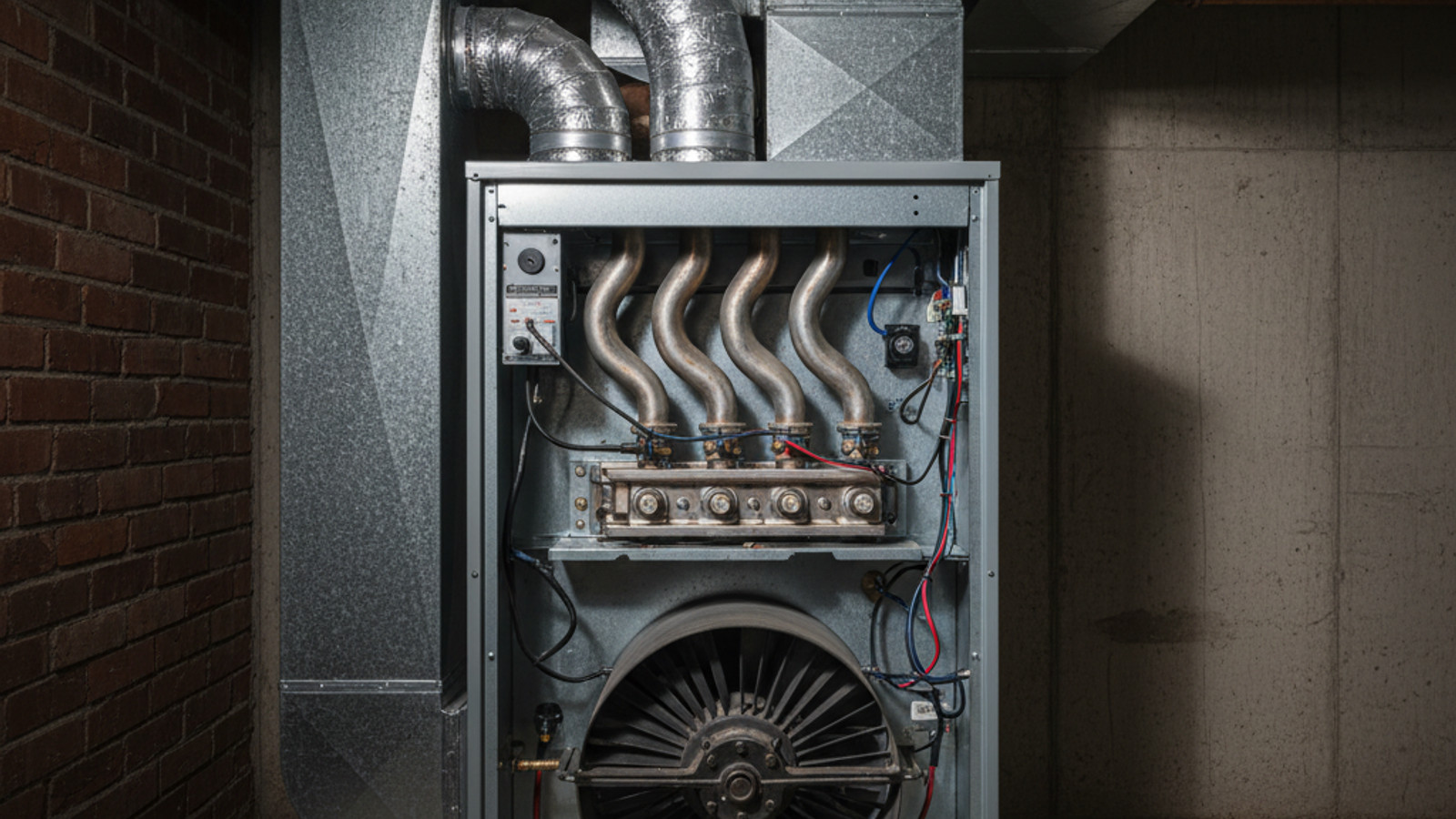
A furnace blowing cold air is one of those problems that immediately gets your attention, especially in the middle of a Massachusetts winter.
In some cases, it is completely normal and part of how the system operates. In others, it is a sign that something is wrong, ranging from a simple thermostat setting to a more serious mechanical issue. The key is knowing how to quickly identify the cause so you can either fix it yourself or call in a professional before it turns into a bigger, more expensive repair.
This guide breaks down the most common reasons furnaces blow cold air and what each one means for your home.
Thermostat settings and simple fixes to check first
Before assuming something is broken, start with the thermostat. It sounds basic, but this is one of the most common causes of cold air complaints.
Make sure the thermostat is set to “heat” and not “cool” or “fan.” If the fan is set to “on,” it will run continuously—even when the furnace is not actively heating—circulating room-temperature air that can feel cold.
Switching the fan setting to “auto” ensures it only runs when the furnace is actually producing heat. Also, check the temperature setting to confirm it is higher than the current room temperature.
Dead batteries in the thermostat can also cause communication issues, leading to inconsistent or incorrect operation. A quick battery swap can sometimes solve the problem instantly.
Dirty air filters and restricted airflow issues
A clogged air filter is one of the most common and most overlooked reasons a furnace blows cold air.
When the filter is packed with dust and debris, it restricts airflow. This can cause the furnace to overheat, triggering a safety shut-off. When that happens, the burner turns off, but the fan may continue to run, blowing cool air through your vents.
In Massachusetts homes, especially during peak winter months when the system runs constantly, filters can clog faster than expected. If it has been more than a couple of months since your last replacement, it is worth checking immediately.
Replacing the filter is a quick, inexpensive fix that often restores normal operation and prevents further strain on the system.
Pilot light or ignition system problems
For gas furnaces, the pilot light or electronic ignition system is responsible for lighting the burners that produce heat.
If the pilot light goes out, or if the ignition system fails, the furnace will still run the blower but will not generate heat. The result is cold air coming through the vents.
Older furnaces rely on a standing pilot light, which can go out due to drafts or buildup around the burner. Newer systems use electronic ignition, which can fail due to worn components or electrical issues.
If you suspect an ignition problem, you may notice that the furnace attempts to start but never produces heat. This is typically not a DIY repair and usually requires a technician to diagnose and fix safely.
Overheating and safety shut off causes
Furnaces are equipped with safety mechanisms to prevent damage or dangerous conditions. One of these is a high-limit switch that shuts off the burner if the system overheats.
When overheating occurs, the furnace stops producing heat, but the blower often continues to run to cool the system down. That is when you feel cold air coming through the vents.
Overheating is commonly caused by restricted airflow, often due to a dirty filter, blocked vents, or ductwork issues. It can also result from internal problems like a failing blower motor or heat exchanger issues.
If your furnace cycles between blowing warm and cold air, overheating is a strong possibility.
Ductwork leaks and airflow imbalances
Sometimes the furnace itself is working properly, but the air never reaches your living space as intended.
Leaky or poorly insulated ductwork—common in older Massachusetts homes—can allow warm air to escape before it reaches your vents. At the same time, cold air from basements or attics can be pulled into the system, diluting the warm air.
This can make it feel like your furnace is blowing cold air when it is actually producing heat that is being lost along the way.
Airflow imbalances can also cause certain rooms to feel colder than others. Inconsistent temperatures across your home are often a sign that ductwork needs to be inspected or sealed.
Fuel supply issues in gas furnaces
Gas furnaces rely on a steady fuel supply to generate heat. If that supply is interrupted, the system cannot produce warm air.
Common issues include a closed or partially closed gas valve, low gas pressure, or problems with the utility supply. In some cases, recent work on gas lines or interruptions in service can cause temporary issues.
If the furnace is running but not producing heat, and other potential causes have been ruled out, fuel supply should be checked. Because this involves gas systems, it is best handled by a professional.
Electrical or control board malfunctions
Modern furnaces rely on electronic control boards to manage everything from ignition to airflow timing.
If the control board malfunctions, it can cause the system to behave unpredictably. The blower may run without the burners activating, or the system may fail to follow the correct heating cycle.
Wiring issues, faulty sensors, or damaged components can also interfere with normal operation. These problems are often harder to diagnose without specialized tools.
Electrical issues typically require a professional inspection, as improper handling can lead to further damage or safety risks.
When cold air is normal vs a problem
Not every instance of cold air means something is wrong.
It is normal for a furnace to blow slightly cool air at the start of a heating cycle. The system needs a short period to warm up before delivering heated air through the ducts.
Similarly, after the thermostat is satisfied and the burner shuts off, the blower may continue running briefly to push out any remaining heat. During this phase, the air may feel cooler.
The difference between normal operation and a problem comes down to duration. If the air warms up quickly, the system is likely functioning correctly. If it stays cold or never produces heat, further investigation is needed.
When to call an HVAC professional
Some furnace issues are easy to fix, but others require professional attention.
You should consider calling a technician if:
- The furnace repeatedly blows cold air without warming up
- You suspect ignition, gas, or electrical issues
- The system is short-cycling or shutting off unexpectedly
- There are unusual noises, smells, or error codes
In Massachusetts, where heating systems are critical during the winter, it is better to address problems early rather than risk a complete breakdown during a cold snap.
A professional inspection can identify the root cause and prevent small issues from turning into major repairs.
FAQs
Why does my furnace blow cold air before it gets warm?
This is normal. The furnace needs time to heat up before it starts delivering warm air. During that brief startup phase, the air may feel cool until the system reaches operating temperature.
Can a dirty filter cause a furnace to blow cold air?
Yes. A clogged filter restricts airflow, which can cause the furnace to overheat and shut off the burner. The blower may continue running, pushing cold air through the system.
Is it safe to keep running a furnace blowing cold air?
It depends on the cause. If it is due to a simple issue like a thermostat setting, it may be safe. However, if the problem is related to overheating, gas supply, or electrical components, continued operation can lead to further damage or safety risks.
How much does it cost to fix a furnace blowing cold air?
Costs vary depending on the issue. Simple fixes like replacing a filter or thermostat batteries may cost very little, while more complex repairs—such as ignition system or control board replacements—can range from a few hundred to over a thousand dollars.