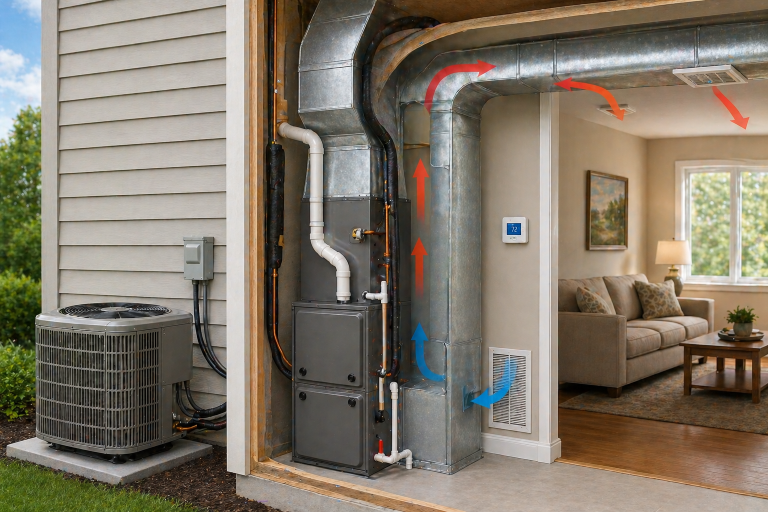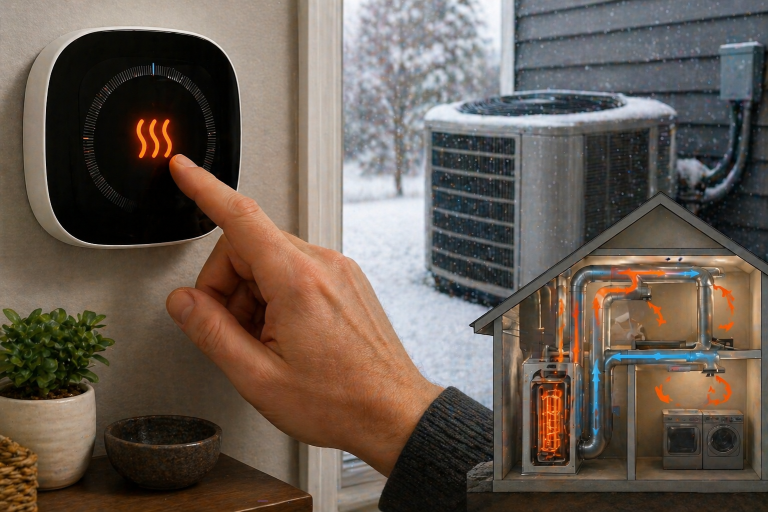

Central Massachusetts winters hit harder than the coast – Worcester averages 10 to 15 more heating degree days per year than Boston. Many homeowners start exploring new options after facing a high furnace repair cost. That context matters when you’re pricing out an HVAC upgrade, because the first question almost every homeowner asks is what a heat pump installation actually costs in a climate this demanding.
Modern equipment handles the cold well. But the upfront number depends on your house size and the specific technology you choose. Between equipment, local labor rates, and available state rebates, the final out-of-pocket expense varies widely – and knowing what drives that range helps you ask the right questions before you sign anything.
Average Installation Costs for Worcester County Homes
A standard heat pump installation in Worcester, MA typically runs between $3,500 and $16,000. For a home between 1,600 and 2,000 square feet – which covers a lot of the local housing stock – most buyers land somewhere between $5,000 and $8,000 for a high-efficiency condensing unit with professional installation. Step up to a cold-climate heat pump and that range shifts to $8,000 to $15,000 before any rebates.
Whole-home installations are a different conversation. A complete whole-home setup in Massachusetts costs $12,000 to $35,000 upfront. Once Mass Save rebates of up to $8,500 are factored in, the typical out-of-pocket expense drops to somewhere between $5,000 and $27,000. Those figures move depending on whether your house needs new ductwork and which system type you land on.
How System Types Impact Your Total Price
Massachusetts building codes use specific design conditions for Climate Zones 5 and 6, which covers Worcester County. To qualify for 2026 Mass Save rebates, cold-climate models must use R-32 or R-454B refrigerant and maintain at least 80% of their rated heating capacity when the outdoor temperature drops to 5 degrees Fahrenheit.
The energy code doesn’t require backup heat, but systems sized to that standard often can’t hit 100% of the design heating load on the coldest days of the year. That’s why whole-home setups frequently include supplemental resistance heat elements built into the air handlers, or keep an existing fossil-fuel backup system in place.
Air-Source and Cold-Climate Models
Cold-climate heat pumps from brands like Mitsubishi, Daikin, and Bosch are built for New England winters. They operate efficiently down to -13 degrees Fahrenheit and handle more than 95% of the area’s heating hours without needing a backup source.
Standard air-source models cost less upfront but can struggle when temperatures plummet. If you’re replacing an aging furnace, cold-climate ratings are worth prioritizing – December through February in Worcester County is not the time to find out your equipment has limits.
Ductless Mini-Split Systems
Homes without existing ductwork often rely on ductless mini-split systems. These pair an outdoor compressor with one or more indoor wall cassettes, giving you room-by-room temperature control without running new ducts.
A single-zone mini-split is generally the most affordable entry point – ideal for adding heating and cooling to a specific room or an addition. Expanding to multiple indoor heads for whole-home coverage pushes equipment and labor costs up accordingly.
Geothermal Ground-Source Options
Geothermal heat pumps draw stable temperatures directly from the earth, which makes them efficient regardless of what’s happening above ground. The tradeoff is that they require extensive excavation to bury the underground loop system in your yard.
This is the highest upfront cost of any heat pump category. For homeowners planning to stay put for decades, though, the long-term energy savings and distinct federal tax incentives make it worth the math.
What Drives Your Final Contractor Quote
Your house size dictates the required tonnage of the equipment – larger homes need more powerful compressors, which raises the baseline price. That part is straightforward.
What surprises some buyers is how much insulation matters to the quote. A contractor evaluating a well-insulated house can specify a slightly smaller, less expensive system to meet the daily heating load. The thermal envelope of your home directly affects what you’ll pay.
Square Footage and Sizing Requirements
Heat pumps are measured in tons or BTUs, and getting that capacity right isn’t optional. An undersized unit runs constantly and still can’t keep up, while an oversized unit short-cycles and wastes electricity.
Contractors use an ACCA Manual J calculation to determine the exact size needed – it accounts for your home’s layout, windows, and insulation levels, not just the square footage. That calculation is what ties the equipment spec to your specific property.
Local Labor Rates and Ductwork Conditions
HVAC contractors in the Worcester area typically charge $100 to $200 per hour. Emergency or after-hours calls run 25% to 50% more than standard daytime rates.
If your house already has central air or forced-air heat, there’s a good chance the existing ductwork can be reused – which keeps costs down. Modifying, sealing, or fully replacing old ducts adds real labor hours and materials to the invoice, so the condition of what’s already in your walls is worth knowing before you get your first quote.
Available Rebates and Tax Credits in Massachusetts
Worcester is served by National Grid, a founding partner of the Mass Save program. That means National Grid customers in the city can access state heat pump rebates, weatherization assistance, and dedicated financing options – all through the same program.
The 2026 Mass Save program structures its air-source heat pump rebates into specific tiers. Whole-home installations qualify for $2,650 per ton up to a maximum of $8,500. Partial-home installations offer $1,125 per ton, also capped at $8,500. Basic rebates for systems meeting limited criteria provide $250 per ton up to $2,500. Knowing which tier your project lands in before you choose equipment is worth the conversation with your contractor.
Income-Based Mass Save Programs
Massachusetts offers enhanced support for households meeting specific financial thresholds. If your household earns less than 80% of the area median income in Worcester County, you may qualify for fully covered upgrades through the state’s turnkey services.
That can mean up to $16,000 toward a new system – or a no-cost installation for eligible families. Check your income bracket through the Mass Save portal before you sign a contractor agreement, not after.
Federal Tax Incentives and Financing
The federal Inflation Reduction Act provides a tax credit of up to $2,000 for installing qualifying energy-efficient heat pumps. That federal credit stacks on top of Mass Save rebates, which matters for the total math.
For whatever balance remains, eligible Massachusetts residents can use the 0% HEAT Loan – up to $25,000 over a seven-year term, with no interest.
Do Heat Pumps Add Value to Your Real Estate?
Buyers in Worcester County pay attention to utility costs and heating infrastructure. Replacing an aging oil furnace or inefficient electric baseboards with a modern cold-climate heat pump lowers monthly energy bills and eliminates the need for fuel deliveries.
A home with updated, high-efficiency HVAC also stands out when it’s time to sell. The dual functionality – reliable winter heating and central air conditioning – is something buyers notice, especially when the alternative is a 30-year-old boiler and window units.
Frequently Asked Questions
What is the average out-of-pocket cost to install a whole-home heat pump in Worcester County?
It depends on the exact system and your eligible rebates. A whole-home installation in Massachusetts typically costs $12,000 to $35,000 upfront. After applying Mass Save rebates of up to $8,500, the typical out-of-pocket cost falls between $5,000 and $27,000.
How do I qualify for the Mass Save heat pump rebates to lower my installation costs?
It depends on your utility provider and the equipment you choose. You must be a customer of a participating utility like National Grid to access the program. For 2026, your cold-climate heat pump must also use R-32 or R-454B refrigerant and maintain at least 80% of its rated heating capacity at 5 degrees Fahrenheit.
Will upgrading to a heat pump actually increase my home’s resale value in the Worcester area?
Yes, energy-efficient upgrades generally improve a property’s market appeal. Buyers value the combination of reliable winter heating and summer air conditioning, especially when it replaces older oil or baseboard systems.
How do the monthly electricity costs of running a heat pump compare to traditional oil or gas heating in MA?
It depends on your home’s insulation and current fuel prices. Heat pumps are extremely efficient and often cost less to operate than traditional oil or electric baseboard heat. The exact monthly savings vary based on local electricity rates and the severity of the winter.
Do I need to keep my existing boiler as a backup for harsh Worcester County winters?
No, it’s not legally required, but it’s a common practice. Modern cold-climate models handle 95% of heating hours without backup, but ACCA Manual J sizing often results in equipment that can’t meet 100% of the load at the coldest design temperatures. Many homeowners keep their fossil-fuel system in place or use integrated resistance heat elements for the coldest days.
How long does the entire process take, from the initial energy assessment to final installation by local contractors?
It depends on contractor availability and the scope of the work. Simple ductless mini-split installations can be completed in a day or two. Whole-home systems requiring new ductwork take longer. Scheduling the required Mass Save energy assessment and securing local permits adds time as well.