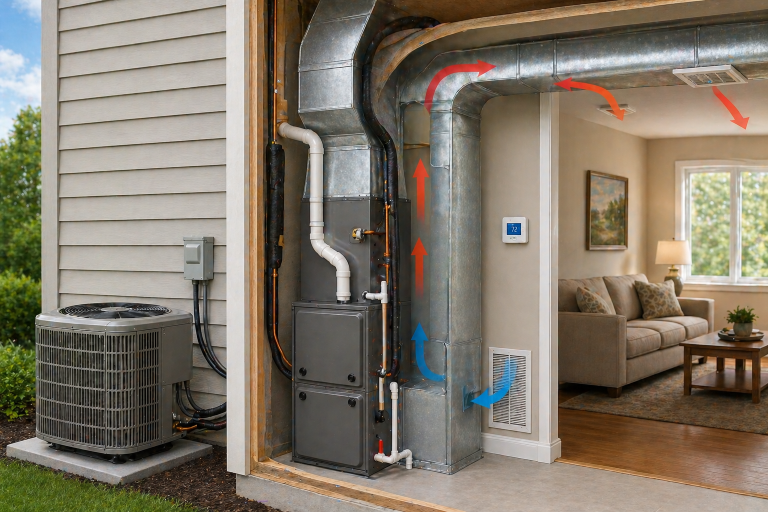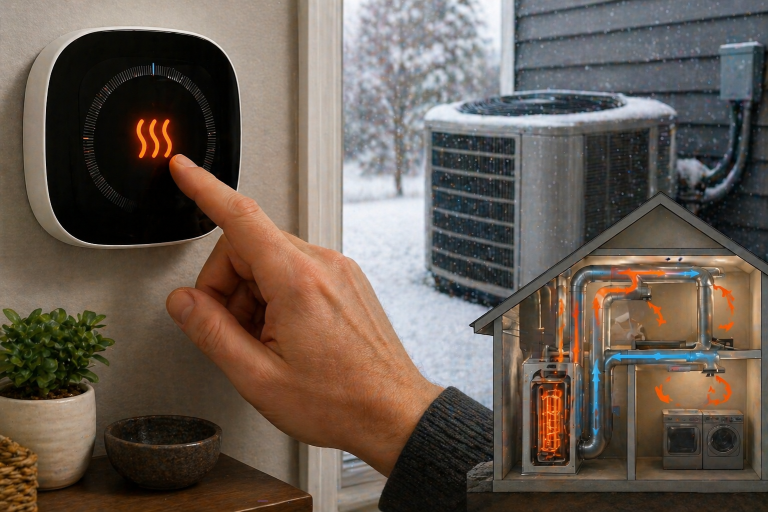

Most homeowners only think about their air conditioner when warm air blows from the vents. Behind the scenes, a complex refrigeration cycle keeps your home comfortable during the summer months.
The average central air conditioning system lasts 12 to 15 years with proper maintenance. Reaching that maximum lifespan requires every component to operate under the correct pressures and temperatures.
The secret to this cooling process lies in how the system handles heat transfer. Technicians use specific measurements to ensure the equipment runs efficiently and safely. One of the most important metrics they check during a service call is superheat.
The Basics of HVAC Superheat
Superheat measures the temperature increase of refrigerant vapor above its boiling point. Inside your air conditioner, liquid refrigerant absorbs heat from your home and boils into a gas. This state change happens inside the indoor evaporator coil.
Think about how water boils at 212 degrees Fahrenheit at sea level. Once the water turns to steam, any additional heat applied to that steam raises its temperature further. That extra temperature above the boiling point is the superheat.
The HVAC industry refers to the energy required to change states as latent heat. Once the refrigerant becomes a complete vapor, it begins absorbing sensible heat. This sensible heat absorption is what raises the thermometer reading of the gas.
In an HVAC system, this extra heat ensures the refrigerant turns entirely into vapor before it travels down the suction line. Compressors are designed to pump gas, not liquid. A proper superheat reading proves that no liquid refrigerant is returning to the compressor.
How Superheat and Subcooling Differ
Technicians look at two main temperature readings when evaluating a refrigeration cycle. While superheat happens inside the home, subcooling takes place at the outdoor unit. Subcooling is the process of cooling liquid refrigerant below its condensation point.
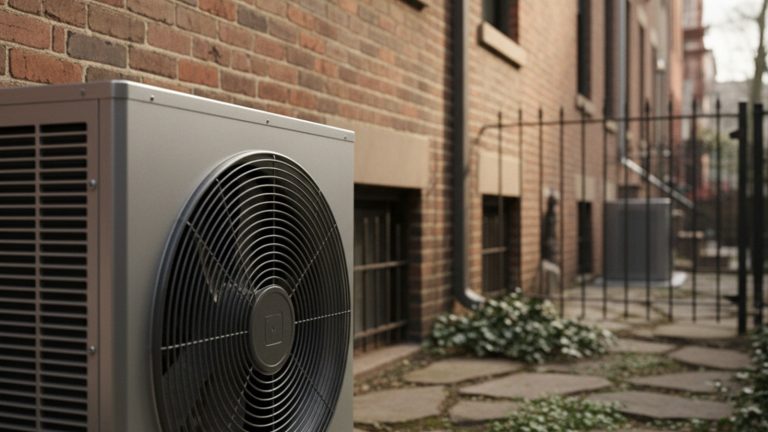
The outdoor unit, known as the condenser, takes the hot gas from the compressor and cools it back into a liquid. Subcooling measures how much the liquid cools down after it finishes condensing. This ensures a solid stream of liquid refrigerant travels back inside to the expansion valve.
If the subcooling drops too low, bubbles form in the liquid line. These vapor bubbles hit the expansion valve and reduce the system’s cooling capacity. The indoor coil will not receive enough liquid to properly cool the house.
These two measurements work together to maintain overall system performance. Superheat protects the compressor from liquid damage, while subcooling ensures the indoor coil receives enough liquid. Both numbers need to align with manufacturer specifications for the system to run correctly.
Why Proper Superheat Levels Protect Your System
Running an air conditioner with incorrect settings directly impacts your monthly utility bills. When the superheat is off, the system struggles to absorb heat effectively. The unit runs longer to cool the house, drawing more electricity and driving up energy costs.
Modern air conditioners carry specific Seasonal Energy Efficiency Ratio ratings. A system rated for high efficiency will only deliver those promised energy savings if the refrigerant charge is exact. Even a minor deviation in superheat reduces the system’s effective efficiency.
The mechanical risks pose an even larger financial threat than the energy waste. If the superheat drops too low, liquid refrigerant enters the compressor. This liquid washes away internal lubricating oil and causes permanent mechanical failure.
Replacing a flooded compressor is an expensive repair. Depending on the size and brand of your system, a new compressor often costs between $1,200 and $2,500. Maintaining the right superheat level extends the equipment’s lifespan and prevents these sudden replacement bills.
How Technicians Measure Your System’s Superheat
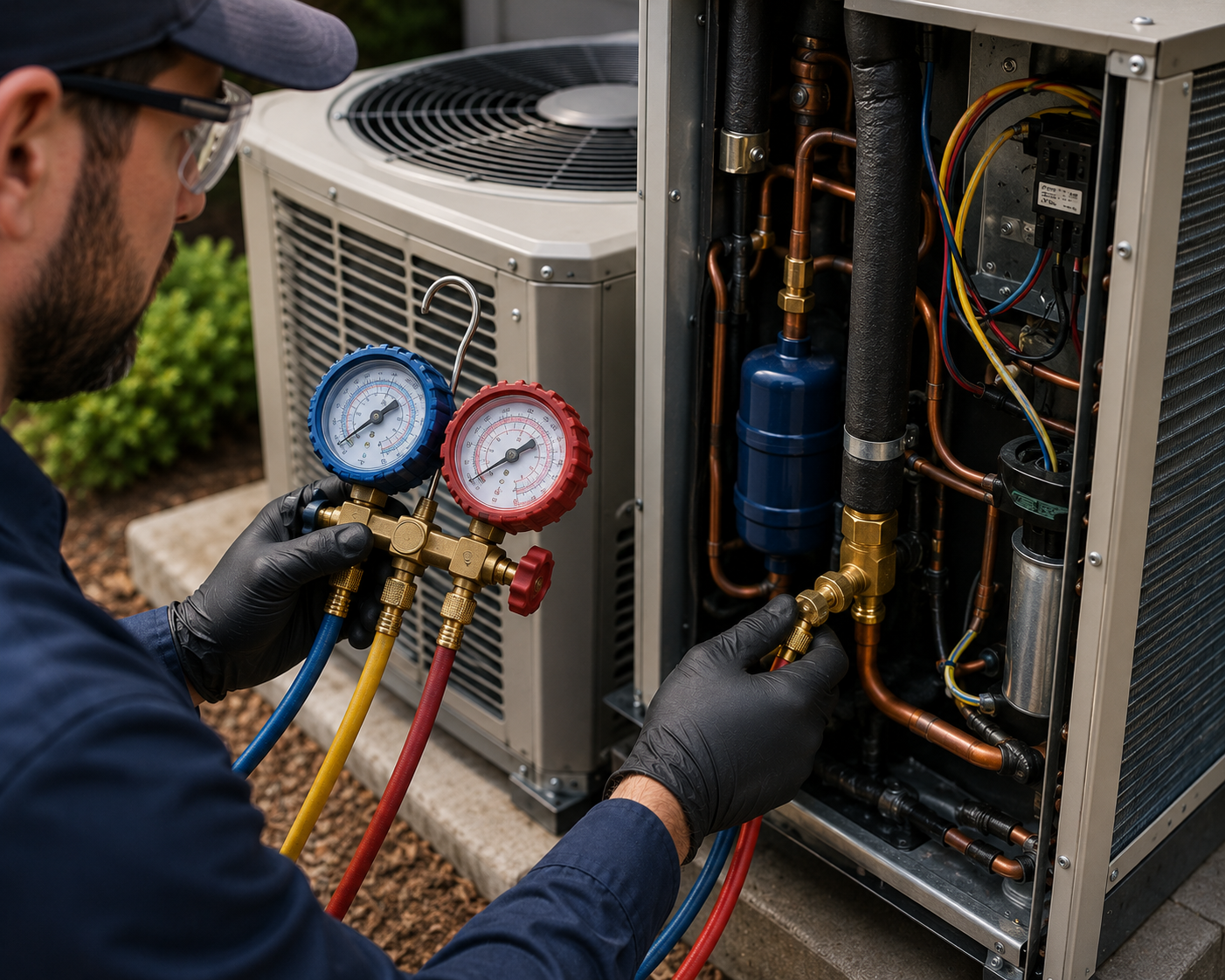
Measuring these temperatures requires specialized gauges and an understanding of pressure-temperature charts. A technician connects a digital pressure gauge and a pipe-clamp thermometer to the suction line service port. They take these readings while the system runs under a normal cooling load.
To get an accurate target, the technician also measures the indoor wet-bulb temperature and the outdoor dry-bulb temperature. They use a psychrometer to calculate the heat and humidity levels inside the home. These environmental factors dictate exactly what the superheat should be at that specific moment.
Technicians rely on a pressure-temperature chart specific to the type of refrigerant in the system. R-410A and newer R-454B refrigerants operate at completely different pressures. A modern digital manifold gauge converts these pressure readings into a saturation temperature automatically.
The technician then subtracts this saturation temperature from the measured suction line temperature. The resulting number is the system’s superheat. Systems equipped with a thermostatic expansion valve automatically adjust the refrigerant flow to keep this number steady.
Homeowners should not attempt to take these measurements themselves. Connecting gauges to the service ports risks venting refrigerant into the atmosphere. Technicians must hold an EPA 608 certification to handle refrigerants legally in the United States.
Recognizing the Signs of Improper Superheat
A standard target superheat range for a system with a fixed orifice is typically between 10 and 20 degrees Fahrenheit. This target shifts depending on the indoor heat load and the outdoor ambient temperature. When the system falls out of this range, noticeable symptoms usually follow.
Paying attention to how your air conditioner behaves can help you catch a problem before the compressor fails. Homeowners should always check for a dirty air filter before calling a professional. Poor indoor airflow directly impacts these temperature readings and mimics a refrigerant issue.
If the filter is clean, the issue likely stems from the refrigerant charge or the metering device. You might notice changes in the airflow temperature or unusual behavior at the indoor unit.
- Low superheat: This indicates too much liquid refrigerant is flooding the evaporator coil. The system risks sending liquid back to the compressor, which causes loud mechanical noises or sudden system failure.
- High superheat: This points to a lack of refrigerant or a severe airflow restriction. Homeowners often notice warm air blowing from the vents or ice forming along the evaporator coil.
- Long run cycles: Regardless of whether the reading is too high or too low, the system loses cooling capacity. The air conditioner will run continuously without ever reaching the set thermostat temperature.
Frequently Asked Questions
What is a good superheat for AC?
A target reading depends on the type of metering device installed in your system. Units with a thermostatic expansion valve usually maintain a steady range between 10 and 15 degrees Fahrenheit. Fixed orifice systems require a technician to calculate the exact target based on real-time indoor and outdoor temperatures.
What happens if superheat is too high?
High readings mean the refrigerant boils off too early in the evaporator coil. The system stops absorbing enough heat from your indoor air, leaving your house warm and humid. This condition often points to a dirty air filter, a failing blower motor, or a slow refrigerant leak.
What is the $5,000 rule for HVAC?
This rule helps homeowners decide whether to repair or replace an aging air conditioner. You multiply the age of the equipment by the estimated cost of the repair. If the total exceeds $5,000, you should replace the entire system rather than paying for the fix.