
New England winters demand reliable heating, and many homeowners are looking for ways to lower their utility bills. As energy costs remain a significant household expense in 2026, finding an efficient heating and cooling system is a top priority. A ground-source heat pump offers a compelling solution for properties in Worcester County.
While traditional furnaces burn fuel to create warmth, a geothermal heat pump system simply moves existing thermal energy from the earth into your house. This technology provides incredibly stable indoor temperatures regardless of how cold it gets outside. Understanding the mechanics and costs can help you decide if this high-efficiency upgrade makes financial sense for your property.
How a Geothermal Heat Pump Works
The secret to geothermal heating lies just a few feet beneath your lawn. In MA, the ground temperature remains a steady 50 to 52 degrees Fahrenheit all year round. A geothermal system uses this stable underground environment as both a heat source in the winter and a heat sink in the summer.
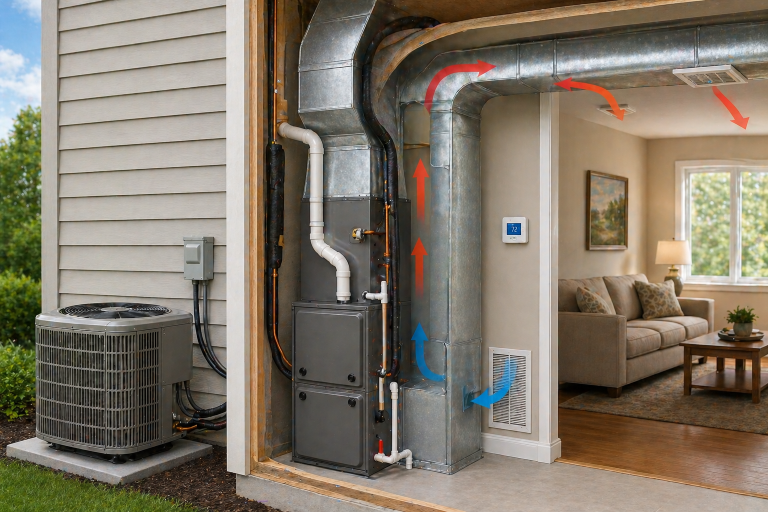
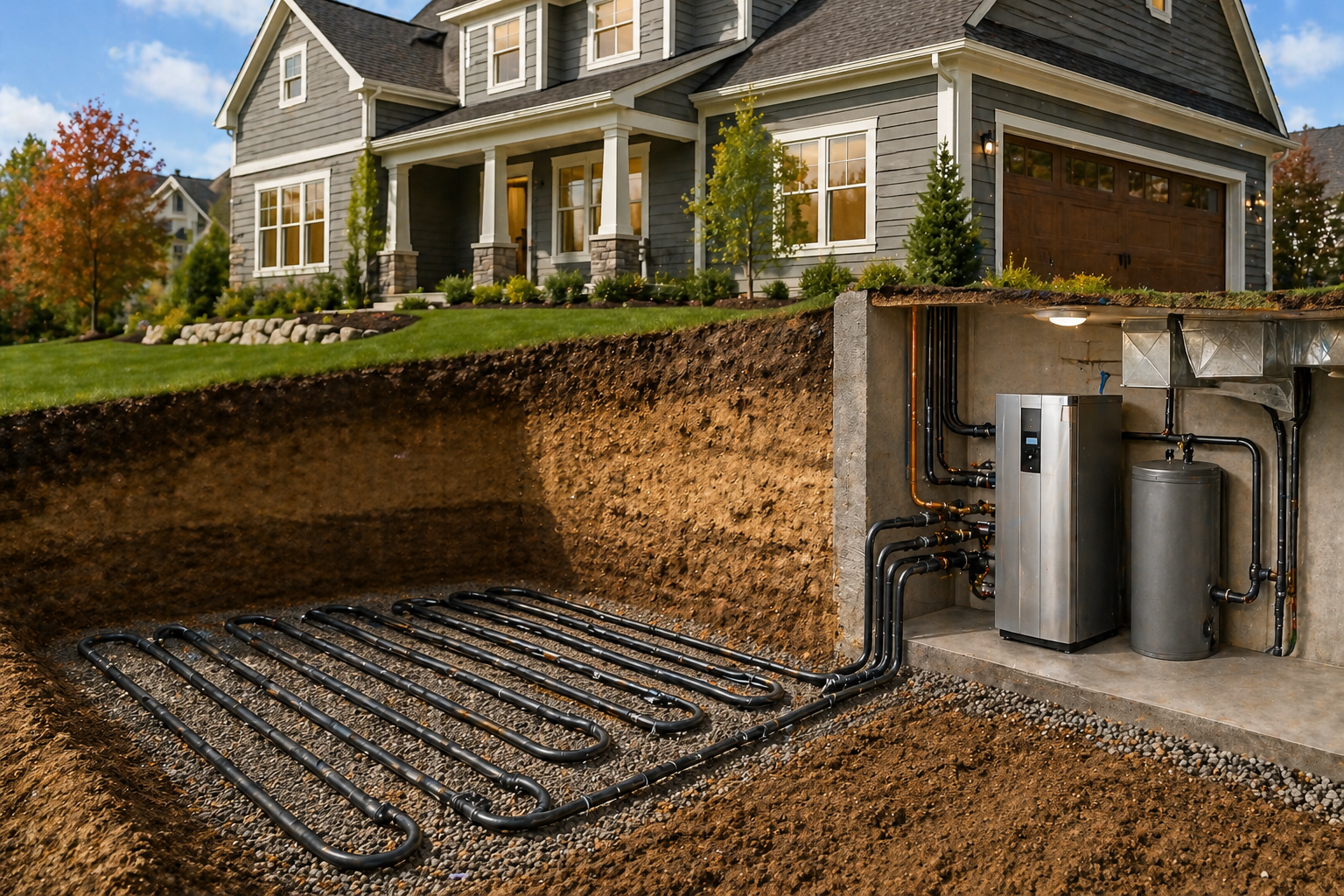
An underground loop of pipes circulates a water-based solution that absorbs thermal energy from the soil. Once this fluid returns to the indoor heat pump, a compressor concentrates the captured warmth and distributes it throughout your ductwork. During the summer, the process reverses to pull heat out of your home and deposit it back into the cooler earth.
This transfer process is vastly more efficient than creating heat from scratch. Geothermal units typically achieve a Coefficient of Performance between 3.0 and 5.0, meaning they produce three to five units of heat for every one unit of electricity consumed. Because the ground never freezes at the depth of the loop, you never experience the efficiency drop-offs common with other systems during extreme cold snaps.
Types of Geothermal Loop Systems
Every property requires a custom approach to capturing ground-source heat. The right loop configuration depends entirely on your available land, soil conditions, and budget. Installers will typically conduct a site assessment to determine the most practical layout for your specific yard.
The underground network is the most critical and permanent component of your geothermal heat pump system. While the indoor mechanical units will eventually need replacement, the ground loop itself is designed to last for generations.
- Horizontal loops require significant yard space to dig trenches four to six feet deep. This is usually the most affordable installation method, requiring roughly 400 to 600 linear feet of trenching per ton of heating capacity.
- Vertical loops are ideal for smaller lots because the pipes are placed in boreholes drilled 150 to 400 feet straight down. Drilling costs generally run between $15 and $25 per foot, making this a more expensive but highly space-efficient option.
- Pond or lake loops involve submerging coiled pipes into a nearby body of water. This is a highly efficient and less invasive option, but it requires specific water depth and volume to work properly.
- Open loops pull water directly from a dedicated ground well, pass it through the heat exchanger, and discharge it. This method requires excellent groundwater quality and strict adherence to local environmental permitting.
Geothermal vs Air-Source Heat Pumps
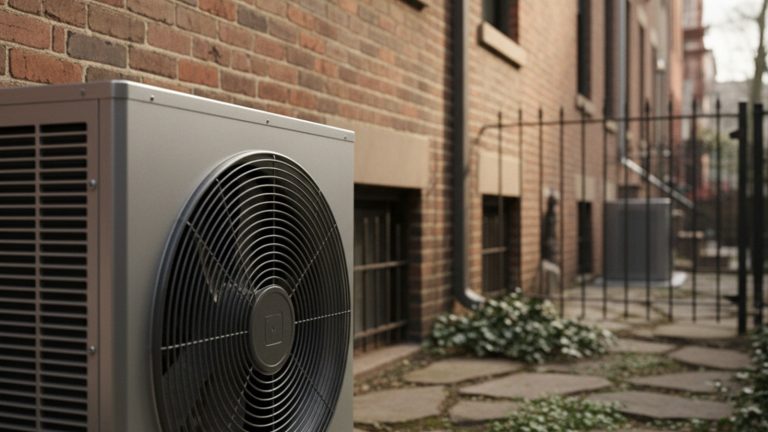
Both air-source and ground-source heat pumps offer excellent energy efficiency compared to traditional fossil fuel furnaces. The primary difference lies in where they draw their thermal energy from. An air-source heat pump extracts warmth from the outside air, while a geothermal system relies on the stable earth.
When temperatures drop below 25 degrees in New England, an air-source unit has to work significantly harder to extract heat. Its efficiency rating can dip to between 2.0 and 3.5 during deep freezes. Geothermal systems maintain a steady 3.0 to 5.0 efficiency rating because the underground temperature never fluctuates.
The trade-off comes down to the initial installation price versus long-term operating costs. An air-source setup might cost between $4,000 and $8,000, making it a highly accessible upgrade for most homeowners. A geothermal installation costs two to three times as much upfront, but it delivers 40 to 60 percent lower monthly operating costs over its lifespan.
Installation Costs and Federal Tax Credits
The financial commitment for a ground-source heat pump is substantial, but strong financial incentives help bridge the gap. A complete geothermal installation typically ranges from $15,000 to $35,000 before any rebates are applied. The final price depends heavily on the size of your home and the complexity of the loop system required.
The Federal Residential Clean Energy Credit significantly reduces this upfront burden. This program provides an uncapped 30 percent tax credit on the total installation cost, and it remains active through 2032. For a $25,000 installation, this credit effectively lowers your net cost to around $17,500.
Local programs in MA offer additional financial support to make these systems more accessible. Programs like Mass Save provide substantial rebates that can further drive down the total investment. When you combine these incentives with the monthly utility savings, the typical payback period for a geothermal system is between seven and twelve years.
Pros and Cons of Geothermal
Upgrading to a ground-source heat pump is a major decision that requires weighing the long-term benefits against the immediate hurdles. The technology is undeniably superior in terms of pure heating and cooling performance. The logistical requirements of burying hundreds of feet of pipe are simply not suitable for every property.
Understanding the distinct advantages and limitations can help you set realistic expectations. For many homeowners in colder climates, the operational stability is worth the initial disruption.
- Pros: These systems offer the highest efficiency ratings on the market and perform consistently in all weather conditions. The underground loop boasts a lifespan of 25 to 50 years, the indoor units operate very quietly, and there is no noisy outdoor condenser to maintain.
- Cons: The upfront cost is significantly higher than any other heating method. The installation process involves major yard disruption, and the longer payback period means it only makes financial sense if you plan to stay in the home for a long time.
Is Geothermal Right for Your Home?
A geothermal system is generally the best choice for homeowners who plan to stay in their current property for ten years or more. This extended timeframe allows the monthly energy savings to easily surpass the initial installation premium. It is also an incredibly smart choice for new construction, where excavation can happen before landscaping is established.
This technology might not be the right fit for everyone. Renters, homeowners on very small urban lots, or those planning to move within five years will likely not see a return on their investment. In those situations, a high-efficiency air-source heat pump is usually a more practical alternative.
The best way to determine your property’s viability is to schedule a professional site assessment. A qualified installer will evaluate your soil, yard space, and current ductwork for a fee typically ranging from $200 to $500. This evaluation provides the hard numbers you need to calculate your exact payback period and potential home resale premium.
Frequently Asked Questions
What are the disadvantages of a geothermal heat pump?
The biggest disadvantage is the high initial installation cost, which can exceed $20,000 even after tax credits. The installation process also requires significant excavation, which will temporarily disrupt your landscaping. Not all lots have the necessary space or soil conditions to support an underground loop.
Do geothermal heat pumps use a lot of electricity?
No, they use less electricity than any other type of electric heating system available. Because they only use power to transfer existing heat rather than generate it, they are incredibly efficient. Most homeowners in MA see a dramatic drop in their overall energy consumption compared to using electric baseboards or traditional furnaces.
How long do geothermal heat pumps last?
The indoor mechanical components typically last between 15 and 25 years with proper maintenance. The underground loop system is incredibly durable and is rated to last anywhere from 25 to over 50 years. This longevity makes geothermal one of the most durable heating and cooling solutions you can install.
Is there a difference between a heat pump and geothermal?
Yes, the term heat pump usually refers to an air-source system that pulls heat from the outside air. A geothermal system is specifically a ground-source heat pump that extracts thermal energy from the earth. Both use similar compressor technology, but geothermal provides much more consistent performance during severe winter weather.
Can you install geothermal in an existing home?
Yes, you can absolutely retrofit a geothermal system into an existing property. If your home already has ductwork for a forced-air furnace, the indoor unit can usually connect directly to it. The main challenge is simply ensuring your yard has enough accessible space for the drilling equipment to install the ground loop.