
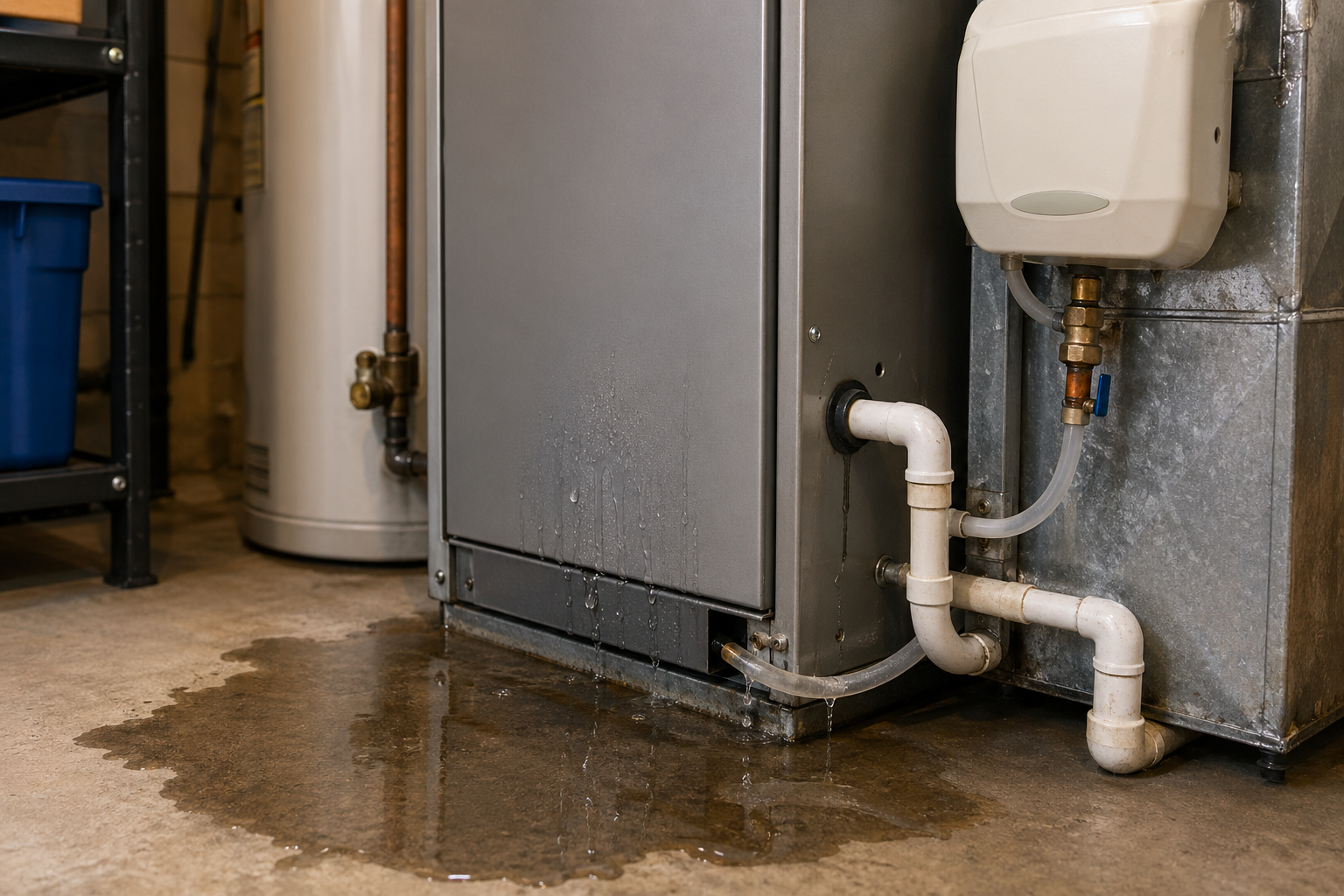
Discovering a puddle of water around your heating system is a stressful moment for any homeowner. You rely on this equipment to keep your property comfortable, and moisture pooling on the floor usually signals an immediate problem. Many homeowners immediately wonder if they need a complete system replacement.
Fortunately, most furnace leaks are highly treatable and stem from a few common maintenance issues. Understanding the root cause can save you from unnecessary panic and expensive emergency service calls. Knowing exactly what to look for will help you protect your utility room floors and get your heating system back on track.
Understanding the Root Causes of Furnace Leaks
The first step in diagnosing a leak is identifying the type of heating system you have in your home. High-efficiency models produce condensation as a normal part of their operation, while standard-efficiency units do not. This distinction is crucial because it dictates where the water might be originating.
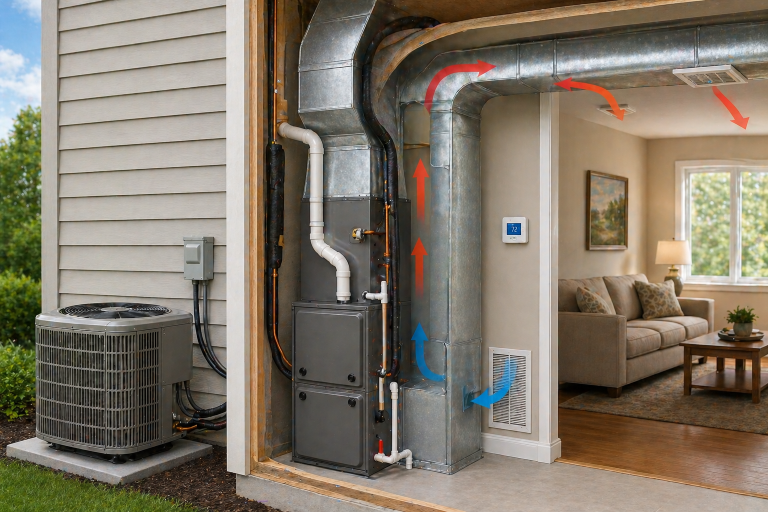
If you own a high-efficiency unit, you will typically see white PVC exhaust pipes rather than traditional metal flues. These modern systems extract heat from combustion gases so thoroughly that the gases cool and turn into liquid condensation. When the components managing this liquid fail, that moisture inevitably finds its way onto your floor.
Condensation Issues in High-Efficiency Models
High-efficiency systems generate gallons of water every day during peak winter usage. This water usually flows safely into a floor drain through a dedicated PVC pipe. If the condensation tubing cracks or comes loose from the unit, water will drip directly down the side of the cabinet.
Clogged Drain Lines and Traps
The most frequent culprit behind a leaking high-efficiency system is a simple blockage. Dust, dirt, and mold can accumulate inside the condensation drain line or the internal drain trap over time. When water cannot flow through the pipe, it backs up into the furnace and eventually spills out the bottom.
Clearing a clogged line is often a straightforward process that restores normal operation immediately. Routine maintenance usually prevents this debris buildup from happening in the first place. You can often spot the blockage by inspecting the clear or white plastic tubing near the base of the unit.
Faulty Humidifier Connections
Many homes have a whole-house humidifier attached directly to the furnace to combat dry winter air. These devices tap into your home plumbing to add moisture to the heated air circulating through your ductwork. A leak in the humidifier water feed line or a cracked internal housing will look exactly like a furnace leak.
You can test this by turning off the water supply valve connected to the humidifier. If the dripping stops, the issue is isolated to the humidifier rather than the heating equipment itself. This is generally a much cheaper repair than fixing internal combustion components.
Immediate Steps to Take When You Spot Water
Finding water around your heating equipment requires fast action to prevent property damage. Your primary goal is to stop the flow of water and secure the area before attempting any diagnostics. Standing water mixed with electrical appliances always presents a significant safety hazard.
You should never open the cabinet panels while the system is actively running or plugged into the wall. Even a small amount of moisture can short out the control board, turning a minor repair into a major expense. Taking a few cautious steps first will protect both you and your expensive equipment.
Shutting Down the System Safely
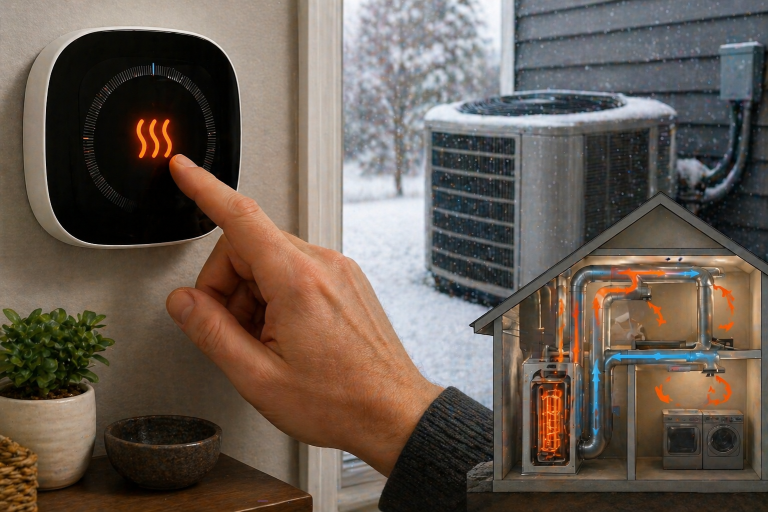
Start by turning off the power to the unit at the main electrical panel or the dedicated wall switch. Once the power is disconnected, locate the thermostat and switch the heating setting to the off position. This guarantees the system will not try to cycle on while you are inspecting the puddle.
Cleaning Up and Assessing the Damage
Use old towels or a wet-dry vacuum to remove all standing water from the floor. Drying the area completely makes it much easier to track exactly where the new drips are falling from. Pay close attention to the base of the unit, the PVC pipes, and the attached humidifier if you have one.
When to Call a Professional HVAC Technician
While clearing a simple drain line is manageable for many homeowners, internal component failures require professional expertise. If you notice water leaking directly from the secondary heat exchanger, the repair is highly technical. A cracked heat exchanger is a serious issue that impacts both system efficiency and household safety.
You should also contact a technician if the leak is accompanied by strange noises, burning smells, or poor heating performance. Modern furnaces are complex machines with sensitive computer boards that can be easily damaged by stray moisture. A licensed professional will have the diagnostic tools needed to pinpoint the exact failure without risking further damage.
Keep in mind that attempting DIY repairs on internal gas or electrical components can void your manufacturer warranty. Most professional service calls for basic leak diagnostics cost between $150 and $300, depending on your local market in states like NY or IL. Investing in an expert opinion is the safest way to ensure your winter heating remains reliable.
Frequently Asked Questions
Can a leaking furnace cause carbon monoxide poisoning?
A standard water leak from a condensation line does not directly cause carbon monoxide leaks. However, if the water stems from a cracked heat exchanger, there is a severe risk of exhaust gases entering your home. You should always maintain functional carbon monoxide detectors on every level of your property.
How much does it cost to fix a leaking furnace?
The cost to repair a leak depends entirely on the source of the water. Clearing a clogged drain line might only cost $150, while replacing a cracked secondary heat exchanger can easily exceed $1,500. Having a technician diagnose the exact issue is the only way to get an accurate estimate.
Should I repair or replace my leaking furnace?
You should repair the system if it is less than ten years old and the leak is a minor plumbing or condensation issue. Replacement is usually the smarter financial choice if the unit is over fifteen years old and requires a major component like a heat exchanger. An older system will continue to lose efficiency and cost you more in monthly utility bills.