
Homeowners are increasingly looking for ways to cut utility costs while upgrading their laundry rooms. Traditional vented dryers have been the standard for decades, but they are notoriously inefficient when it comes to energy consumption. They pull conditioned air from your home, heat it up, and blast it outside through an exhaust vent.
This constant cycle of wasting heated air has driven a massive shift toward newer, ventless technologies. If you are shopping for new appliances this year, you have likely noticed a different option dominating showroom floors. Understanding exactly what is a heat pump dryer can help you decide if this energy-saving appliance is the right fit for your home.
How Heat Pump Dryers Actually Work
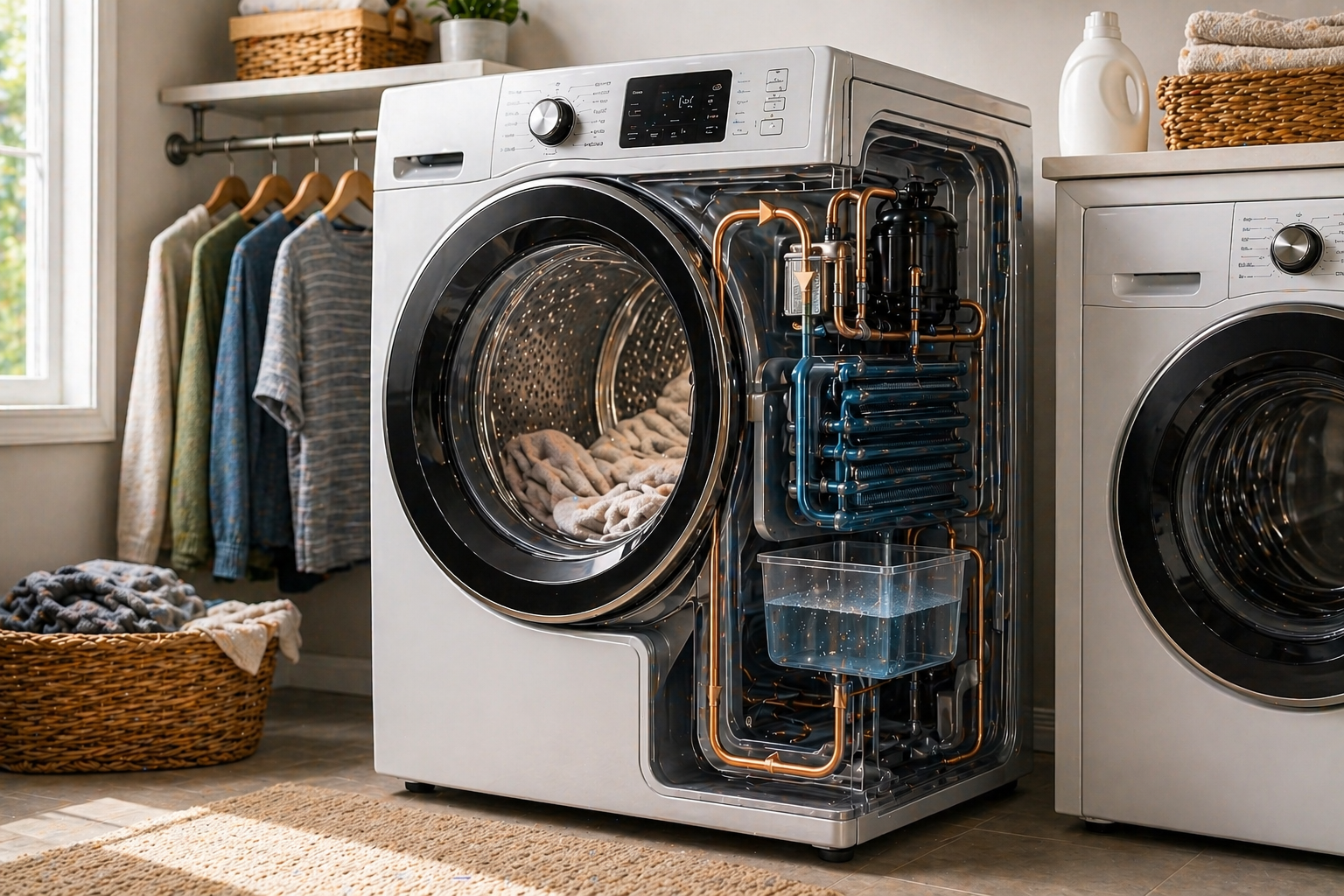
Unlike conventional models that generate heat through electric coils or gas burners, a heat pump dryer operates on a closed-loop system. It uses a specialized refrigerant system to heat the air circulating inside the drum. This warm air absorbs moisture from your wet clothes as they tumble.
Instead of venting that hot, humid air outside, the machine pushes it through a cooling coil. The sudden drop in temperature forces the moisture to condense into water, which is then drained away or collected in a tank. The remaining air is reheated and sent back into the drum to continue the cycle.
The Condensation Process
This closed-loop moisture extraction is the secret behind the machine’s efficiency. Because the air is constantly recycled, the dryer does not need to draw in fresh air from your living space. You simply empty the water collection tank after a few loads or connect a drainage hose directly to your plumbing.
Unmatched Energy Efficiency
By recycling the same air, these appliances use significantly less electricity than traditional models. Homeowners often see their drying energy consumption drop by up to 50 percent. Over the lifespan of the machine, these monthly utility savings can offset the higher initial purchase price.
Installation and Setup Requirements
One of the biggest advantages of this technology is the ventless design. You can place these dryers anywhere in your house, from a primary bedroom closet to a hallway alcove. There is no need to cut a hole in your exterior wall or worry about cleaning a massive lint trap duct every year.
Electrical requirements also make these units incredibly versatile for older homes or tight spaces. Many models run on a standard 120-volt outlet, eliminating the need for a dedicated 240-volt circuit. This flexibility is especially valuable for condo owners or those adding a secondary laundry zone to a finished basement.
Keep in mind that while you do not need an exhaust vent, you still need to manage the extracted water. Most buyers opt to run a small drain hose into the same standpipe used by their washing machine. If a drain is not accessible, you will just need to manually empty the built-in water reservoir after each cycle.
Pros and Cons for Your Laundry Room
Upgrading to this technology requires weighing a few distinct trade-offs. On the plus side, the lower operating temperatures are exceptionally gentle on fabrics, helping your clothes last longer. The lack of an exhaust vent also means your HVAC system will not have to work overtime to replace the conditioned air a traditional dryer pushes outside.
The primary drawback is the upfront cost, as these units generally run $300 to $500 more than conventional electric dryers. You will also need to adjust your laundry habits, because the lower temperatures mean drying cycles take longer to complete. A load of heavy towels might take over an hour, which requires a bit more planning on laundry day.
Maintenance also looks a little different with this type of appliance. You must clean a secondary filter near the condenser coils regularly to keep the system running efficiently. This extra step only takes a minute, but neglecting it can severely impact the machine’s performance.
Frequently Asked Questions
Do heat pump dryers take longer to dry clothes?
Yes, these appliances use lower temperatures to protect fabrics and save energy, which extends the drying time. A standard load typically takes 20 to 30 minutes longer than it would in a traditional vented dryer. The gentle heat helps prevent shrinking and fading, making the extra time worthwhile for many homeowners.
Can I install a heat pump dryer in a closet?
These ventless machines are perfect for closet installations since they do not require an exterior exhaust duct. You just need a standard electrical outlet and enough clearance for the appliance doors to open. Many models are also compact, making them ideal for tight spaces in condos or older properties.
Are heat pump dryers worth the higher upfront cost?
The initial investment is typically higher, often exceeding $1,000 for a high-quality unit. However, the dramatic reduction in electricity usage usually pays for the price difference over a few years. Homeowners in areas with high utility rates see the fastest return on their investment.